


Therapeutic strategies targeting complement in myasthenia gravis patients
- PMID: 40601074
- PMCID: PMC12222297
- DOI: 10.1007/s00415-025-13225-7
Therapeutic strategies targeting complement in myasthenia gravis patients
Abstract
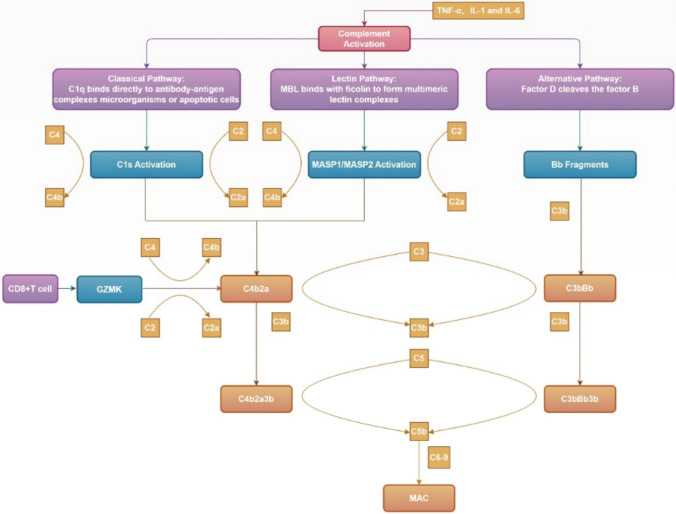
Myasthenia gravis (MG) is an acquired autoimmune disorder characterized by impaired neuromuscular junction transmission, leading to fluctuating muscle weakness. With the progressive identification of MG-related antibodies, such as acetylcholine receptor (AChR) antibodies and muscle-specific kinase (MuSK) antibodies, coupled with advancements in antibody detection technology, the use of these diagnostic markers has become widely accessible in clinical practice. This has facilitated the detection of key biomarkers and enabled the study of targeted therapeutic interventions aimed at addressing the underlying production of MG pathogenic antibodies and their various stages of pathogenicity. Among the emerging therapeutic strategies, complement-targeting drugs have garnered significant attention from medical researchers because of their ability to reduce complement activation and inhibit autoimmune-mediated tissue damage. Inhibition of the terminal complement cascade has demonstrated efficacy in reducing disease severity and improving clinical outcomes, particularly in refractory cases of MG. This review summarizes the underlying mechanisms of complement activation in MG, evaluates the current therapeutic landscape, including both approved and investigational complement inhibitors and discusses the safety considerations of their application.
Keywords: Complement inhibitors; Complement system; Myasthenia gravis; Targeted therapy.
© 2025. The Author(s).
Conflict of interest statement
Declarations. Ethical approval: The manuscript does not contain clinical studies or patient data. Conflict of interest: The authors have no relevant financial or non-financial interests to disclose. The authors have no conflict of interest to declare that are relevant to the content of this article. All authors certify that they have no affiliations with or involvement in any organization or entity with any financial interest or non-financial interest in the subject matter or materials discussed in this manuscript. The authors have no financial or proprietary interests in any material discussed in this article.
Figures
References
Publication types
MeSH terms
Substances
Grants and funding
- 82271275/National Natural Science Foundation of China
- 2023JH2/101700204/Science and Technology Program Joint Program of Liaoning Province (Project of Fundamental Research for Application)
- 2023JH2/101800017/Science and Technology Program Joint Program of Liaoning Province (Project of Key Research and Development Program)
LinkOut - more resources
Full Text Sources
Medical
