


Biomarkers for intensive care unit-acquired weakness: a systematic review for prediction, diagnosis and prognosis
- PMID: 40601169
- PMCID: PMC12222590
- DOI: 10.1186/s13613-025-01500-9
Biomarkers for intensive care unit-acquired weakness: a systematic review for prediction, diagnosis and prognosis
Abstract
Background: Intensive care unit-acquired weakness (ICU-AW) is a common and debilitating complication in critically ill patients, significantly affecting both short- and long-term outcomes. The existing ICU-AW diagnostic methods are not widely accepted and have a narrow application window. Biomarkers offer potential for diagnosing, predicting, and prognosticating ICU-AW, but a comprehensive synthesis of the available evidence is still lacking.
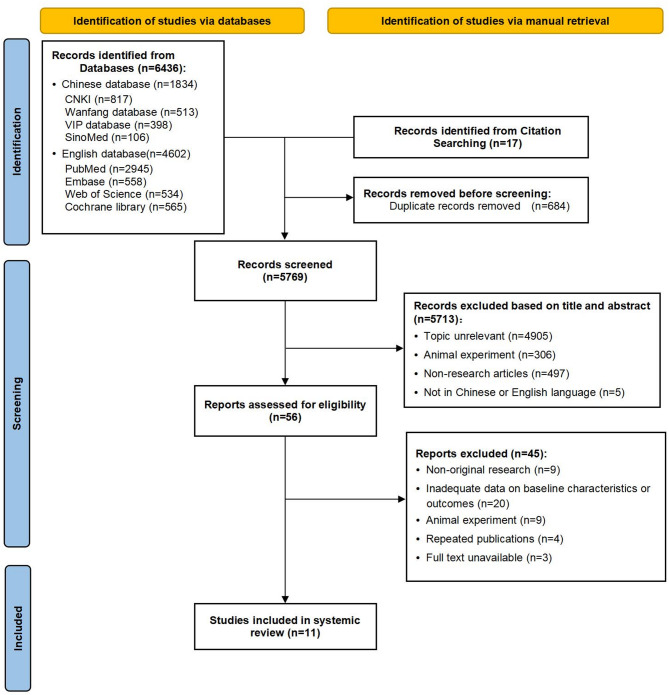
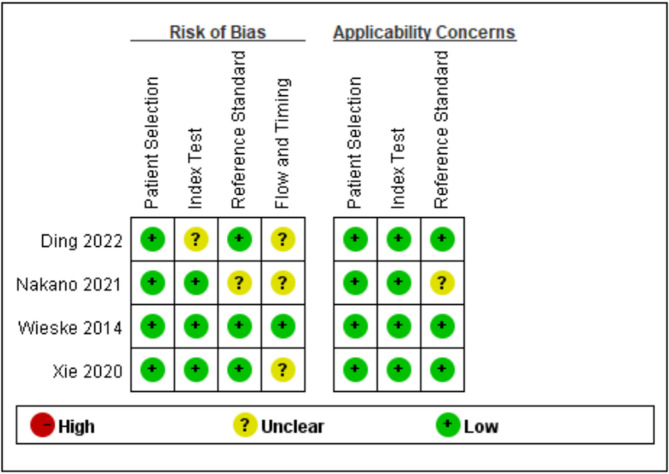
Methods: We conducted a systematic search across PubMed, Cochrane Library, Embase, Web of Science, CNKI, Wanfang Database, China Science and Technology Journal Database (VIP Database), and China Biomedical Literature Database (SinoMed Database) from inception to January 23, 2025. Study quality was assessed using the revised Newcastle-Ottawa scale and the Quality Assessment of Diagnostic Accuracy Studies-2 tool. Data extraction included basic characteristics of the included studies, name of biomarkers, objective, specimen types, sampling time, type of biomarker, ICU-AW diagnostic criteria, and outcomes.
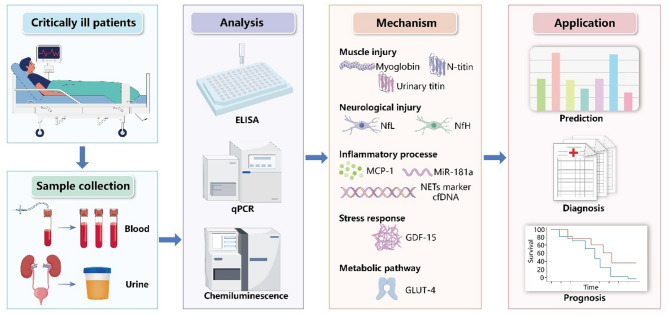
Results: Out of 5,769 publications screened, 11 studies of moderate to high quality (scores ≥ 6) involving 1,176 critically ill patients were included. Ten biomarkers were identified and categorized into five mechanisms: muscle injury (myoglobin, N-titin, urinary titin), metabolic pathway (glucose transporter protein type-4), neurological injury (neurofilament light/heavy chain), stress response (growth differentiation factor-15), and inflammatory process (monocyte chemoattractant protein-1, NETs marker cfDNA, and miR-181a). Six biomarkers demonstrated strong predictive and diagnostic accuracy with AUC values exceeding 0.80. Notably, growth differentiation factor-15 exhibited excellent clinical utility across diagnostic, predictive, and prognostic applications (AUC ≥ 0.85). The remaining four biomarkers showed moderate performance, with AUC values ranging from 0.60 to 0.80.
Conclusion: While ten biomarkers exhibit potential for ICU-AW assessment, their clinical utility remains inconsistent. This highlights the need for large-scale, prospective validation studies and the incorporation of advanced technologies to refine existing biomarkers and identify novel candidates for ICU-AW prediction, diagnosis and management.
Date of registration: Registered 1 August 2024.
Trial registration: PROSPERO ID: CRD42024574437.
Keywords: Biomarkers; Diagnosis; ICU-acquired weakness; Prediction; Prognosis; Systematic review.
© 2025. The Author(s).
Conflict of interest statement
Declarations. Ethics approval and consent to participate: Not applicable’ for that section. Consent for publication: Not applicable’ for that section. Competing interests: The authors declare that they have no competing interests.
Figures
References
Publication types
Grants and funding
LinkOut - more resources
Full Text Sources
Research Materials
