


Applications of artificial intelligence in the analysis of histopathology images of gliomas: a review
- PMID: 40603567
- PMCID: PMC12118767
- DOI: 10.1038/s44303-024-00020-8
Applications of artificial intelligence in the analysis of histopathology images of gliomas: a review
Abstract
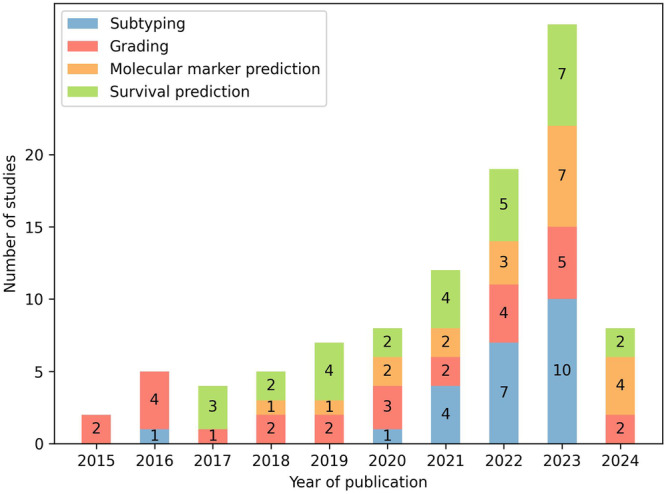
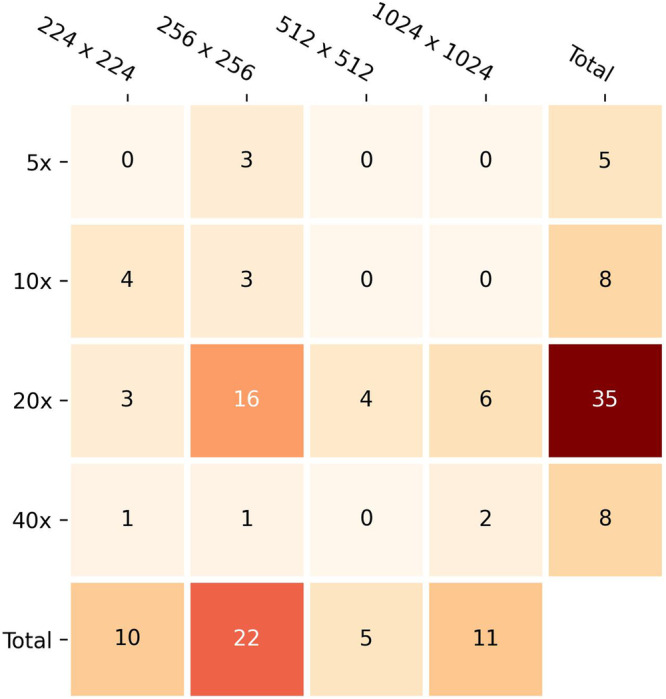
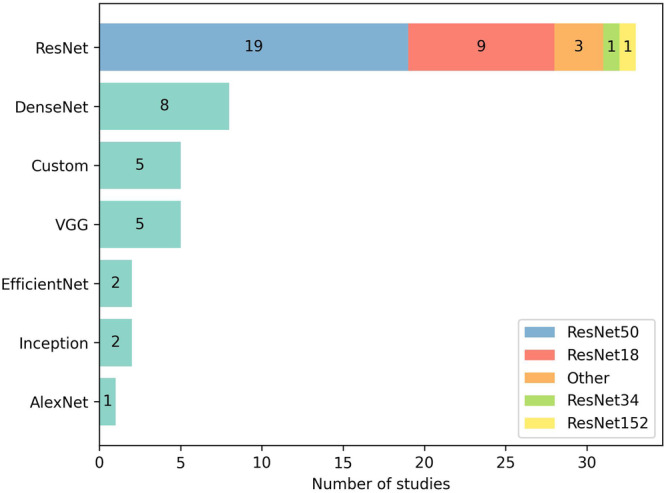
In recent years, the diagnosis of gliomas has become increasingly complex. Analysis of glioma histopathology images using artificial intelligence (AI) offers new opportunities to support diagnosis and outcome prediction. To give an overview of the current state of research, this review examines 83 publicly available research studies that have proposed AI-based methods for whole-slide histopathology images of human gliomas, covering the diagnostic tasks of subtyping (23/83), grading (27/83), molecular marker prediction (20/83), and survival prediction (29/83). All studies were reviewed with regard to methodological aspects as well as clinical applicability. It was found that the focus of current research is the assessment of hematoxylin and eosin-stained tissue sections of adult-type diffuse gliomas. The majority of studies (52/83) are based on the publicly available glioblastoma and low-grade glioma datasets from The Cancer Genome Atlas (TCGA) and only a few studies employed other datasets in isolation (16/83) or in addition to the TCGA datasets (15/83). Current approaches mostly rely on convolutional neural networks (63/83) for analyzing tissue at 20x magnification (35/83). A new field of research is the integration of clinical data, omics data, or magnetic resonance imaging (29/83). So far, AI-based methods have achieved promising results, but are not yet used in real clinical settings. Future work should focus on the independent validation of methods on larger, multi-site datasets with high-quality and up-to-date clinical and molecular pathology annotations to demonstrate routine applicability.
© 2024. The Author(s).
Conflict of interest statement
Competing interests: The authors declare no competing interests.
Figures

References
Publication types
Grants and funding
- ZMI5-2522DAT15A/Bundesministerium für Gesundheit
- ZMI5-2522DAT15D/Bundesministerium für Gesundheit
- ZMI5-2522DAT15E/Bundesministerium für Gesundheit
- ZMI5-2522DAT15D/Bundesministerium für Gesundheit
- ZMI5-2522DAT15A/Bundesministerium für Gesundheit
- ZMI5-2522DAT15B/Bundesministerium für Gesundheit
- ZMI5-2522DAT15B/Bundesministerium für Gesundheit
- ZMI5-2522DAT15B/Bundesministerium für Gesundheit
- ZMI5-2522DAT15E/Bundesministerium für Gesundheit
- ZMI5-2522DAT15A/Bundesministerium für Gesundheit
- ZMI5-2522DAT15A/Bundesministerium für Gesundheit
- No 643271/Horizon 2020
LinkOut - more resources
Full Text Sources