


Smart traceable framework for transportation of transplantable organs using IPFS, iot, and smart contracts
- PMID: 40603944
- PMCID: PMC12223096
- DOI: 10.1038/s41598-025-06471-2
Smart traceable framework for transportation of transplantable organs using IPFS, iot, and smart contracts
Abstract
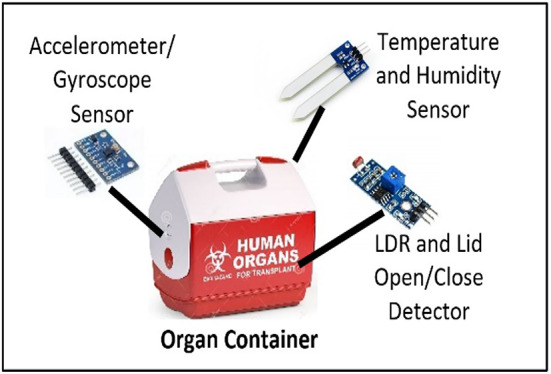
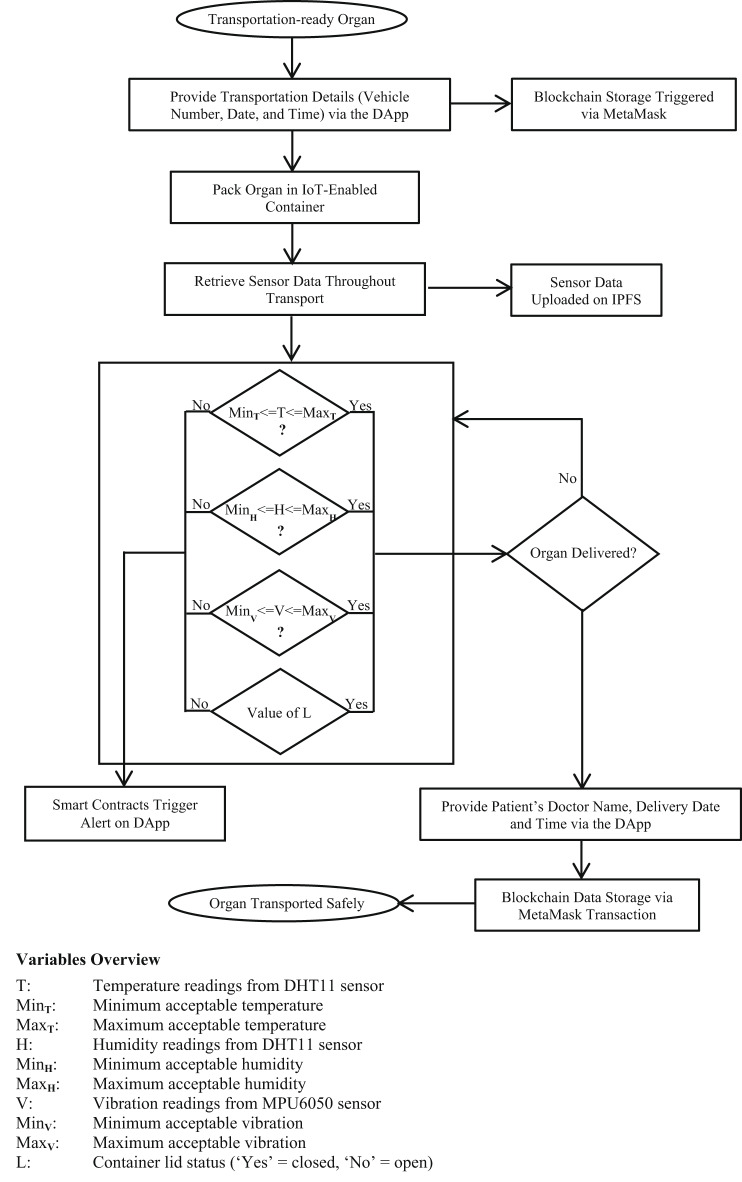
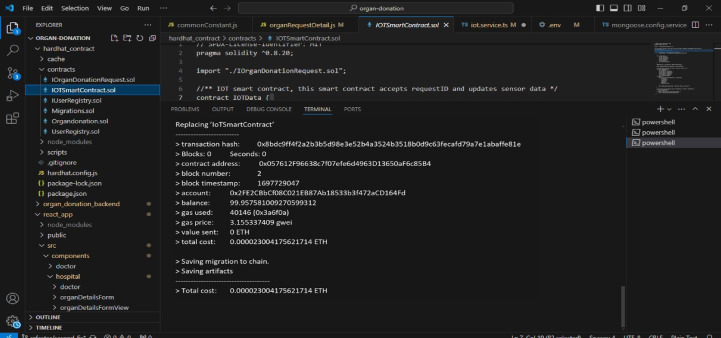
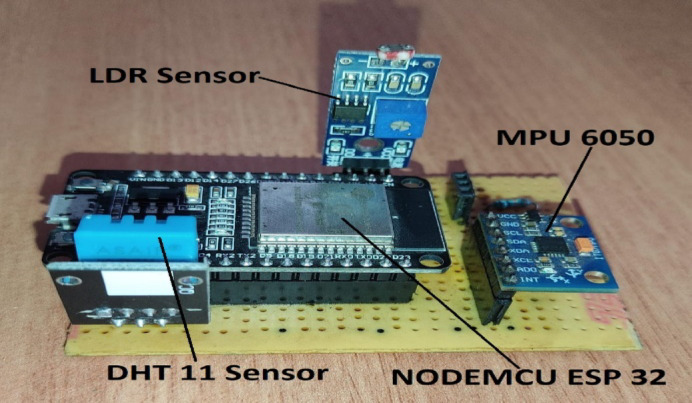
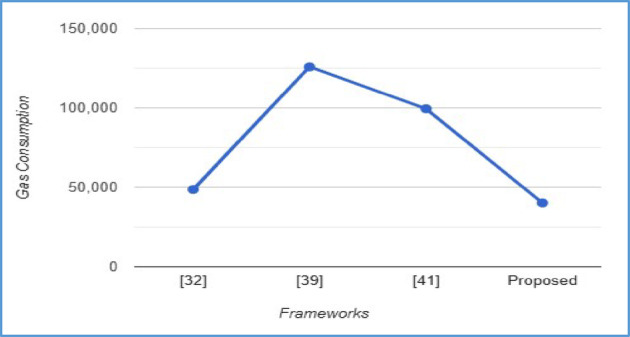
Existing organ transportation management systems face significant limitations as they do not allow patients to monitor the condition of the transplantable organ during its transportation from the donor's place to the recipient's venue. This undermines patients' confidence that the organ allotted to them remains uncontaminated, healthy, and unaffected by fluctuations in parameters including temperature, humidity, and the container's vibration, and orientation. Additionally, there is a lack of technology to ensure that the organ container remains securely closed throughout the shipment. Furthermore, the shipment data is often stored in centralized or with third-party systems, which are potentially vulnerable to security risks and single points of failure. These limitations highlight the need for a more secure, transparent, and reliable solution to improve organ transportation safety and data integrity. This paper addresses these challenges by proposing a cost-efficient, decentralized, and transparent framework for managing organ transportation that enhances data security and traceability. The proposed framework integrates Internet of Things sensors within the organ container and connects them to smart contracts via the InterPlanetary File System. The blockchain ensures data security, immutability, and decentralization, while sensors safeguard the organ by providing real-time updates on its condition. The smart contracts generate alerts for issues and notify stakeholders for prompt action. A key contribution of this work is the novel use of IPFS for off-chain data storage, which reduces blockchain storage requirements, Ether consumption, and overall system costs. A comparative analysis with existing IoT, IPFS, and blockchain-based transportation approaches demonstrates that the proposed framework consumes a negligible amount of Ether; approximately, 0.000023004, equivalent to approximately 5.52 INR; for deployment, while ensuring safe, transparent, cost-effective, and traceable organ transportation.
Keywords: Blockchain; InterPlanetary file system; Internet of things; Organ transportation; Smart contracts; Traceability.
© 2025. The Author(s).
Conflict of interest statement
Declarations. Competing interests: The authors declare no competing interests. Disclosure: No potential conflict of interest was reported by the authors. Ethics statement: “Not Applicable” because this study does not involve any human subject or animal.
Figures
References
-
- Mahmood, S., Hasan, R., Ullah, A. & Sarker, K. U. SMART security alert system for monitoring and controlling container transportation. In: 4th MEC International Conference on Big Data and Smart City (ICBDSC). Muscat. Oman. (2019). 10.1109/icbdsc.2019.8645574
-
- Tang, P., Postolache, O. A., Hao, Y. & Zhong, M. Reefer Container Monitoring System. In: 11th International Symposium on Advanced Topics in Electrical Engineering (ATEE). Bucharest. Romania. (2019). 10.1109/atee.2019.8724950
-
- Bawa, G., Singh, H., Rani, S., Kataria, A. & Min, H. Exploring perspectives of blockchain technology and traditional centralized technology in organ donation management: A comprehensive review. Information15 (11), 703. 10.3390/info15110703 (2024). - DOI
MeSH terms
Grants and funding
LinkOut - more resources
Full Text Sources
Medical
