


Regulation of APX, SOD, and PAL genes by chitosan under salt stress in rapeseed (Brassica napus L.)
- PMID: 40604426
- PMCID: PMC12220346
- DOI: 10.1186/s12870-025-06815-0
Regulation of APX, SOD, and PAL genes by chitosan under salt stress in rapeseed (Brassica napus L.)
Abstract
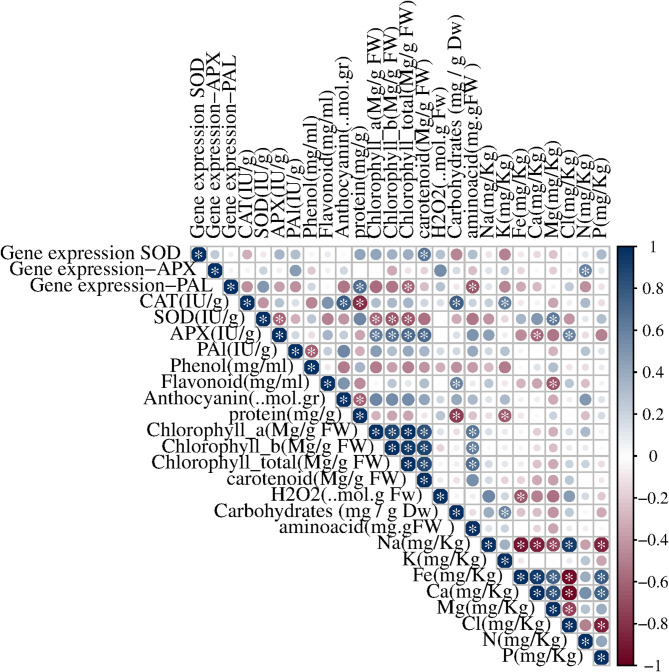
Salt stress significantly impairs plant growth and productivity. This study evaluated the effects of foliar-applied chitosan on salt stress mitigation in Brassica napus L. under NaCl treatments (0, 50, 100, 150 mM). Plants were treated with chitosan (0, 5, and 10 mg/L), and their physiological, biochemical, and molecular responses were analyzed. Chitosan at 10 mg/L significantly improved biomass production, root development, and photosynthetic efficiency, increasing total chlorophyll content by up to 35% under severe salinity (150 mM NaCl). It enhanced ion homeostasis by reducing sodium (Na+) accumulation (up to 19%) and increasing potassium (K+) uptake (up to 27%), mitigating ion toxicity. Chitosan at 10 mg/L also improved membrane stability and osmotic adjustment by elevating phenolics (47%), flavonoids (40%), and anthocyanins (60%), particularly under 100 and 150 mM NaCl. Antioxidant defense mechanisms were strengthened, with 10 mg/L chitosan increasing superoxide dismutase (SOD) activity by 15%, ascorbate peroxidase (APX) by 35%, and catalase (CAT) by 168%, leading to a 30% reduction in hydrogen peroxide (H2O2) content, primarily under high salinity (100-150 mM NaCl). Additionally, chitosan upregulated the expression of stress-related genes, including SOD (55%), APX (26%), and phenylalanine ammonia-lyase (PAL) (45%), reinforcing the oxidative defense system. These findings highlight chitosan's role in salt tolerance via ion regulation, osmolyte synthesis, and antioxidant modulation, with 10 mg/L being the most effective concentration. Chitosan represents a promising biostimulant for enhancing crop resilience in saline environments. Future research should optimize formulations for large-scale applications and assess long-term effects on soil and plant health.
Keywords: Antioxidant enzymes; Chitosan; Essential elements; Oxidative damage; Salinity.
© 2025. The Author(s).
Conflict of interest statement
Declarations. Ethics approval and consent to participate: Not applicable. Consent for publication: Not applicable. Competing interests: The authors declare no competing interests.
Figures



References
-
- Shams M, Yildirim E, Khadivi A, Ekinci M, Muhie SH. Differences in seed germination, plant growth, and proline content of some pepper (Capsicum annuum L.) genotypes under salinity stress. J Crop Health. 2024;76(1):309–16. 10.1007/s10343-023-00962-w - DOI
-
- Mushtaq Z, Faizan S, Gulzar B. Salt stress, its impacts on plants and the strategies plants are employing against it: A review. J Appl Biol Biotechnol. 2020;8:81–91. 10.7324/JABB.2020.80315 - DOI
MeSH terms
Substances
LinkOut - more resources
Full Text Sources
Miscellaneous
