


Cognitive reserve in subjective cognitive decline with worry: DMN-VN connectivity supports episodic memory under structural vulnerability
- PMID: 40604471
- PMCID: PMC12220014
- DOI: 10.1186/s12877-025-06072-8
Cognitive reserve in subjective cognitive decline with worry: DMN-VN connectivity supports episodic memory under structural vulnerability
Abstract
Background: The occurrence of worry in subjects with Subjective Cognitive Decline(SCD) confers a greater risk of future AD and cognitive decline. However, it is not known whether these individuals have distinct memory and neuroimaging profiles. Therefore, we aimed to identify brain imaging characteristics associated with episodic memory in elderly adults with subjective cognitive decline and related worry (SCD+) in a population-based cohort.
Methods: A total of 418 individuals from the BABRI cohort underwent structural MRI (n = 418) and episodic memory-related task-based fMRI (n = 153) scans. The subjects were classified into Mild Cognitive Impairment (MCI), SCD+ , SCD, and Normal Control (NC) groups. A brain structure-function-episodic memory pathway model was constructed to investigate potential compensatory mechanisms.
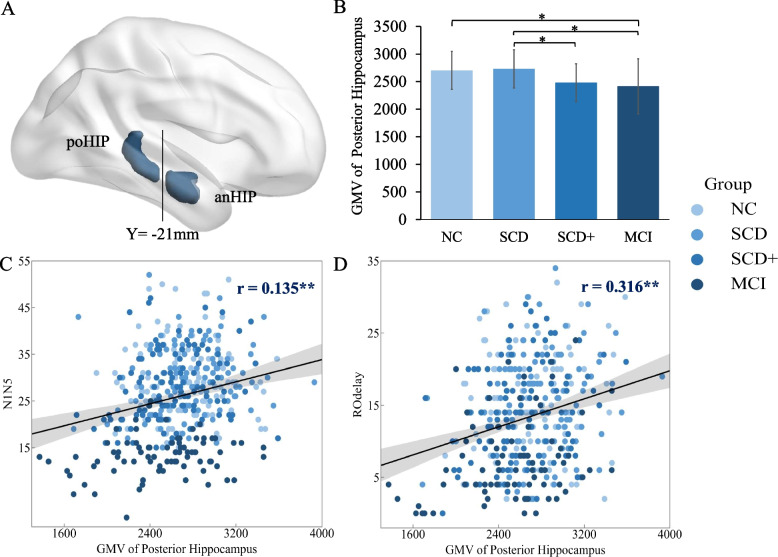
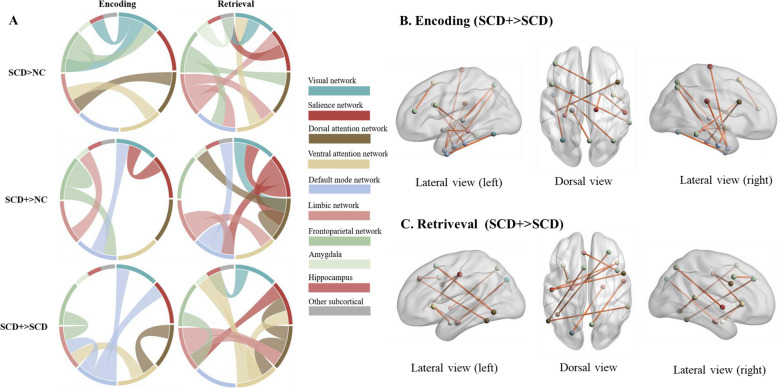
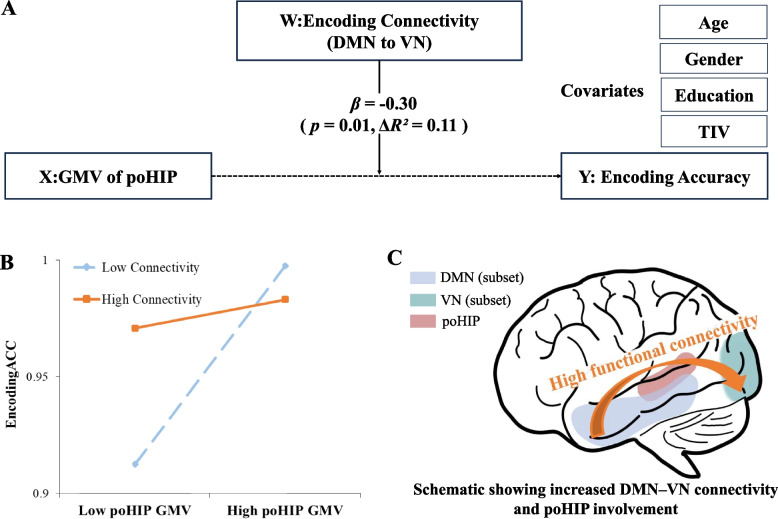
Results: Cognitively, SCD+ group did not perform significantly worse than SCD group on episodic memory tasks. For the structural T1-weighted MRI results, gray matter integrity in SCD+ group exhibited altered atrophy patterns compared to SCD, mainly in the posterior hippocampus and parahippocampal cortex. Using PsychoPhysiological Interactions (PPI) to investigate task-based functional connectivity, we found that the SCD+ group exhibited significantly stronger functional connectivity (FC) in the Default Mode Network (DMN) and other networks than SCD. Using moderation model analysis, we found that stronger FC between the DMN and Visual Network (VN) moderated the relationship between gray matter volume (GM) of the posterior hippocampus and episodic memory encoding accuracy within SCD+ group.
Conclusions: Stronger DMN-VN connectivity may reflect early cognitive reserve processes supporting episodic memory in SCD+ despite structural vulnerability, although such adaptations may vunerable as Alzheimer's disease progresses. Task-based fMRI may serve as a sensitive tool for detecting these processes before clinical decline.
Keywords: Cognitive reserve; Default mode network; Episodic memory; Subjective cognitive decline with related worry; Visual network.
© 2025. The Author(s).
Conflict of interest statement
Declarations. Ethics approval and consent to participate: We confirm that the research described in our manuscript adheres to the principles outlined in the Declaration of Helsinki. Written informed consent was obtained from each participant, and the use of human subjects was approved by the Institutional Review Board (IRB) at the Imaging Center for Brain Research at Beijing Normal University(ICBIR_A_0041_002_02). All methods were performed following the relevant guidelines and regulations. Consent for publication: Not applicable. Competing interests: The authors declare no competing interests.
Figures
References
-
- Asaf G, Hannah M. Neurobiology of Schemas and Schema-Mediated Memory Trends in Cognitive Sciences. 2017;21(8):618–31. 10.1016/j.tics.2017.04.013. - PubMed
-
- Beaudreau SA, O’Hara R. Late-life anxiety and cognitive impairment: A review. American Journal of Geriatric Psychiatry. 2008;16(10):790–803. 10.1097/JGP.0b013e31817945c3. - PubMed
MeSH terms
Grants and funding
LinkOut - more resources
Full Text Sources
Medical
