


Global burden of disease and its risk factors for adults aged 70 and older across 204 countries and territories: a comprehensive analysis of the Global Burden of Disease Study 2021
- PMID: 40604507
- PMCID: PMC12220231
- DOI: 10.1186/s12877-025-06095-1
Global burden of disease and its risk factors for adults aged 70 and older across 204 countries and territories: a comprehensive analysis of the Global Burden of Disease Study 2021
Abstract
Background: The global older population has been rapidly increasing in recent decades, presenting substantial economic and social challenges.
Aims: This study aims to examine the global disease burden and the associated risk factors among the population aged 70 and older across different regions.
Methods: Data from the Global Burden of Disease Study (GBD) database were used to analyze global deaths, disability-adjusted life years (DALYs), and average annual percentage changes to assess disease burden and associated risk factors.
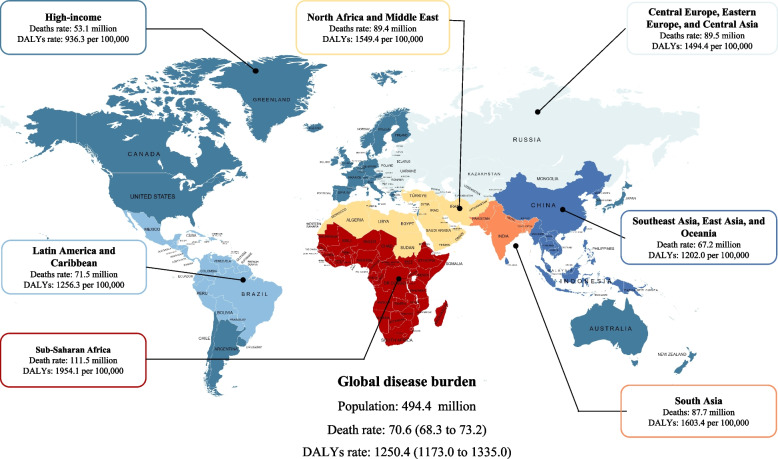
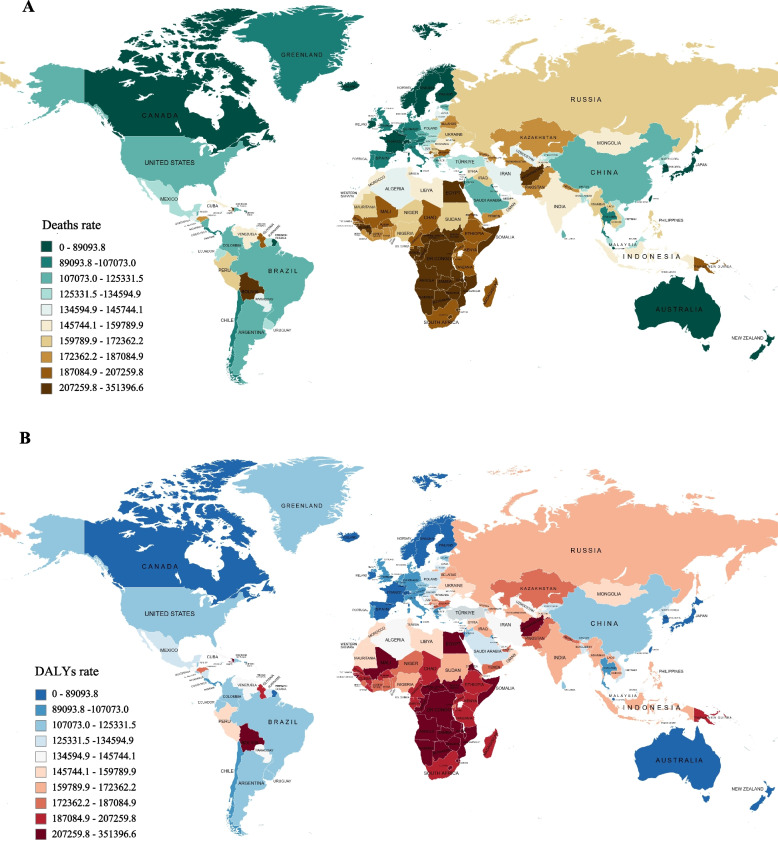
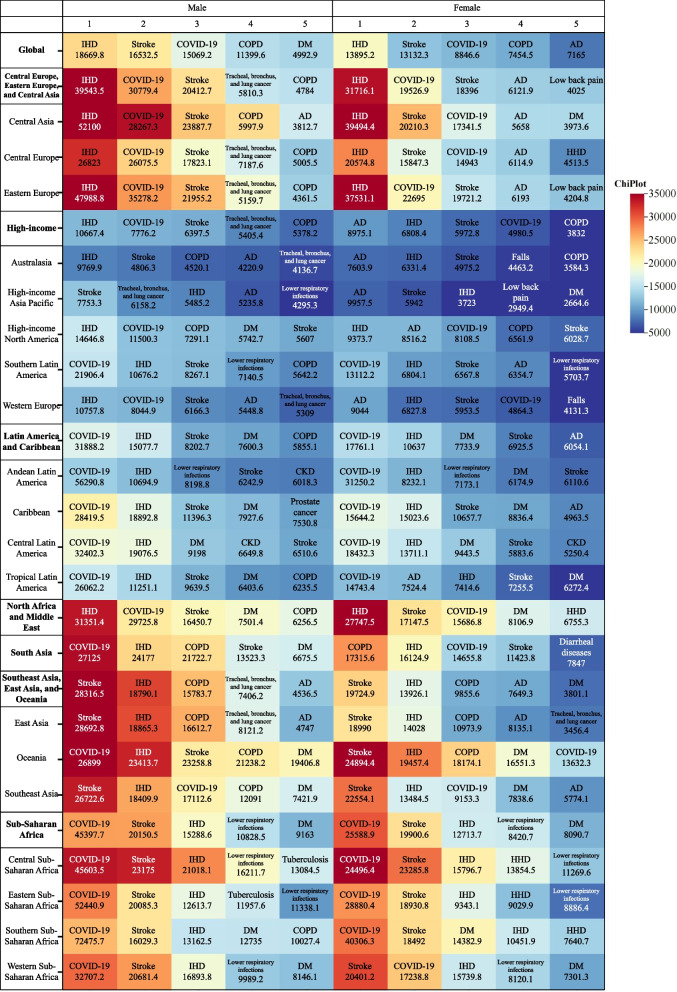
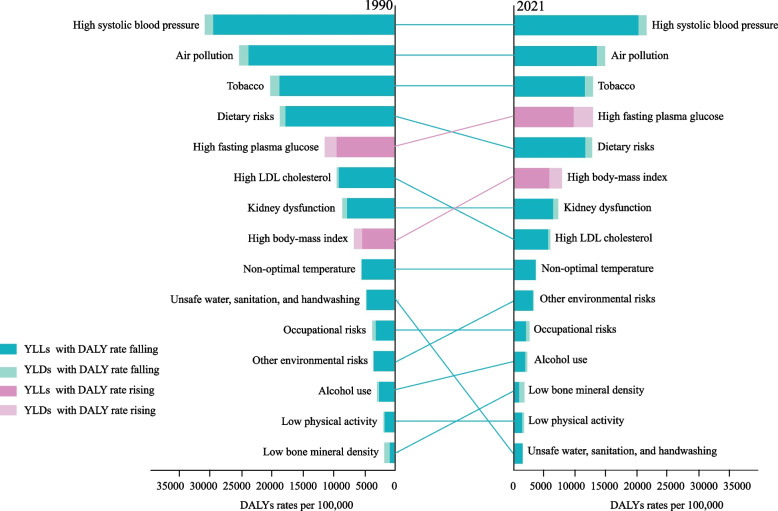
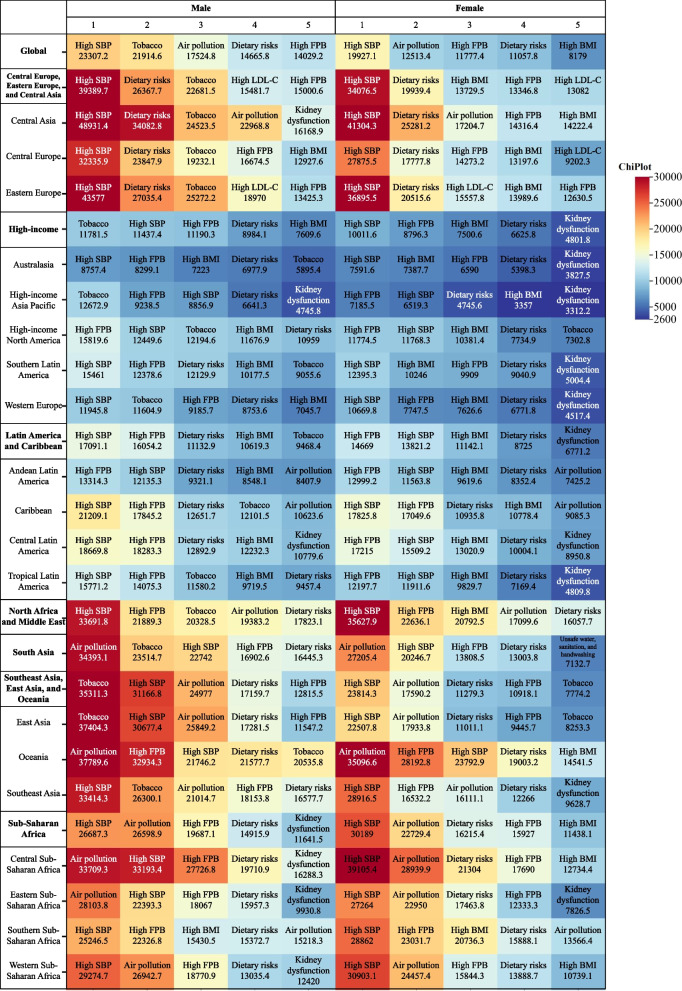
Results: In 2021, the global population aged 70 and older reached 494.4 (95%UI 482.1-508.2) million. Death and DALY rates have declined by 9.2% (95%CI 5.3-12.7) and 11.0% (95%CI 7.7-14.0) from 1990 to 2021, respectively. However, the global death rate increased to 7,062 per 100,000 population, with DALY rates rising to 125,042 per 100,000. A strong correlation exists between socio-demographic index (SDI) and DALY rates. Regions with lower SDI levels, particularly low and low-middle SDI regions, showed higher DALY rates, reaching 189,563 and 165,080 per 100,000, respectively. The leading causes of death among the older included ischemic heart disease, stroke, COVID-19, and chronic obstructive pulmonary disease. The primary risk factors contributing to DALYs were high systolic blood pressure, air pollution, and tobacco use.
Conclusions: The global disease burden among adults aged 70 and older has shown declines in death and DALY rates, yet remains a significant challenge exacerbated by population growth, especially in less developed regions. Implementing preventive strategies that target primary risk factors early and enhancing treatment of underlying conditions are crucial.
Keywords: Aging; Causes of death; Global disease burden; Older population; Risk factors.
© 2025. The Author(s).
Conflict of interest statement
Declarations. Ethics approval and consent to participate: This study utilized publicly available data from the Global Burden of Disease (GBD) Study 2021, which is a global health resource that aggregates data from various sources under ethical standards. As the data is anonymized and does not involve direct human participation, no individual ethics approval was required. The GBD study has received ethical approval from relevant ethics committees in the countries where data collection took place, as per the guidelines of the respective institutions. Consent for publication: Not applicable. Competing interests: The authors declare no competing interests.
Figures

References
-
- Chen QF, Chen L, Katsouras CS, et al. Global burden of heart failure and its underlying causes in 204 countries and territories, 1990–2021. Eur Heart J Qual Care Clin Outcomes; 2025. Epub ahead of print. 10.1093/ehjqcco/qcae110. - PubMed
-
- Larsen B, Sánchez-Triana E. Global health burden and cost of lead exposure in children and adults: a health impact and economic modelling analysis. Lancet Planet Health. 2023;7(10):e831–40. - PubMed
MeSH terms
Grants and funding
LinkOut - more resources
Full Text Sources
