


Syndromic gingival fibromatosis associated with pathogenic variation in the voltage-gated potassium channel gene KCNH1: a case report and proposed treatment protocol
- PMID: 40604848
- PMCID: PMC12220361
- DOI: 10.1186/s12903-025-06197-7
Syndromic gingival fibromatosis associated with pathogenic variation in the voltage-gated potassium channel gene KCNH1: a case report and proposed treatment protocol
Abstract
Background: The KCNH1 gene (OMIM #603,305) encodes a voltage-gated potassium channel primarily found in the central nervous system. Recent discoveries have linked pathogenic variations in this gene to Temple-Baraitser syndrome (TMBTS, OMIM #611,816) and Zimmermann-Laband syndrome (ZLS, OMIM #135,500). A common manifestation of these syndromes is gingival fibromatosis, which may partially or completely cover tooth crowns, leading in some cases to functional and aesthetic problems, as well as delayed tooth eruption.
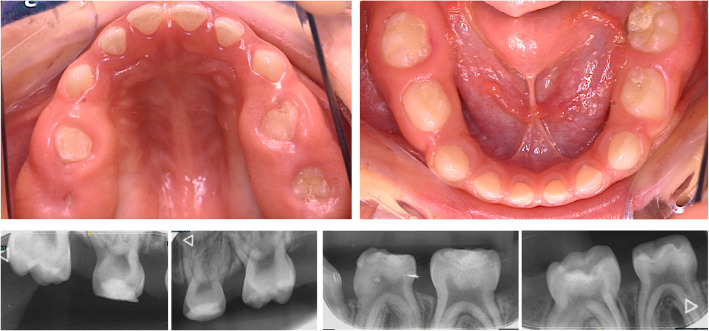
Case presentation: A four-year-old boy and his parents first consulted for delayed primary molars eruption. Shortly after birth, he was diagnosed with a developmental encephalopathy caused by a de novo pathogenic variant in KCNH1.
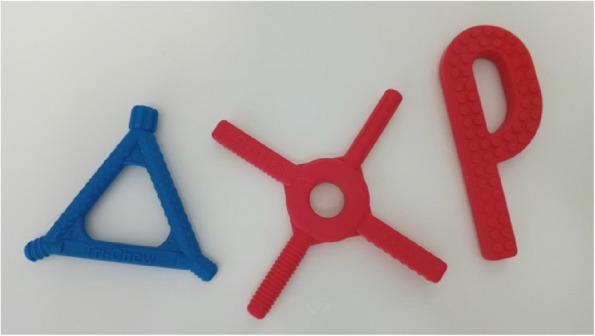
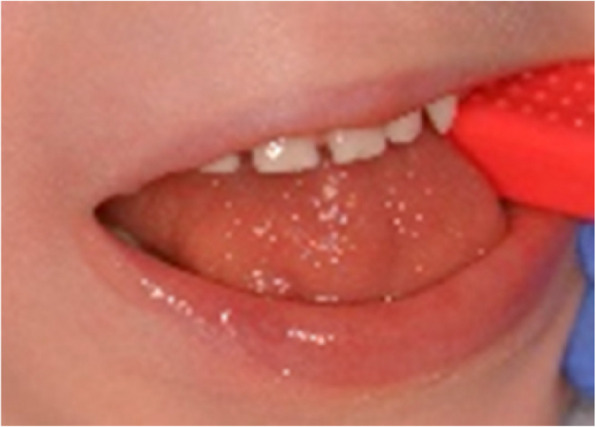
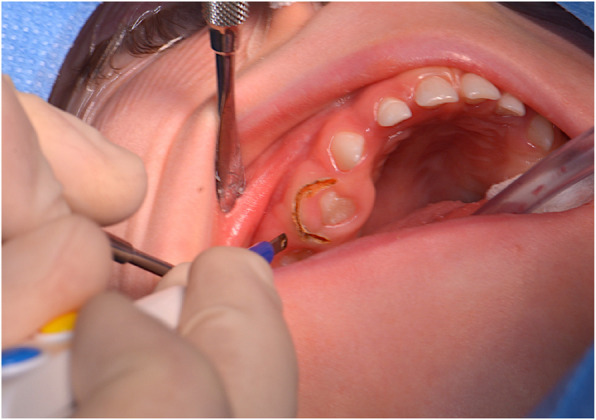
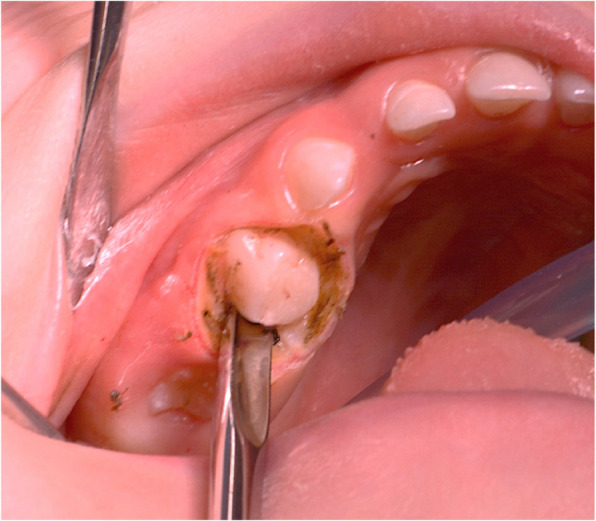
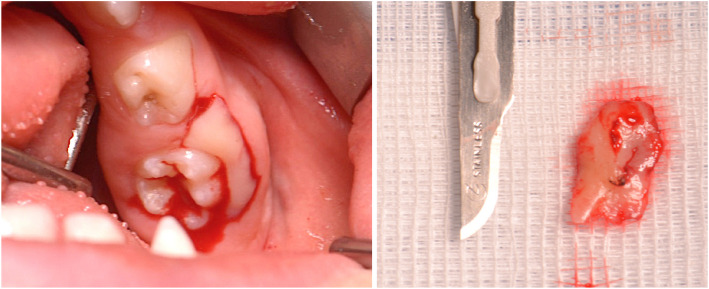
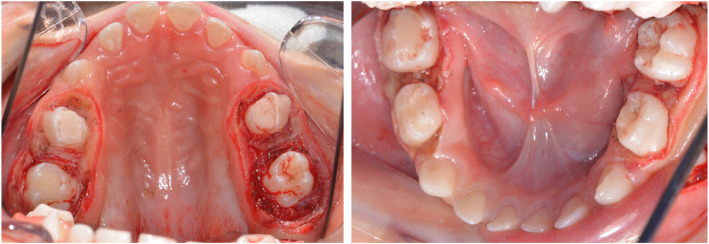
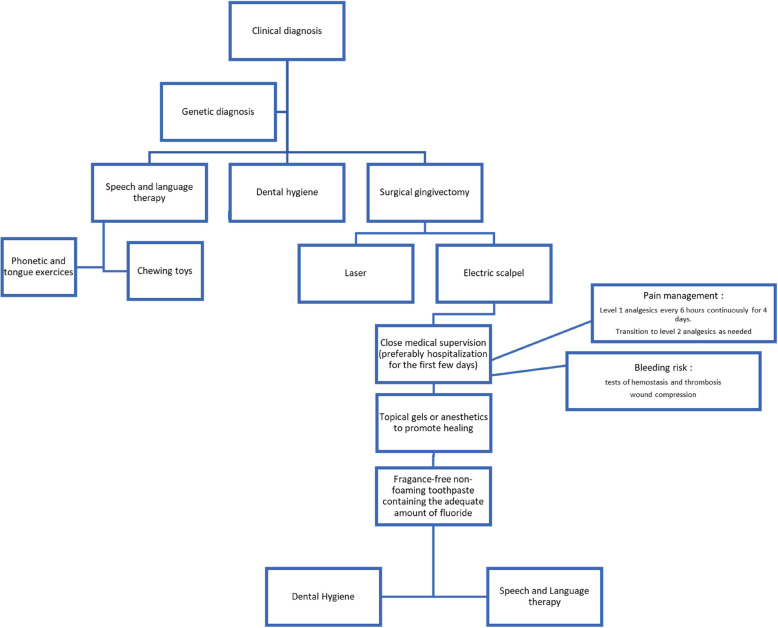
Treatment: The first step of oral treatment consisted of myofunctional and speech/language therapy to stimulate biting and chewing. It also helped with the rehabilitation of proper tongue function. This was followed by a gingivoplasty to expose the submerged teeth. We propose a clinical approach to optimize disease management. This aims to minimize complications associated with this rare disorder.
Conclusion: This case illustrates the need for appropriate and early gingivoplasty to prevent teeth impaction and restore dental function. Additionally, it explores potential complications and provides grounds for a comprehensive protocol for managing gingival fibromatosis for patients with KCNH1 variant.
Keywords: Gingival fibromatosis; Gingival hyperplasia; Gingivoplasty; KCNH1 developmental and epileptic encephalopathy; Temple-Baraitser Syndrome; Zimmermann-Laband Syndrome.
© 2025. The Author(s).
Conflict of interest statement
Declarations. Ethics approval and consent to participate: Informed consent about clinical management was obtained from the parents in this case. Consent for publication: Written informed consent was obtained from the parents for the publication of any potentially identifiable images or data included in this article. Competing interests: The authors declare no competing interests.
Figures
References
-
- Chand P, Sulaiman A, Kirmani S. Potassium voltage-gated channel subfamily H member 1 (KCNH1) missense mutation causing epileptic encephalopathy and autistic behavior. J Pak Med Assoc. 2023;73(9):1894–6. 10.47391/JPMA.6766. - PubMed
-
- Simons C, et al. Mutations in the voltage-gated potassium channel gene KCNH1 cause Temple-Baraitser syndrome and epilepsy. Nat Genet. 2015;47(1):73–7. 10.1038/ng.3153. - PubMed
-
- Kortüm F, et al. Mutations in KCNH1 and ATP6V1B2 cause Zimmermann-Laband syndrome. Nat Genet. 2015;47(6):661–7. 10.1038/ng.3282. - PubMed
Publication types
MeSH terms
Substances
Supplementary concepts
LinkOut - more resources
Full Text Sources
