


Integrating network pharmacology and multi-omics in a systems approach: a mechanism study of Jinhong tablets against chronic superficial gastritis
- PMID: 40604861
- PMCID: PMC12224787
- DOI: 10.1186/s13020-025-01138-6
Integrating network pharmacology and multi-omics in a systems approach: a mechanism study of Jinhong tablets against chronic superficial gastritis
Abstract
Background: Chronic gastritis (CG) significantly impacts patients' quality of life and can progress to more severe gastric conditions. In China, Traditional Chinese Medicine (TCM) has been widely applied for its holistic efficacy in treating chronic superficial gastritis (CSG), including formulas like Jinhong Tablets (JHT), known for their anti-inflammatory effects. However, the mechanism of action of JHT in treating CSG still requires further clarification.
Purpose: This study aimed to elucidate the mechanism by which JHT alleviates CSG, integrating network pharmacology, untargeted metabolomics, and gut microbiota analyses.
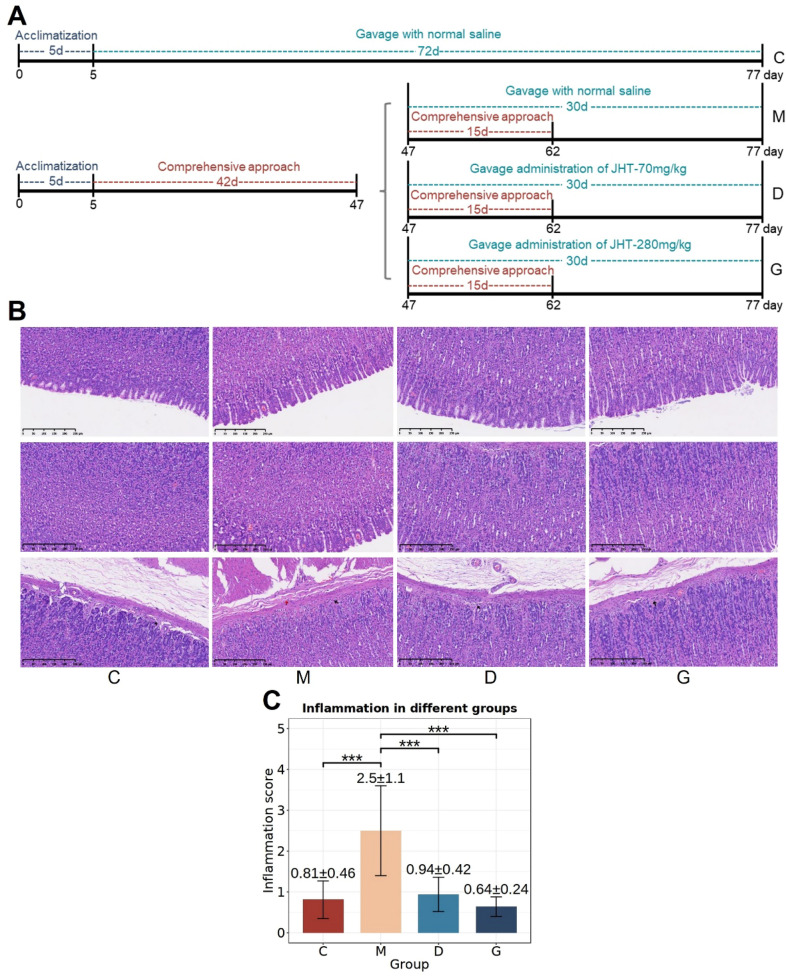
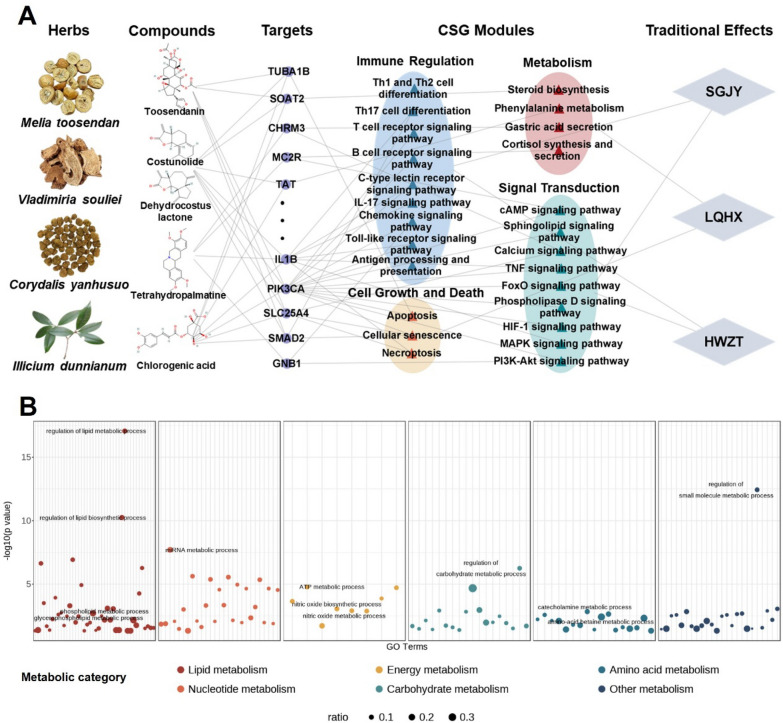
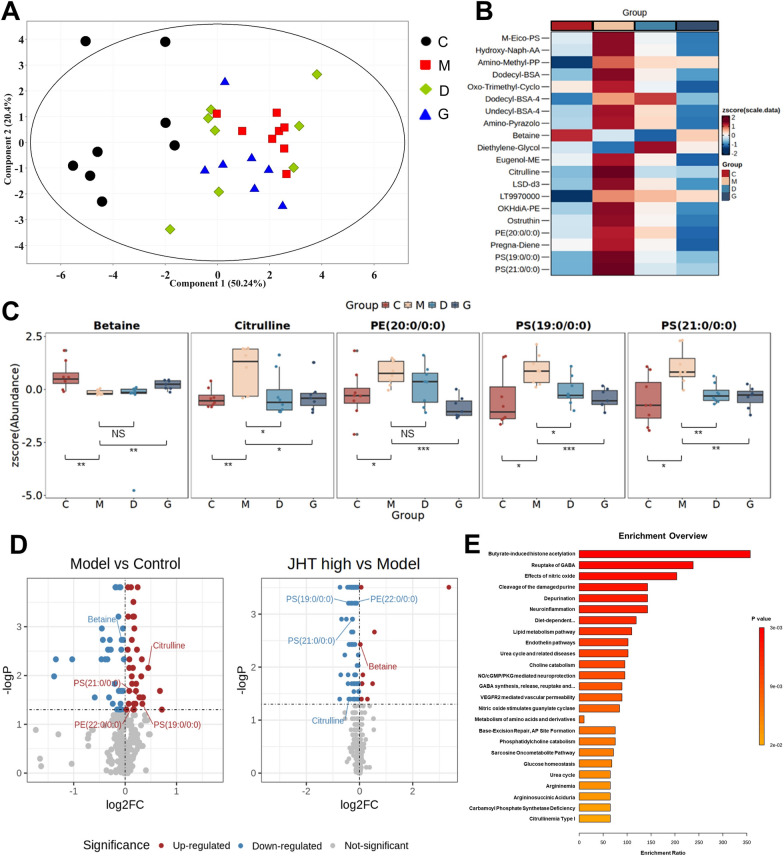
Methods: The CSG rat model was established, and treatment effects were assessed via Hematoxylin and eosin (H&E) staining. The target profiles of JHT's components and the holistic targets of JHT were obtained. Enrichment analyses were performed on holistic targets and a multi-layer biomolecular network of JHT was established. The study also analyzed rat plasma for differential metabolites through untargeted metabolomics and evaluated the diversity and composition of gut microbiota in fecal and cecal contents samples using 16S rRNA sequencing.
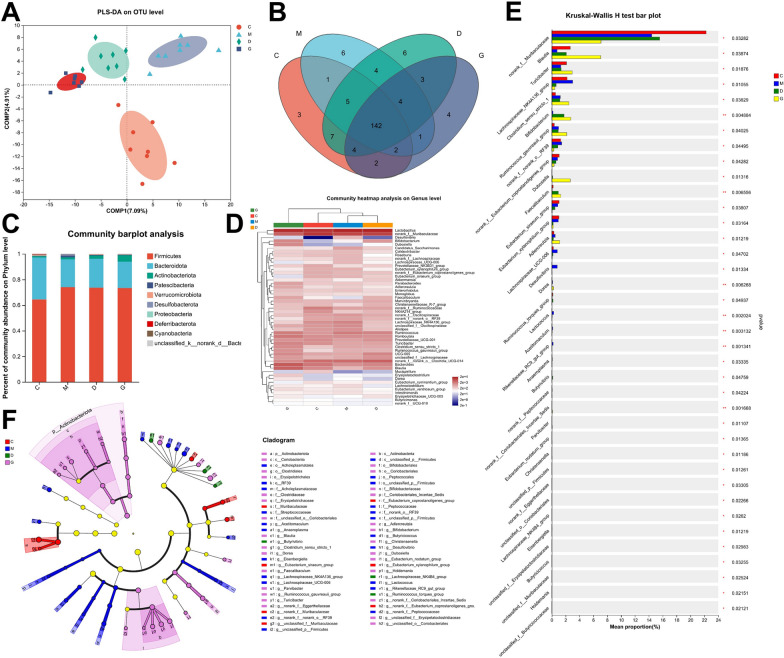
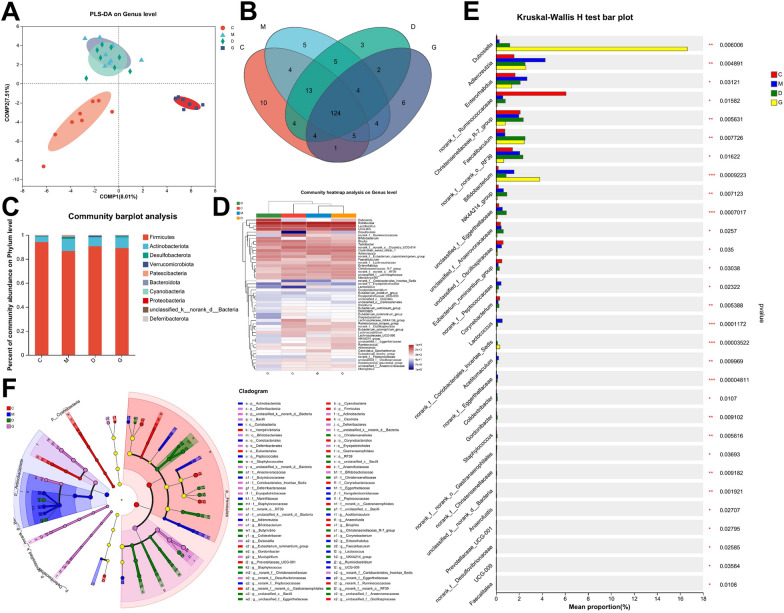
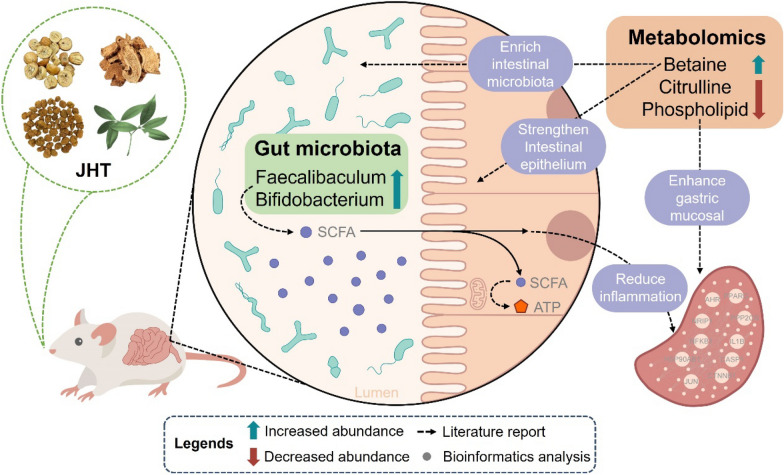
Results: JHT effectively reduced gastric inflammation in CSG rats. Network pharmacology indicated that diverse metabolic processes including lipid metabolism and nitric oxide metabolism play pivotal roles in the therapeutic effects of JHT on CSG. Metabolomics analysis identified differential metabolites, including betaine, which help enrich the gut microbiota. Phospholipids and citrulline indicate the severity of CSG. The pathway enrichment of differential metabolites confirmed the network pharmacology results and indicated the association with the gut microbiota. Through gut microbiota analyses, it was discovered that JHT could augment the gut microbiota by enhancing the abundance of betaine. Additionally, JHT was shown to boost the production of short-chain fatty acids (SCFAs) by increasing the abundances of Faecalibaculum and Bifidobacterium, consequently alleviating gastric inflammation in CSG.
Conclusion: Our study revealed that JHT alleviated CSG through diverse metabolic processes including lipid and energy metabolism. Metabolites such as betaine, along with gut microbiota including Faecalibaculum and Bifidobacterium, play crucial roles in the therapeutic interventions. Our findings support the therapeutic potential of JHT and contribute to a deeper understanding of the role of TCM in the treatment of CSG.
Keywords: Chronic superficial gastritis; Gut microbiota; Jinhong tablets; Network pharmacology; Untargeted metabolomics.
© 2025. The Author(s).
Conflict of interest statement
Declarations. Ethics approval and consent to participate: The animal experiment was carried out following internationally recognized guidelines for the use of laboratory animals and received ethical approval from the Kangyuan Pharmaceutical Experimental Animal Ethics Committee, with the approval number 2023100511. Consent for publication: Not applicable. Competing interests: The authors declare that there are no known conflicts of interest associated with this publication and there has been no significant financial support for this work that could have influenced its outcome.
Figures
References
-
- Chen H, Gong Y, Huang Z, Zhao G, Chen Z, Zen Y, Li H, Hu Y. Efficacy and safety of Chinese herbal medicine Qirui Weishu capsule in treating chronic non-atrophic gastritis: a multicentre, double-blind, randomized controlled clinical trial. J Ethnopharmacol. 2022;294:115341. 10.1016/j.jep.2022.115341. - DOI - PubMed
-
- Cryan JF, O’Riordan KJ, Cowan CSM, Sandhu KV, Bastiaanssen TFS, Boehme M, Codagnone MG, Cussotto S, Fulling C, Golubeva AV, Guzzetta KE, Jaggar M, Long-Smith CM, Lyte JM, Martin JA, Molinero-Perez A, Moloney G, Morelli E, Morillas E, O’Connor R, Cruz-Pereira JS, Peterson VL, Rea K, Ritz NL, Sherwin E, Spichak S, Teichman EM, van de Wouw M, Ventura-Silva AP, Wallace-Fitzsimons SE, Hyland N, Clarke G, Dinan TG. The microbiota-gut-brain axis. Physiol Rev. 2019;99:1877–2013. 10.1152/physrev.00018.2018. - DOI - PubMed
Grants and funding
LinkOut - more resources
Full Text Sources
