


Assessment of the effect of prokinetic drugs on transit time and gastrointestinal cleanliness in capsule endoscopy
- PMID: 40604869
- PMCID: PMC12220565
- DOI: 10.1186/s12917-025-04862-1
Assessment of the effect of prokinetic drugs on transit time and gastrointestinal cleanliness in capsule endoscopy
Abstract
Background: Endoscopic examinations are increasingly used in veterinary medicine. Examination using flexible endoscopes is limited to the anterior gastrointestinal tract (panendoscopy) and colon (colonoscopy), while a significant part of the small intestine remains unexamined. Capsular endoscopy is increasingly used, allowing macroscopic assessment of the entire digestive tract. The current study assessed the effect of prokinetic drugs on transit time and cleanliness of the tested part of the digestive tract in capsule endoscopy.
Methods: The study aimed to evaluate the usefulness of two prokinetic drugs (metoclopramide and cisapride) in capsule endoscopy studies while assessing the quality of the macroscopic image. Each animal included into the study had endoscopic examination three times - without the administration of prokinetic drugs, after receiving metoclopramide and after receiving cisapride.
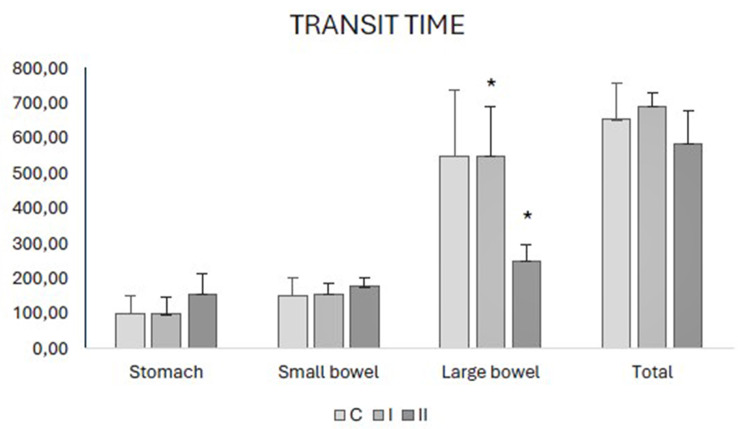
Results: The total passage time of the capsule through the gastrointestinal tract was the longest in the group receiving metoclopramide (691.33 min) and the shortest in the group receiving cisapride (584.17 min). The best quality images were observed in the control group.
Conclusion: This research has confirmed the hypothesis that administration of prokinetic drugs increases the probability of recording the entire macroscopic image of the gastrointestinal tract during endoscopy in dogs. A negative feature of their administration is significantly reduced recording quality because of the level of cleanliness of the tested gastrointestinal section.
Keywords: Canine; Capsule endoscopy; Digestive tract; Dogs; Endoscopy; Prokinetic drugs.
© 2025. The Author(s).
Conflict of interest statement
Declarations. Ethics approval and consent to participate: Animals included in the study are potential donors for fecal transplants. Before qualifying an animal as a donor, it must be certain that it is a completely healthy animal, without any subclinical changes in the digestive tract. Therefore, in accordance with the content of the ACT on animal health care facilities (Journal of Laws 2019, item 24) issued by the Marshal of the Sejm of the Republic of Poland the approval of the ethical committee was not required. Authors declare no IACUC or other approval was needed. All procedures performed in studies involving animals were in accordance with the ethical standards of the institution at which the studies were conducted. A verbal permission from the owners were taken to include the animals in the study. Consent for publication: Not applicable. Competing interests: The authors declare no competing interests.
Figures



References
MeSH terms
Substances
LinkOut - more resources
Full Text Sources
