


Factors influencing the implementation of interventions for symptoms of posttraumatic stress disorder among hospital-based nurses and physicians during the COVID-19 pandemic: a scoping review
- PMID: 40604886
- PMCID: PMC12225526
- DOI: 10.1186/s12913-025-13005-z
Factors influencing the implementation of interventions for symptoms of posttraumatic stress disorder among hospital-based nurses and physicians during the COVID-19 pandemic: a scoping review
Abstract
Background: In the field of posttraumatic stress disorder (PTSD) among nurses and physicians working in an acute hospital setting, various investigations have been conducted on the prevalence of PTSD during the COVID-19 pandemic rather than on the implementation of PTSD-related interventions to improve the mental health of health care workers. It is known that implementation faces challenges, such as social restrictions or the dynamic of the pandemic itself. However, for successful implementation under these conditions, identifying barriers and facilitators is inevitable before using tailored implementation strategies. The following research question was addressed: What are the barriers/facilitators in the implementation of PTSD-related interventions for nurses and physicians working in an acute hospital setting during the COVID-19 pandemic?
Methods: Using a scoping review approach, we conducted systematic literature searches from February to May 2023 in MEDLINE via PubMed and PsychINFO/CINAHL via EBSCO. We included primary studies (protocols), and concept articles focused on influencing factors in the implementation of PTSD-related interventions for nurses and physicians working in an acute hospital setting during the COVID-19 pandemic. We performed data analysis in MaxQDA via evaluative content analysis using the Consolidated Framework of Implementation Research (CFIR).
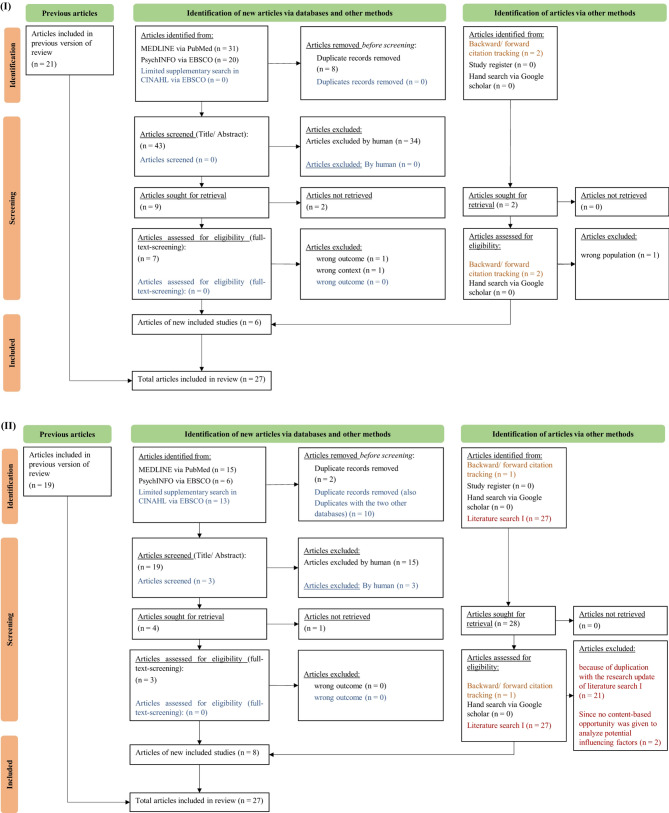
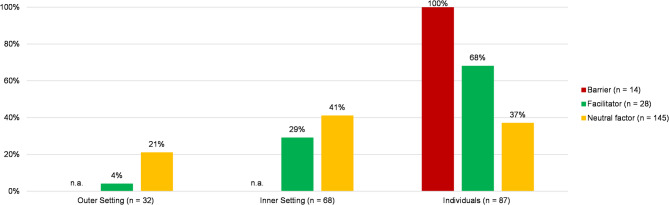
Results: A total of 19 studies were included. Most of them used an empirical approach to evaluate the intervention during its development or adaptation process. The identified factors were mainly neutral factors that emerged from the inner setting and individuals as the intervention's target group. The management, the nurses, and the physicians as innovation recipients themselves, and the connection between the inner and outer settings could influence the implementation of PTSD-related interventions.
Conclusion: With these results, decision-makers in organizations in health care systems can be encouraged to implement interventions to improve PTSD among hospital-based nurses and physicians under pandemic conditions. Future research needs to focus on conducting implementation studies to evaluate influencing factors and investigate whether these factors enable or hinder the implementation of PTSD-related interventions.
Keywords: COVID-19; Hospitals; Implementation science; Nurses; Physicians; Post-traumatic; Stress disorders.
© 2025. The Author(s).
Conflict of interest statement
Declarations. Ethics approval and consent to participate: Not applicable. Consent for publication: Not applicable. Competing interests: The authors declare no competing interests.
Figures
References
-
- Mathieu E, Ritchie H, Rodés-Guirao L, Appel C, Gavrilov D, Giattino C et al. Coronavirus (COVID-19) Hospitalizations: Our World in Data 2022. https://ourworldindata.org/covid-hospitalizations. Accessed 04. Aug 2024.
-
- WHO. Coronavirus disease 2019 (COVID-19). Situation Report - 51. 2020. Report No.: 51. World Health Organization. 2020. https://www.who.int/docs/default-source/coronaviruse/situation-reports/2.... Accessed 9 June 2025.
-
- WHO. WHO Coronavirus (COVID-19) Dashboard World Health Organization. 2021. https://covid19.who.int/. Accessed 04 Aug 2024.
Publication types
MeSH terms
LinkOut - more resources
Full Text Sources
Medical
