


Urinary phytoestrogen levels and reduced thyroid hormone sensitivity: a cross-sectional analysis of NHANES 2007-2010
- PMID: 40604928
- PMCID: PMC12225033
- DOI: 10.1186/s40001-025-02800-3
Urinary phytoestrogen levels and reduced thyroid hormone sensitivity: a cross-sectional analysis of NHANES 2007-2010
Abstract
Background: Estrogen and thyroid hormone interact extensively in vivo, but the relationship between phytoestrogens and thyroid function and thyroid hormone sensitivity remains unclear.
Methods: Using 2007-2010 NHANES data of United States, we analysed the association of six urinary phytoestrogens with thyroid function and thyroid hormone sensitivity using a weighted multivariate linear regression model.
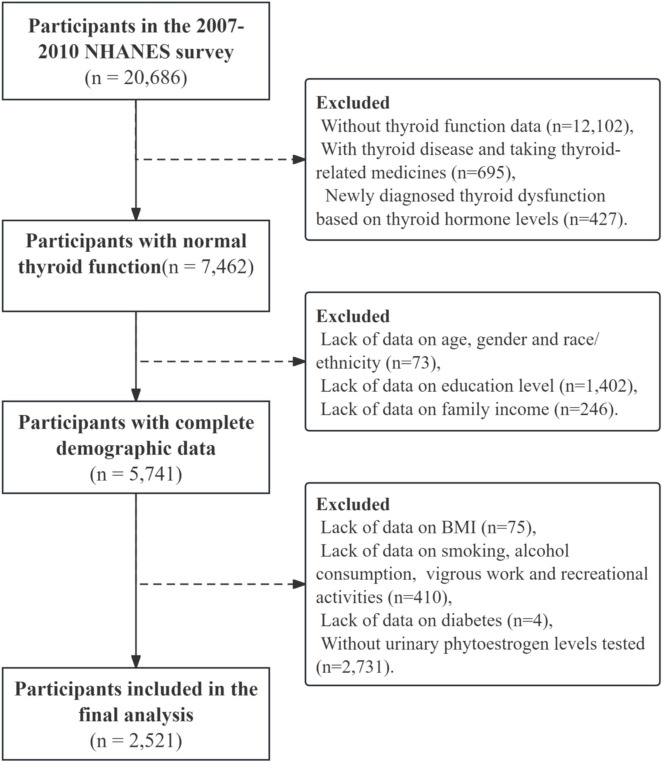
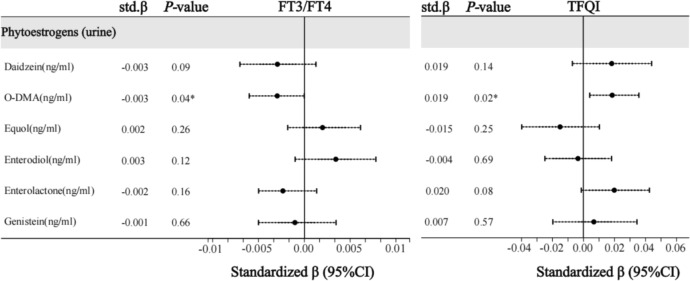
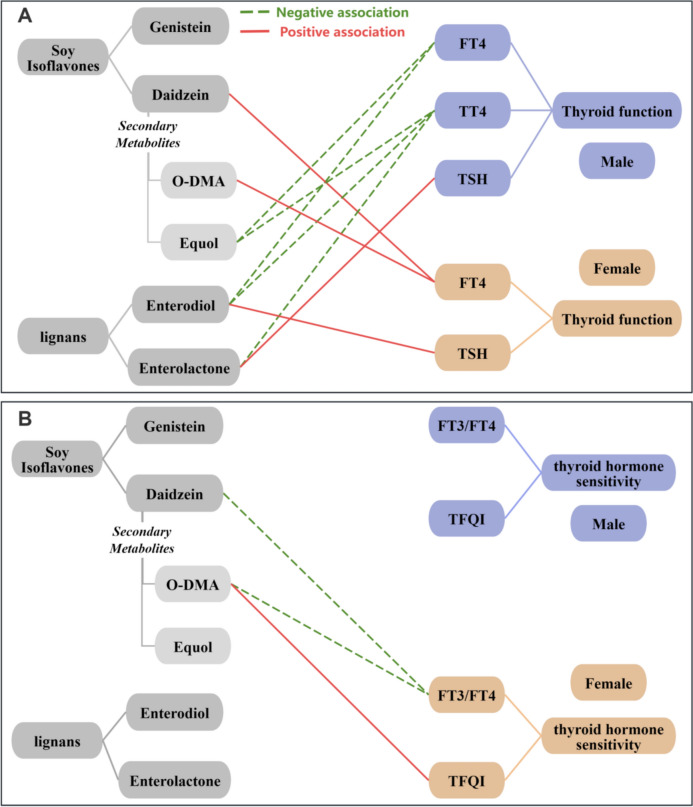
Results: The final analysis included 2521 euthyroid participants. After weighted multivariable adjustment (excluding dietary patterns and serum iodine levels), urinary phytoestrogen concentrations showed significant sex- and compound-specific associations with both thyroid function indicators and thyroid hormone sensitivity indices. For thyroid function, in males, Equol and Enterodiol showed negative associations with free thyroxine (FT4), while Equol, Enterodiol, and Enterolactone were negatively associated with total thyroxine (TT4). In females, Daidzein and O-Desmethylangolensin (O-DMA) demonstrated positive associations with FT4. Regarding thyroid hormone sensitivity, sex-stratified analysis revealed significant negative associations in females between Daidzein/O-DMA and FT3/FT4 ratio (P = 0.01), and between O-DMA and Thyroid Feedback Quantile-based Index (TFQI) (P = 0.04), with no significant associations observed in males.
Conclusions: Urinary phytoestrogens were associated with thyroid function and may adversely affect the central thyroid hormone sensitivity. Given the risk of hypothyroidism and subclinical hypothyroidism (SCH) associated with reduced thyroid hormone sensitivity, more health monitoring of people with high phytoestrogens intake is warranted.
Keywords: Hypothyroidism; Thyroid function; Thyroid hormone receptor; Thyroid hormone sensitivity; Urinary phytoestrogen.
© 2025. The Author(s).
Conflict of interest statement
Declarations. Ethics approval and consent to participate: The data our study used was from a complex, multistage sampling project conducted by the National Center for Health Statistics (NCHS) of the US: The National Health and Nutrition Examination Survey (NHANES). The NCHS Ethics Review Committee reviewed and approved the programme, and all participants signed an informed consent form before taking part in the survey. Consent for publication: Not applicable. Competing interests: All authors declare that this study does not have any potential or actual conflicts of interest in business or financial relationships.
Figures
References
-
- Okosieme OE, Usman D, Taylor PN, Dayan CM, Lyons G, Moran C, Chatterjee K, Rees DA. Cardiovascular morbidity and mortality in patients in Wales, UK with resistance to thyroid hormone β (RTHβ): a linked-record cohort study. Lancet Diabetes Endocrinol. 2023;11(9):657–66. 10.1016/s2213-8587(23)00155-9. - DOI - PubMed
MeSH terms
Substances
Grants and funding
LinkOut - more resources
Full Text Sources
Miscellaneous
