


Time-series metabolomic profiling of SARS-CoV-2 infection: Possible prognostic biomarkers in patients in the ICU by ¹H-NMR analysis
- PMID: 40608744
- PMCID: PMC12225815
- DOI: 10.1371/journal.pone.0327244
Time-series metabolomic profiling of SARS-CoV-2 infection: Possible prognostic biomarkers in patients in the ICU by ¹H-NMR analysis
Abstract
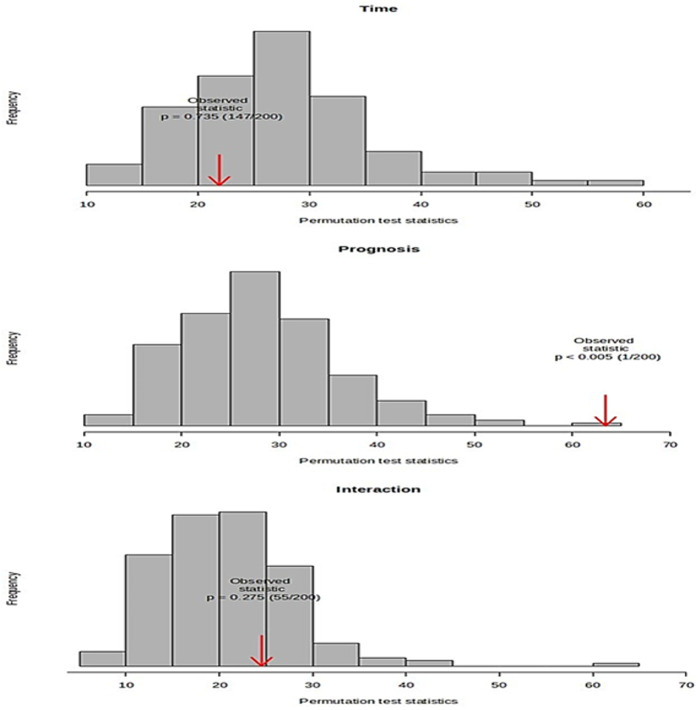
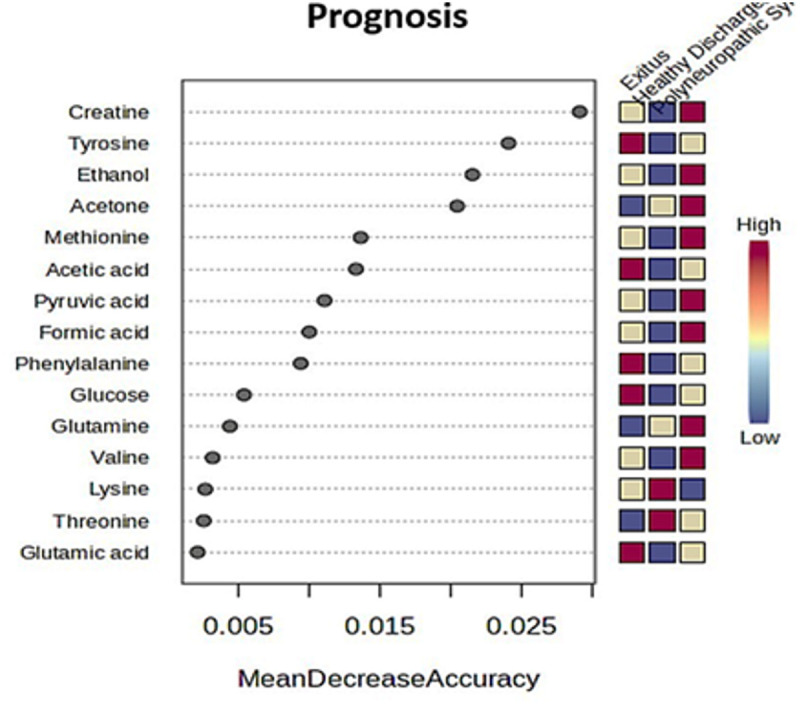
The global impact of SARS-CoV-2, which causes COVID-19, remains significant, being intensified by the emergence of variants. Comprehensive metabolomic studies aimed to elucidate the distinctive metabolic footprint of the virus. For critically ill patients with COVID-19 in the intensive care unit (ICU), longitudinal monitoring based on their prognosis is crucial to optimize treatment outcomes. This study retrospectively investigated the temporal changes in the metabolomic profiles of patients admitted to the ICU with COVID-19, who were categorized into three prognostic groups: healthy discharged (HD), polyneuropathic syndrome (PS), and Exitus. In total, 32 serum samples collected in April 2020 at regular intervals (four samples per patient) and stored at -80°C, were analyzed using proton nuclear magnetic resonance (1H-NMR) spectroscopy. Significant (p < 0.05) prognostic changes in creatine and tyrosine levels were revealed by two-way analysis of variance (ANOVA) and ANOVA-simultaneous component analysis (ASCA). Furthermore, supervised random forest analysis demonstrated excellent group prediction with a 21.9% out-of-bag error rate based on prognosis. Specifically, creatine levels were highest in the PS group, whereas tyrosine levels were highest in the Exitus group. However, no metabolite displayed significant changes over time. In addition, metabolic pathway analysis using the Kyoto Encyclopedia of Genes and Genomes database indicated that the most significantly impacted pathway (p < 0.05) across different prognostic groups was "phenylalanine, tyrosine and tryptophan biosynthesis." This preliminary study emphasizes the need for time-series analysis of samples from unvaccinated patients with varying prognoses, providing valuable insights into the metabolic impact of COVID-19.
Copyright: © 2025 Matpan et al. This is an open access article distributed under the terms of the Creative Commons Attribution License, which permits unrestricted use, distribution, and reproduction in any medium, provided the original author and source are credited.
Conflict of interest statement
The authors have declared that no competing interests exist.
Figures
References
-
- COVID-19 Weekly Epidemiological Update Global overview. 2023.
-
- Kimhofer T, Lodge S, Whiley L, Gray N, Loo RL, Lawler NG, et al. Integrative Modeling of Quantitative Plasma Lipoprotein, Metabolic, and Amino Acid Data Reveals a Multiorgan Pathological Signature of SARS-CoV-2 Infection. J Proteome Res. 2020;19(11):4442–54. doi: 10.1021/acs.jproteome.0c00519 - DOI - PubMed
-
- Páez-Franco JC, Torres-Ruiz J, Sosa-Hernández VA, Cervantes-Díaz R, Romero-Ramírez S, Pérez-Fragoso A, et al. Metabolomics analysis reveals a modified amino acid metabolism that correlates with altered oxygen homeostasis in COVID-19 patients. Sci Rep. 2021;11(1):6350. doi: 10.1038/s41598-021-85788-0 - DOI - PMC - PubMed
MeSH terms
Substances
LinkOut - more resources
Full Text Sources
Medical
Miscellaneous
