


Exploring pain management preferences: a discrete choice experiment on cannabis or opioids among middle-aged and older adults
- PMID: 40611345
- PMCID: PMC12225370
- DOI: 10.1186/s41043-025-00989-x
Exploring pain management preferences: a discrete choice experiment on cannabis or opioids among middle-aged and older adults
Abstract
Objective: The study examines middle-aged and older adult’s preferences to identify policies that might increase the use of cannabis rather than opioids for controlling physical pain.
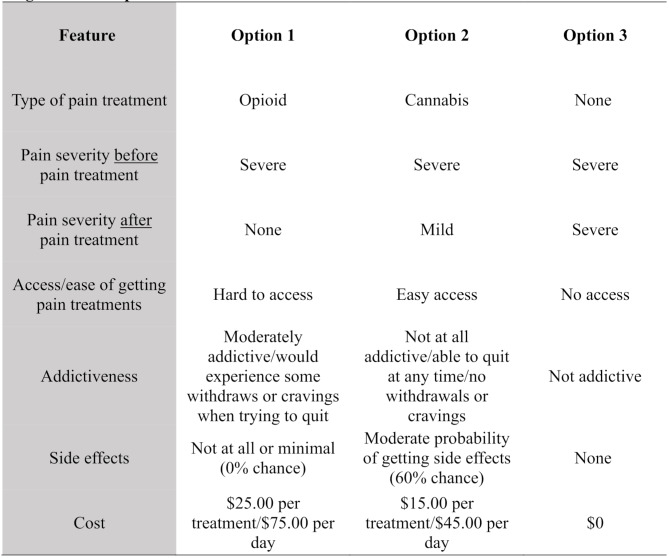
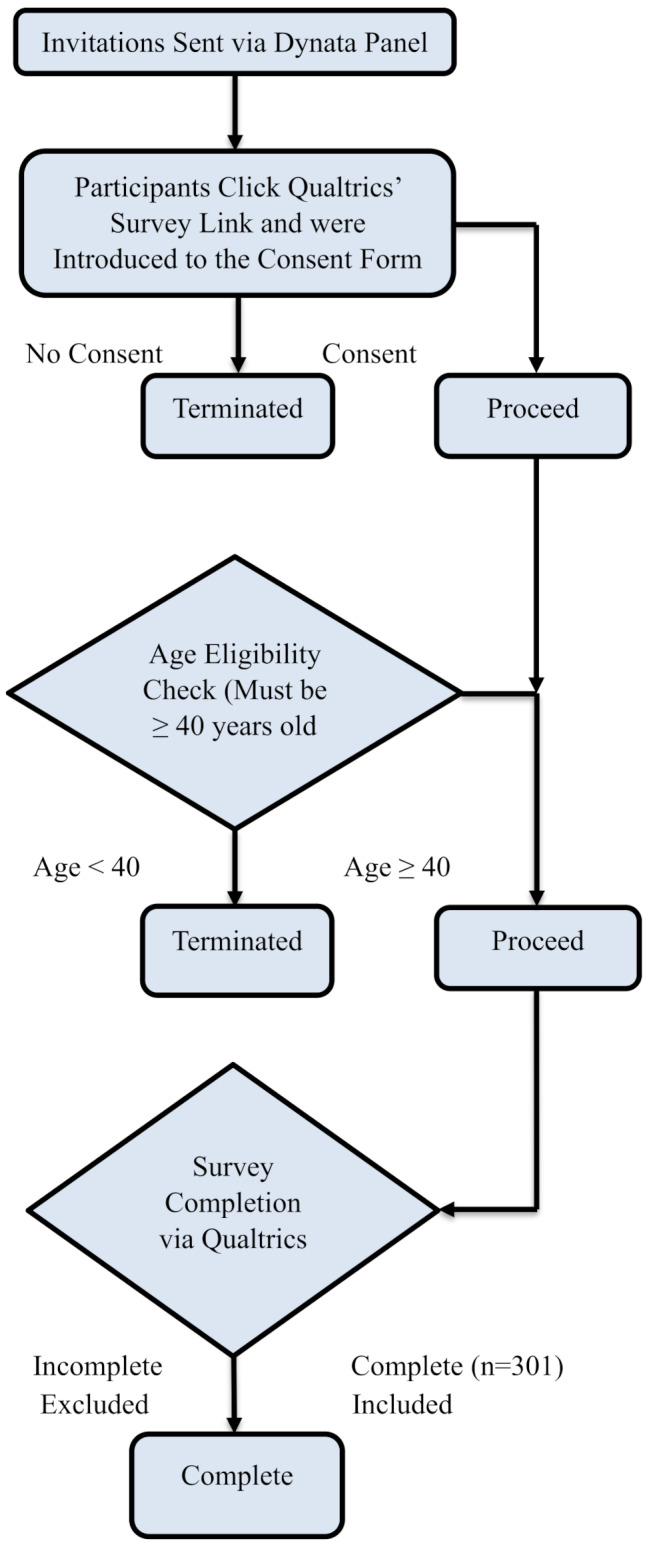
Method: A discrete choice survey was administered to 301 older adults (≥ 40 years) in three California regions (Los Angeles, Bay Area, and San Joaquin Valley). Participants expressed preferences for pain medication under mild, moderate, and severe pain scenarios. Each participant made 16 choices between options that varied by medication type (medical cannabis, opioids, over-the-counter medications, or none), effectiveness, accessibility, side effects, addictiveness, and cost of the medication. A conditional logit model (CLM) was used to analyze the results for the entire sample, stratified by pain levels, and according to whether the participant had previous experience with taking medications for physical pain.
Results: The results suggest that, all else equal, over-the-counter (OTC) treatments were the most preferred option for pain management. However, individuals were also willing to consider cannabis as a secondary treatment. Respondents with previous cannabis experience, either medically or recreationally, were more likely to select cannabis as their primary treatment choice. Marginal analysis revealed that the policy option of doubling opioid costs led to the greatest reduction in opioid use and increased the likelihood of cannabis use.
Conclusions: Cannabis is a viable alternative to opioids for controlling pain. Findings suggest that interest in cannabis relative to opioids is high, and that messages that emphasize the addictiveness of opioids relative to cannabis might be particularly effective in decreasing opioid use.
Keywords: Cannabis; Discrete choice experiment; Opioids; Over-the-counter medication; Policy options.
Conflict of interest statement
Declarations. Ethics approval and consent to participate: The study was approved by a university Institutional Review Borad. The project was ruled ‘exempt’. Consent for publication: There is no external consent needed. All authors consent. Competing interests: The authors declare no competing interests.
Figures
References
-
- Schappert SM, Burt CW. Ambulatory care visits to physician offices, hospital outpatient departments, and emergency departments: United States, 2001–02. Vital Health Stat 13. 2006;(159):1–66. Available from: https://stacks.cdc.gov/view/cdc/6677 - PubMed
-
- Centers for Disease Control and Prevention. CDC Clinical Practice Guideline for prescribing opioids for pain - United States, 2022. November 3, 2022. 10.15585/mmwr.rr7103a1
-
- Chou R, Deyo R, Friedly J, et al. Systemic Pharmacologic therapies for low back pain: a systematic review for an American college of physicians clinical practice guideline. Ann Intern Med. 2017;166(7):480–92. 10.7326/M16-2458 - PubMed
-
- Qaseem A, Wilt TJ, McLean RM, Forciea MA. Noninvasive treatments for acute, subacute, and chronic low back pain: a clinical practice guideline from the American college of physicians. Ann Intern Med. 2017;166(7):514–30. 10.7326/M16-2367 - PubMed
LinkOut - more resources
Full Text Sources
