


Exploring health system challenges and gaps for crisis response in Ethiopia: a scoping review of publications and reports from 2020-2024
- PMID: 40616095
- PMCID: PMC12228147
- DOI: 10.1186/s12913-025-13084-y
Exploring health system challenges and gaps for crisis response in Ethiopia: a scoping review of publications and reports from 2020-2024
Abstract
Background: Ethiopia's health system has faced significant challenges due to COVID-19, natural disasters, and conflicts, disrupting healthcare delivery. This scoping review examined health system gaps and responses during crises, aiming to recommend strategies for resilience.
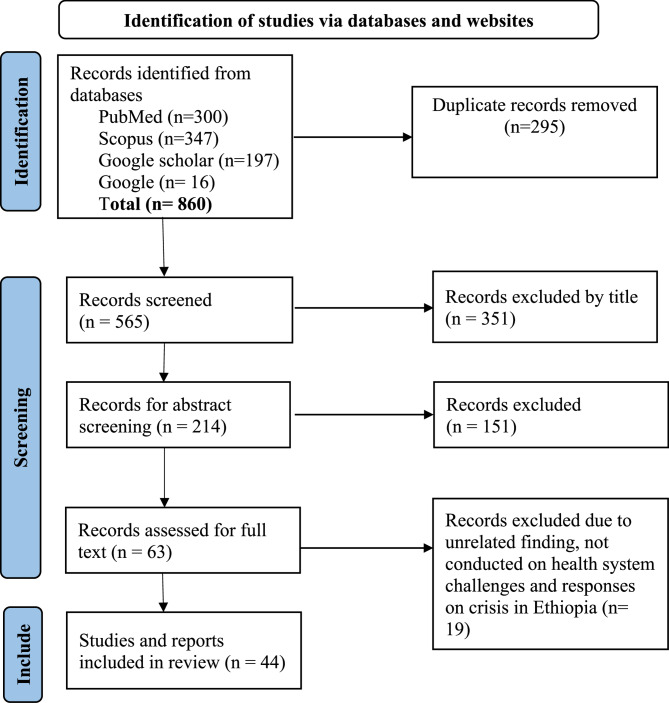
Method: We followed a systematic scoping review approach using the five-step methodology: defining the research question, identifying relevant literature, selecting studies, charting the data, and summarizing/analyzing results. The review was guided by PRISMA-ScR and used the Population, Concept, and Context (PCC) framework. We included all English-language studies published between January 2000 and December 2024 addressing challenges or responses of the Ethiopian health system during crises, regardless of study design. PubMed, SCOPUS, Google Scholar, and Google were searched using MeSH terms/keywords. After title, abstract, and full-text screening, 44 articles were included for final analysis. Data were synthesized using descriptive analytical methods and narrative synthesis to summarize and interpret findings.
Results: Findings revealed crises severely impacted health services due to shortages of medical supplies, workforce, and infrastructure. Demand surges, transport restrictions, border closures, and financial constraints exacerbated these gaps. Additional challenges included poor data availability, high staff turnover, lack of emergency communication plans, and insufficient funding.
Conclusion and recommendations: The COVID-19 pandemic and the northern Ethiopian conflict notably disrupted routine services, infrastructure, and health information systems. To build resilience, the study recommends: (1) developing scalable emergency plans for essential services, (2) strengthening primary healthcare and community-based systems, (3) maintaining medical stockpiles, and (4) providing crisis-specific training for health workers. These measures aim to enhance preparedness and sustainability in Ethiopia's health system amid future shocks.
Keywords: Crises response; Ethiopian; Health systems; Public health emergencies.
© 2025. The Author(s).
Conflict of interest statement
Declarations. Ethics approval and consent to participate: Not applicable. Consent for publication: Not Applicable. Competing interests: The authors declare no competing interests.
Figures
References
-
- Brecher M, Wilkenfeld J. A study of crisis. University of Michigan Press; 2022.
-
- Bookchin M. The modern crisis. AK Press; 2022.
Publication types
MeSH terms
Grants and funding
- RF-EGA-2023-H03/Research Investment for Global Health Technology (RIGHT) Foundation
- RF-EGA-2023-H03/Research Investment for Global Health Technology (RIGHT) Foundation
- RF-EGA-2023-H03/Research Investment for Global Health Technology (RIGHT) Foundation
- RF-EGA-2023-H03/Research Investment for Global Health Technology (RIGHT) Foundation
LinkOut - more resources
Full Text Sources
Medical
