


Effect of oxytocin on cardiovascular modulation in normal and post-traumatic stress disorder model rats
- PMID: 40617872
- PMCID: PMC12228725
- DOI: 10.1038/s41598-025-09217-2
Effect of oxytocin on cardiovascular modulation in normal and post-traumatic stress disorder model rats
Abstract
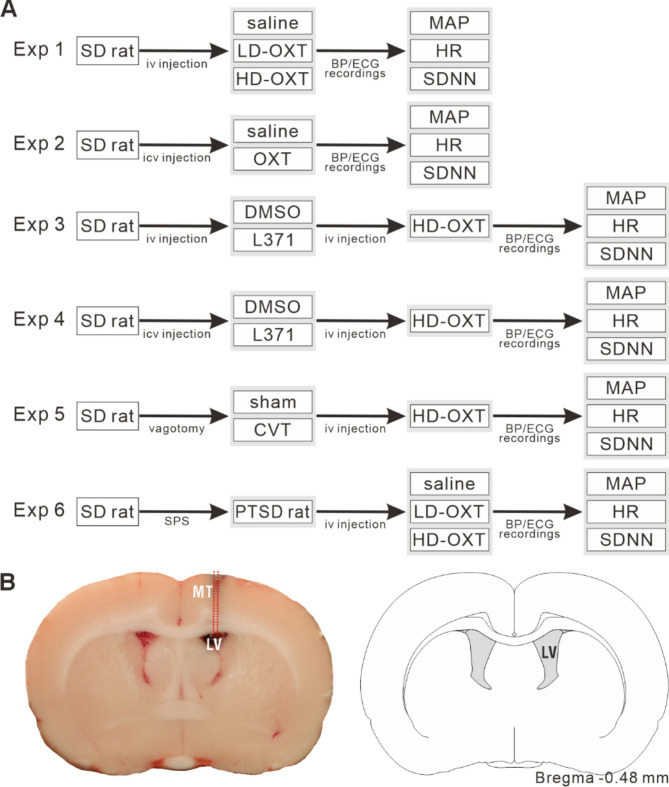
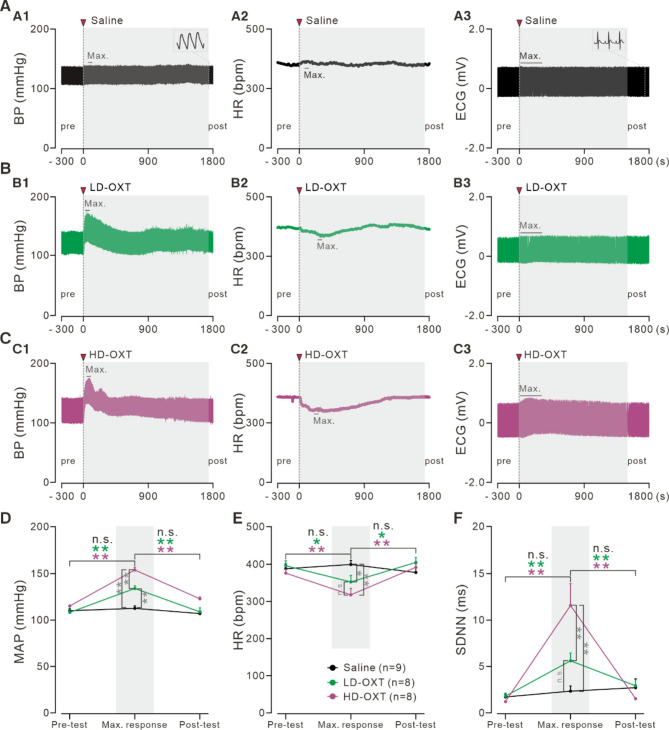
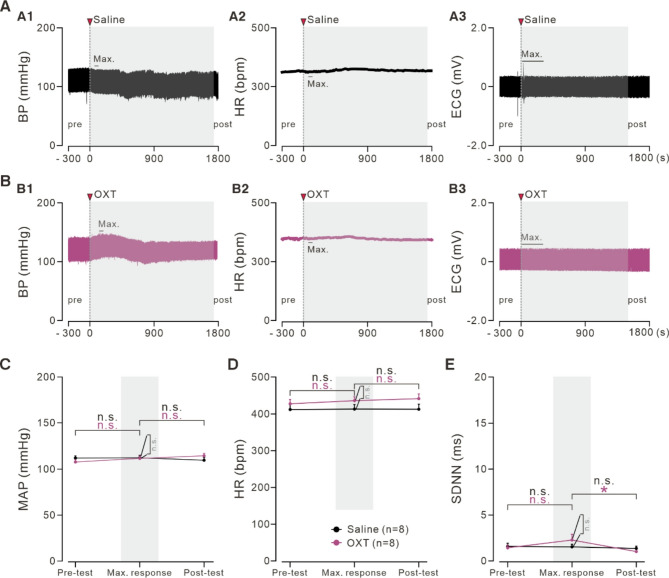
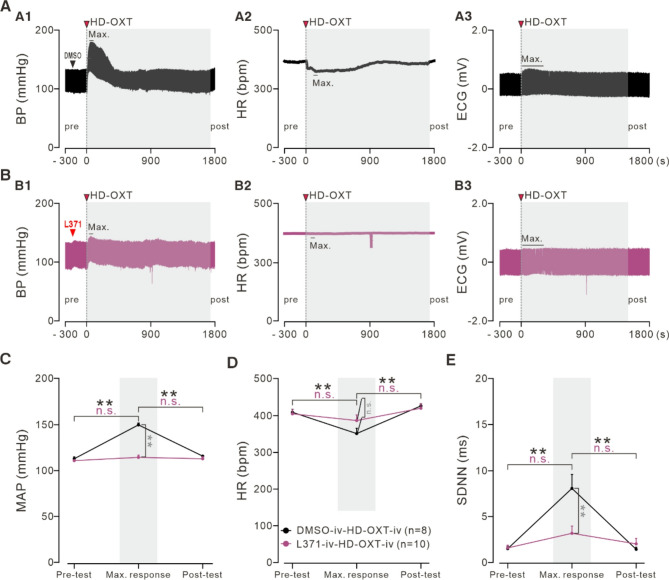
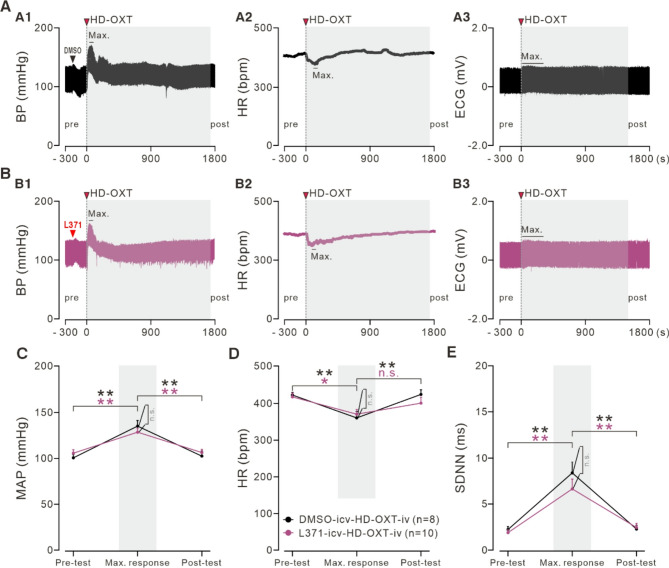
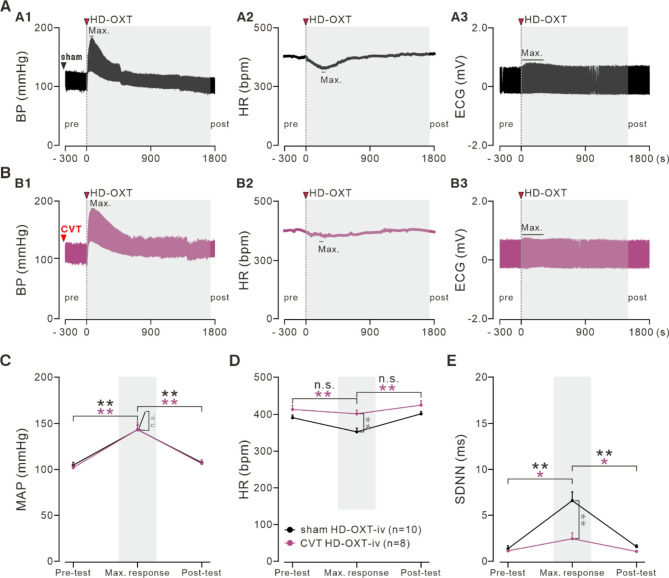
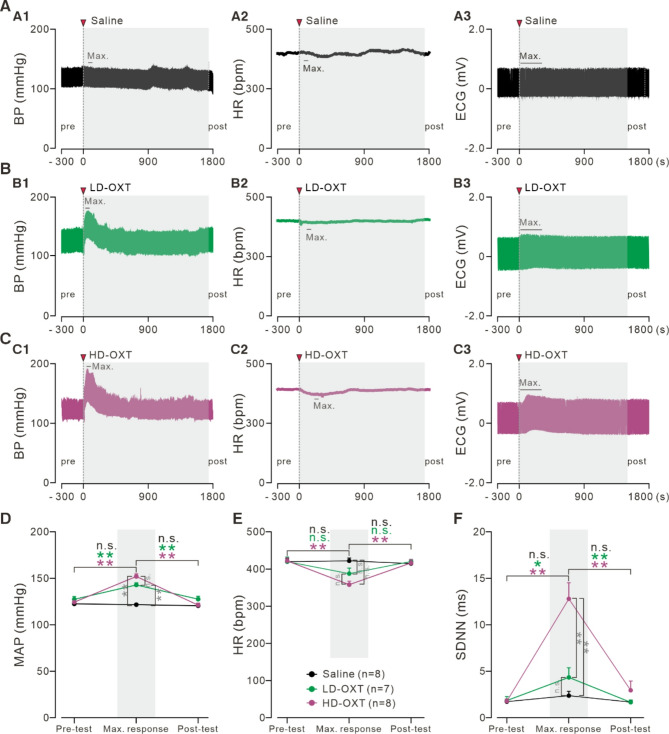
Oxytocin (OXT) is associated with cardioprotective effects and shows to alleviate symptoms of post-traumatic stress disorder (PTSD). This study investigates blood pressure and electrocardiographic (ECG) parameters in anesthetized normal rats utilizing intravenous (iv) and intracerebroventricular (icv) administration of oxytocinergic agents. We also assessed the effects of cervical vagotomy on the cardiovascular responses to iv OXT. Furthermore, we compared the cardiovascular responses to iv OXT in PTSD model rats with those in normal controls. The mean arterial pressure (MAP), mean heart rate (HR) and the standard deviation of normal-to-normal intervals (SDNN, an indicator of HR variability) were measured and analyzed. Results showed that iv, rather than icv, administration of OXT led to a concentration-dependent increase in MAP, a decrease in HR, and an increase in the SDNN. Cervical vagotomy did not significantly alter the MAP responses but reduced cardiac activities (both HR and SDNN) during OXT stimulation. PTSD model rats exhibited higher baseline MAP and HR, but showed a diminished cardiovascular response to OXT compared to normal rats. These findings suggest that OXT induces distinct cardiovascular effects in normal versus PTSD model rats, underscoring the need to consider the cardiovascular implications of OXT in clinical applications.
Keywords: Blood pressure; Heart rate; Oxytocin; Post-traumatic stress disorder; Standard deviation of normal-to-normal intervals.
© 2025. The Author(s).
Conflict of interest statement
Declarations. Competing interests: The authors declare no competing interests.
Figures
References
-
- Gimpl, G. & Fahrenholz, F. The Oxytocin receptor system: structure, function, and regulation. Physiol. Rev.81, 629–683 (2001). - PubMed
MeSH terms
Substances
Grants and funding
LinkOut - more resources
Full Text Sources
Medical
