


Risk of dementia in older patients with different anesthesia: a systematic review and meta-analysis of cohort studies
- PMID: 40618084
- PMCID: PMC12228410
- DOI: 10.1186/s12877-025-06096-0
Risk of dementia in older patients with different anesthesia: a systematic review and meta-analysis of cohort studies
Erratum in
-
Correction: Risk of dementia in older patients with different anesthesia: a systematic review and meta-analysis of cohort studies.BMC Geriatr. 2025 Oct 24;25(1):804. doi: 10.1186/s12877-025-06460-0. BMC Geriatr. 2025. PMID: 41136915 Free PMC article. No abstract available.
Abstract
Background: Anesthesia has been hypothesized to influence dementia risk due to its potential neurotoxic effects, especially in older patients. The administration of anesthetic agents may exacerbate underlying neurodegenerative processes. This study aimed to assess the risk of dementia, Alzheimer’s disease (AD), and Alzheimer’s disease and related dementia (ADRD) in older patients who underwent general or regional anesthesia.
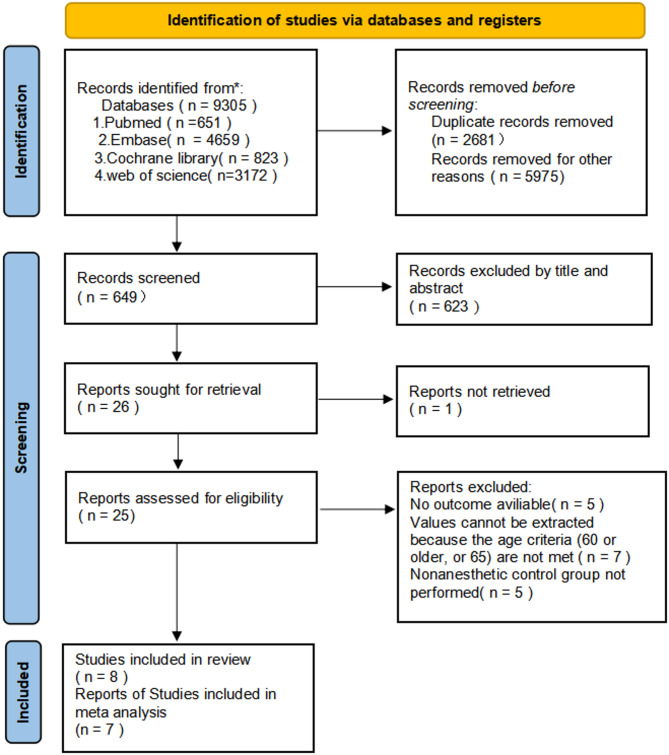
Methods: We conducted a systematic review and meta-analysis to explore the associations between different types of anesthesia and the risk of dementia, AD, and ADRD in older patients. We searched Cochrane Library, PubMed, Web of Science, and EMBASE databases from inception to 13, February 2025. Two authors independently selected eligible studies, used the Newcastle-Ottawa Scale to assess the quality of included studies, and extracted data. Any disagreements were resolved through discussions involving a third author.
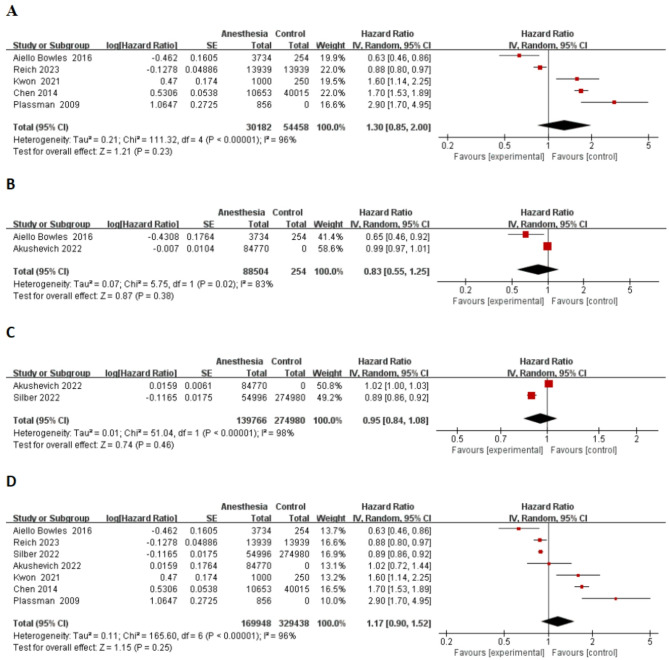
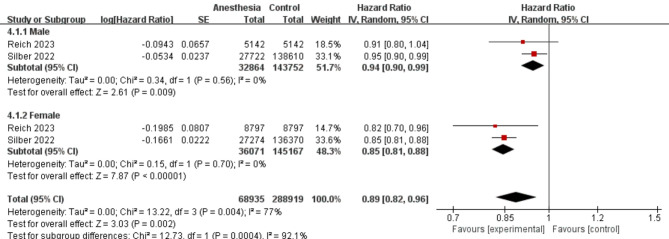
Results: Eight population-based cohort studies were included and considered as high quality. Our findings indicated that the type of anesthesia (general or regional) did not increase the risk of dementia (hazard ratio [HR] 1.30, 95% confidence interval [CI] 0.85–2.00), AD (HR 0.83, 95% CI 0.55–1.25),ADRD (HR 0.95, 95% CI 0.84–1.08), or composite outcome dementia (HR 1.17, 95% CI 0.90–1.52). We also found no increase in the risk of dementia (HR 1.33, 95% CI 0.30–5.94), AD (HR 0.83, 95% CI 0.55–1.25, or composite outcome dementia (HR 1.06, 95% CI 0.72–1.56) among older patients underwent general anesthesia. In the stratified analysis, we found differences between male and female in terms of increased risk of dementia, AD or ADRD (HR 0.89, 95% CI 0.82–0.96).We also found no increase in dementia, AD or ADRD among older patients exposed to different anesthesia protocols between Asia and North America.
Conclusions: The available limited, low-quality evidence does not indicate an increased risk of dementia in older patients exposed to general or regional anesthesia. However, it is necessary to acknowledge that anesthesia may influence cognitive function.
Supplementary Information: The online version contains supplementary material available at 10.1186/s12877-025-06096-0.
Keywords: ADRD; Aged; Alzheimer’s disease; Anesthesia; Cognitive impairment; Dementia; Meta-analysis.
Conflict of interest statement
Declarations. Ethics approval and consent to participate: Not applicable. Consent for publication: Not applicable. Competing interests: The authors declare no competing interests.
Figures


References
-
- Oh ES, Rabins PV. Dementia. Annal Internal Med. 2019;171(5):ITC33. 10.7326/aitc201909030 - PubMed
-
- O WH. Global status report on the public health response to dementia. World Health O; 2021.
-
- 2021 Alzheimer’s disease facts and figures. Alzheimer’s & dementia. 2021;17(3):327–406. 10.1002/alz.12328 - PubMed
-
- Brody H. Alzheimer’s disease. Nature. 2011;475(7355):S1. 10.1038/475s1a - PubMed
Publication types
LinkOut - more resources
Full Text Sources
