


The properties of ginsenosides in ginseng garden soil: accumulation, persistence and behaviour
- PMID: 40621106
- PMCID: PMC12227356
- DOI: 10.1007/s11104-024-07025-7
The properties of ginsenosides in ginseng garden soil: accumulation, persistence and behaviour
Abstract
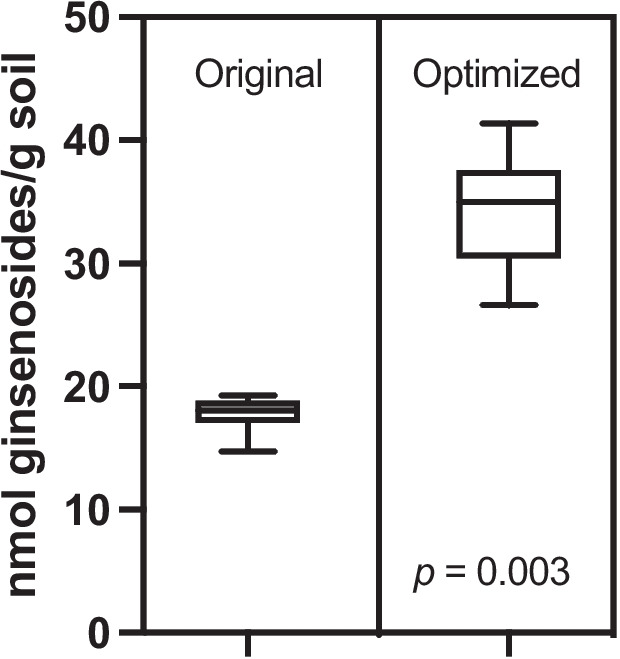
Background & aims: Ginsenosides are triterpene saponins produced by ginseng (Panax spp.). Ginsenosides are secreted into the soil during ginseng growth and are mildly anti-fungal and autotoxic. While an ecological role for ginsenosides in maintenance of the sparse density growth habit of wild ginseng populations can be inferred, the consequence of ginsenoside accumulation in densely populated commercial ginseng gardens remains unknown. The potential for residual ginsenosides in former ginseng gardens to contribute to ginseng replant disease (GRD), a condition in which a new ginseng crop cannot be successfully cultivated in a garden used for ginseng cultivation in the past, has been suggested. However, the extent to which ginsenosides accumulate in ginseng garden soil and persist beyond harvest is poorly documented.
Methods: We developed an extraction protocol to extract ginsenosides from ginseng garden soil, and established the behaviour of ginsenosides in soil in controlled experiments using ginseng garden soil packed into columns.
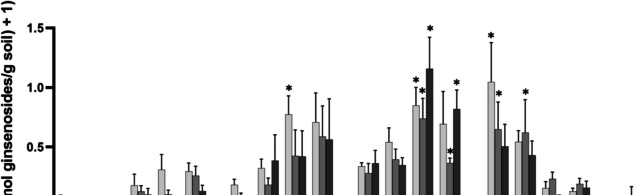
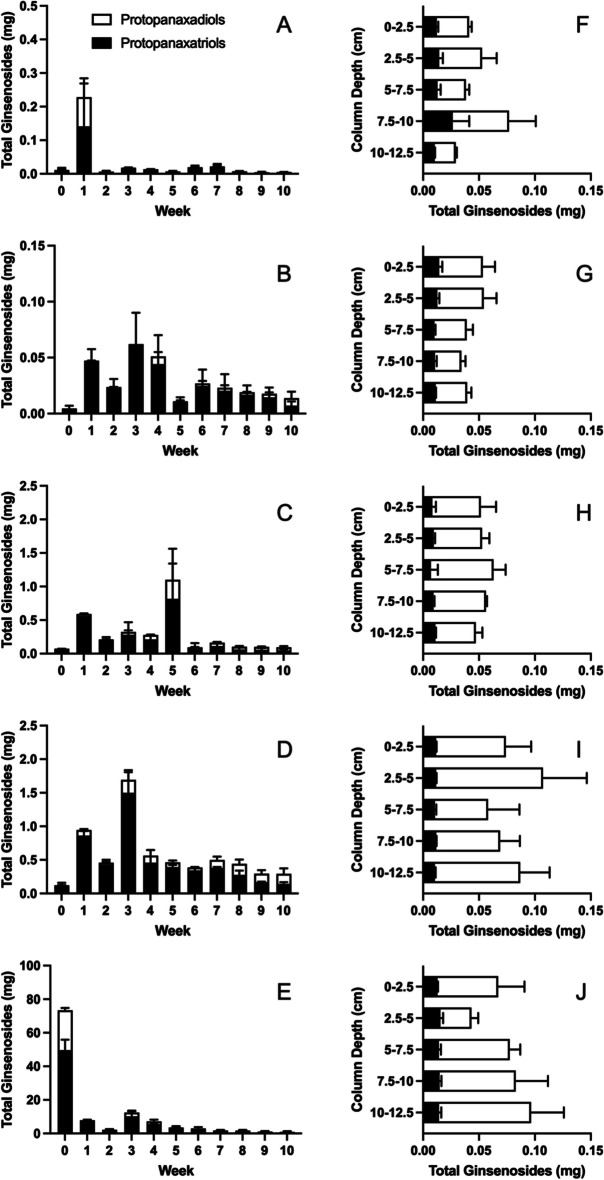
Results: Ginsenosides accumulate throughout the first three and a half years of ginseng cultivation and decline during the fourth year. Residual ginsenosides present in garden soil at the time of harvest are largely gone by the following spring. Soil column data revealed that sandy-loam soil has capacity to bind and retain ginsenosides, and that protopanaxatriol-type ginsenosides are more mobile than the protopanaxadiol-type.
Conclusion: Ginsenosides accumulate in ginseng garden soil during cultivation, but do not persist. Our data suggest that the impact of ginsenosides on the establishment of GRD occurs during crop growth rather than during the time between plantings.
Supplementary information: The online version contains supplementary material available at 10.1007/s11104-024-07025-7.
Keywords: GRD; Ginseng; Ginseng replant disease; Ginsenosides; Panax quinquefolius; Soil extraction.
© The Author(s) 2024.
Conflict of interest statement
Competing InterestsThe authors have no relevant financial or non-financial interests to disclose.
Figures
References
-
- Capriel P, Haisch A, Khan SU (1986) Supercritical methanol: an efficacious technique for the extraction of bound pesticide residues from soil and plant samples. J Agric Food Chem 34(1):70–73. 10.1021/jf00067a020
-
- Christensen LP (2009) Ginsenosides chemistry, biosynthesis, analysis, and potential health effects. In: Taylor SL (ed) Advances in Food and Nutrition Research Volume 55 (1–99) United States. 10.1016/S1043-4526(08)00401-4 - PubMed
-
- Dubreuil A, Dubreuil XY (2015) Divine farmer’s classic of materia medica. Translated from original text by Gu, G.G. 1844. Foreign Languages Press, Beijing
-
- Environment & Climate Change Canada Fact Sheet (n.d.) (https://www.canada.ca/en/environment-climate-change/services/species-ris...) Accessed July 8, 2024
LinkOut - more resources
Full Text Sources
Miscellaneous