. 2025 Oct;53(10):2489-2502.
doi: 10.1007/s10439-025-03783-2. Epub 2025 Jul 8.

Neuromusculoskeletal Modeling and Force Prediction: Verification Through Experimental Neuromuscular Dynamics

Affiliations

Neuromusculoskeletal Modeling and Force Prediction: Verification Through Experimental Neuromuscular Dynamics

Colton D Babcock et al. Ann Biomed Eng. 2025 Oct.

Abstract

Purpose: Neuromusculoskeletal (NMS) function is influenced by the interactions between neural and musculoskeletal systems. Age-related changes in motor unit morphology contribute to changes in motor control and force production with advancing age; however, a better understanding of the underlying mechanisms between force production and motor unit reorganization and their interrelationships is needed to develop targeted therapies and interventions to age-related changes. Direct experimental measurement of these neuromuscular changes is challenging due to ethical and logistical constraints and the complexity of isolating individual motor unit contributions in vivo, particularly across time. Computational modeling provides a complementary approach which can help bridge this gap. The objective of this study is to develop a computational framework for predicting dorsiflexion force profiles through the translation of experimental motor unit recordings into simulated musculoskeletal responses.

Methods: This study presents the development of a combined NMS model that integrates experimental motor unit recordings into a musculoskeletal simulation framework. Specifically, the NMS model predicts dorsiflexion force profiles by translating experimental data from high-density electromyography recordings into simulated subject-specific motor unit discharge characteristics and simulated muscle responses. The NMS model incorporates a detailed motor neuron pool simulation and a finite element musculoskeletal model, allowing for physiologically accurate representation of motor unit discharge characteristics, muscle force generation, and force variability.

Results: The accuracy of the simulated force profiles in predicting the experimental force were 10.25 N and 0.95, respectively, for average root mean square error and R2 values. Results demonstrate strong agreement between simulated and experimental force profiles and motor unit recordings.

Conclusion: By bridging the gap between computational and experimental approaches, this study aims to enhance understanding of NMS dynamics and support the development of personalized treatment strategies for neurodegenerative disease patients.

Keywords: Finite element; High-density electromyography; Musculoskeletal modeling; Neural modeling.


Conflict of interest statement

Declarations. Conflict of interest: The authors have no conflict of interest to disclose.

Figures
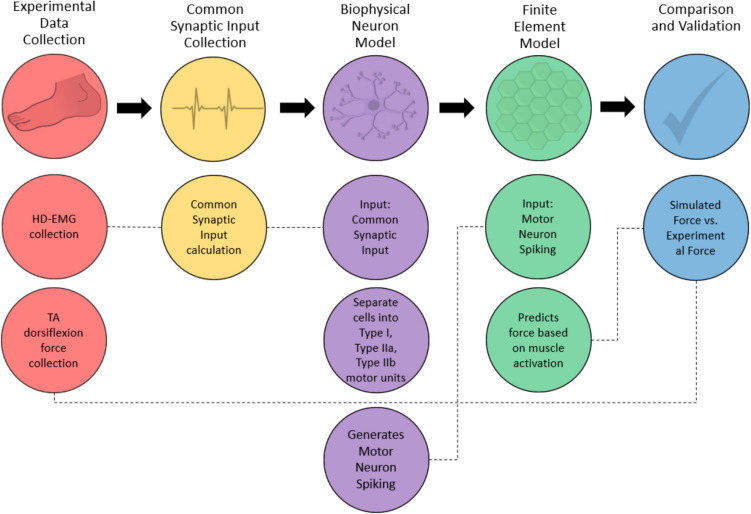
Fig. 1
Fig. 1
Workflow for neuromuscular modeling: From experimental data collection to validation, incorporating common synaptic input, biophysical neuron modeling, and finite element modeling to compare simulated and experimental force outputs
Fig. 2
Fig. 2
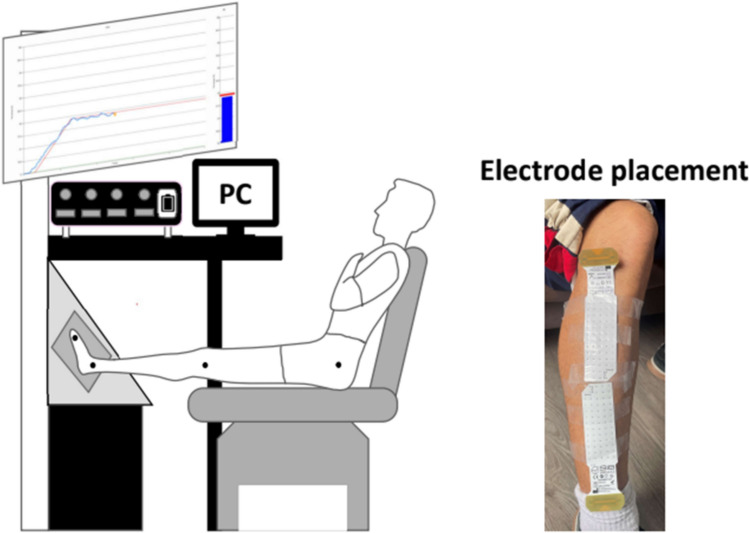
Experimental setup and electrode placement. Participants were seated in a reclined position with the foot secured to a dynamometer for isometric dorsiflexion force measurements. High-density surface EMG (HD-EMG) signals were recorded from the tibialis anterior (TA) muscle using a 64-channel electrode grid, shown on the right, positioned over the muscle belly
Fig. 3
Fig. 3
Relationship between motor neuron number and cell diameter: smaller motor neurons correspond to Type I fibers, while larger motor neurons innervate Type IIa and IIb fibers, reflecting the size principle of motor unit recruitment
Fig. 4
Fig. 4
FE lower limb model of TA and surrounding bone geometry. Lateral (A), anterior (B), and medial (C) view of the right shank
Fig. 5
Fig. 5
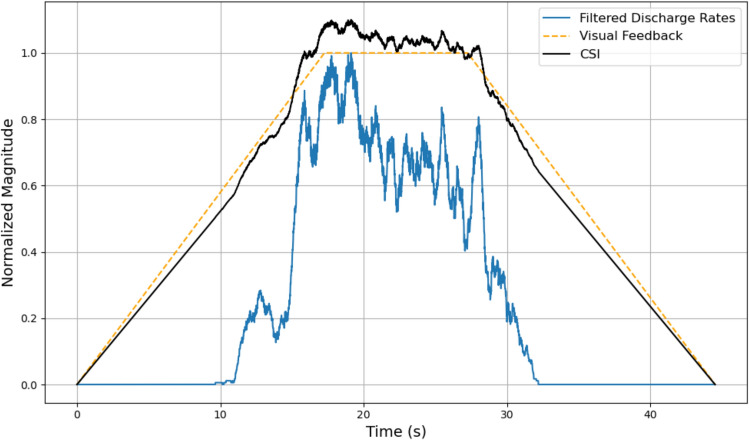
Representation of the two signals in which a weighted average is performed to generate the CSI for the neuromuscular model. The blue curve is a filtered version of the discharge rates of the participant’s specific HD-sEMG recording. The orange curve represents the desired force profile the subject is attempting to recreate. Finally, the black curve is the product of the weighted average of the orange (90%) and blue curve (20%) which is the CSI that is input into the motor neuron pool
Fig. 6
Fig. 6
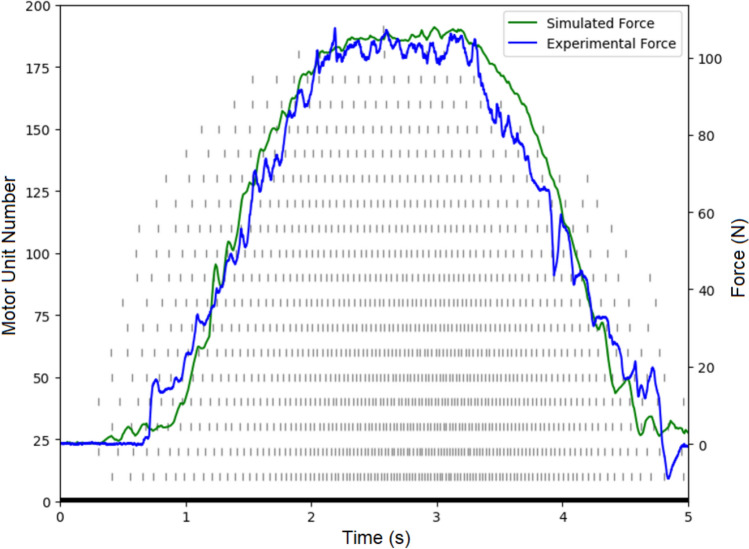
Force profile of simulated dorsiflexion (green) and experimental dorsiflexion (blue) with simulated raster plot (gray) with subject-specific force metrics
Fig. 7
Fig. 7
RMS error between simulated and experimental force profiles, illustrating the force differences between experiment and simulated predictions
Fig. 8
Fig. 8
Boxplots of spike train metrics for each subject showing CoV of ISI (A) and Z-score boxplot of STDs of CST (B). The boxes show the middle 50% of the data with median line, with the whiskers indicating 1.5 times the interquartile range from first quartile and the third quartile (outliers are data points outside this range and indicated with red dots)
Fig. 9
Fig. 9
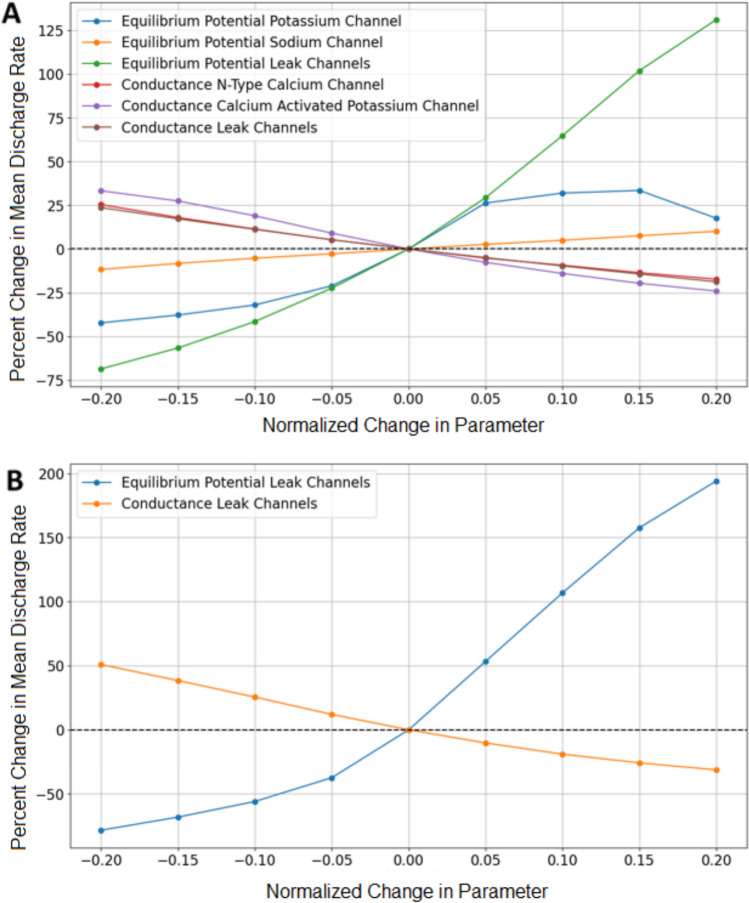
Sensitivity study results. Change in discharge rate vs normalized change in parameter associated with soma (A). Change in discharge rate vs percent change in parameter associated with dendrite (B)
Fig. 10
Fig. 10
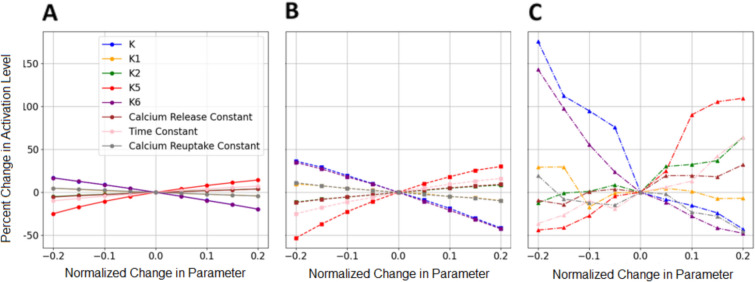
Change in activation level vs normalized change in a parameter associated with the NMJ activating type I (A), type IIa (B), and type IIb (C) muscle fibers

References

    1. Hunter, S. K. Performance fatigability: mechanisms and task specificity. Cold Spring Harb Perspect Med. 8(7):a029728, 2018. - PMC - PubMed
    1. Katyal, N., and R. Govindarajan. Shortcomings in the current amyotrophic lateral sclerosis trials and potential solutions for improvement. Front Neurol. 8:521, 2017. - PMC - PubMed
    1. Wong, C., M. Stavrou, E. Elliott, J. M. Gregory, N. Leigh, A. A. Pinto, et al. Clinical trials in amyotrophic lateral sclerosis: a systematic review and perspective. Brain Commun. 3:fcab242, 2021. - PMC - PubMed
    1. Thorpe K, Allan L, Thomas J. Neurodegenerative disease burden on US. 2021.
    1. Chou, S. C., A. Aggarwal, V. L. Dawson, T. M. Dawson, and T. I. Kam. Recent advances in preventing neurodegenerative diseases. Fac Rev. 1:10, 2021. - PMC - PubMed

LinkOut - more resources