


Explainable deep learning approaches for high precision early melanoma detection using dermoscopic images
- PMID: 40629062
- PMCID: PMC12238264
- DOI: 10.1038/s41598-025-09938-4
Explainable deep learning approaches for high precision early melanoma detection using dermoscopic images
Abstract
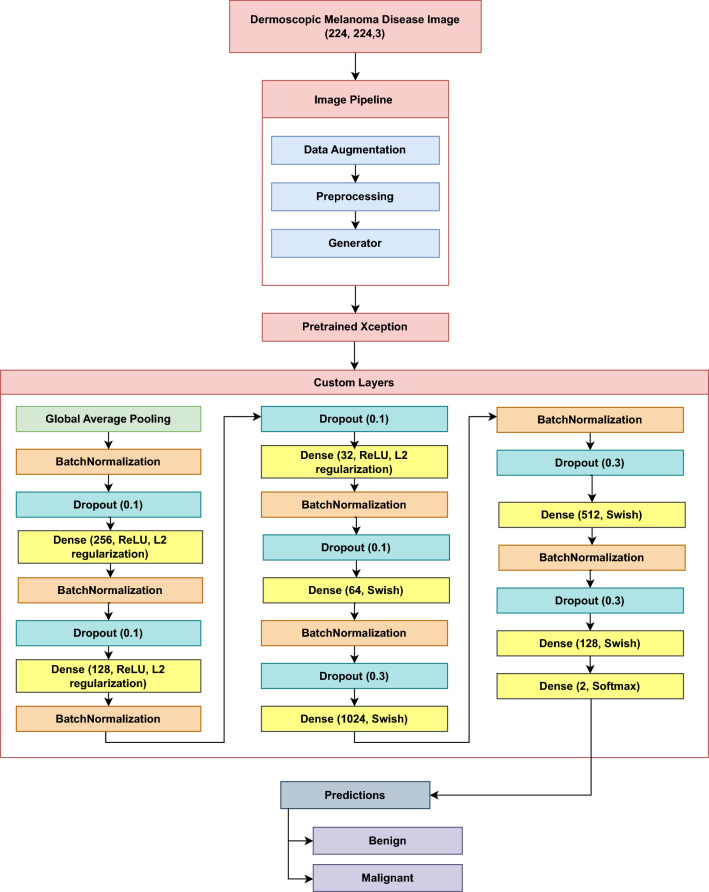
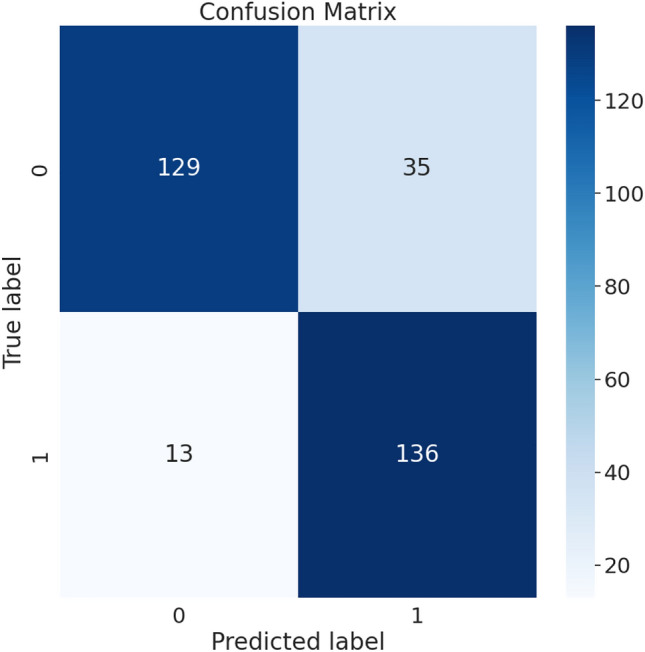
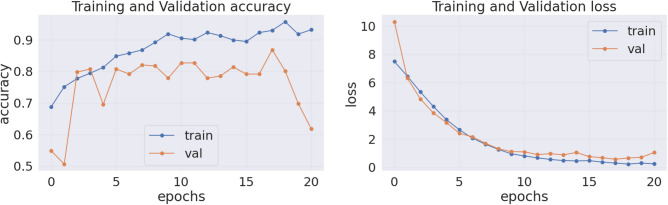
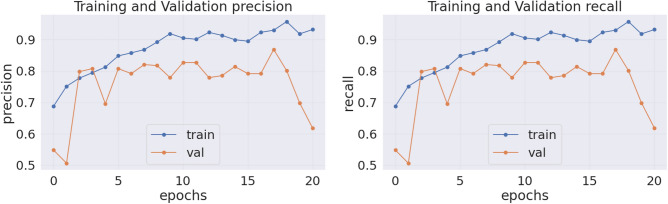
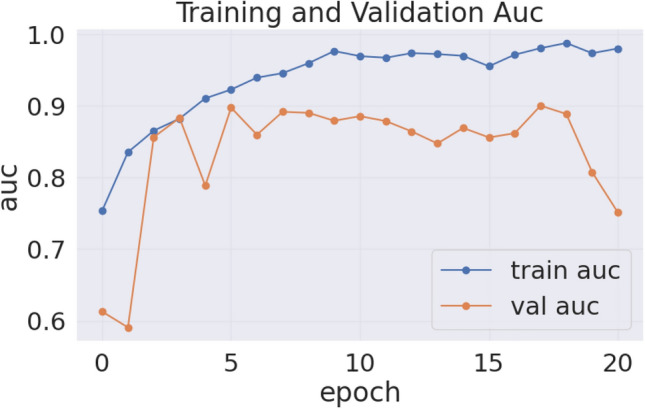
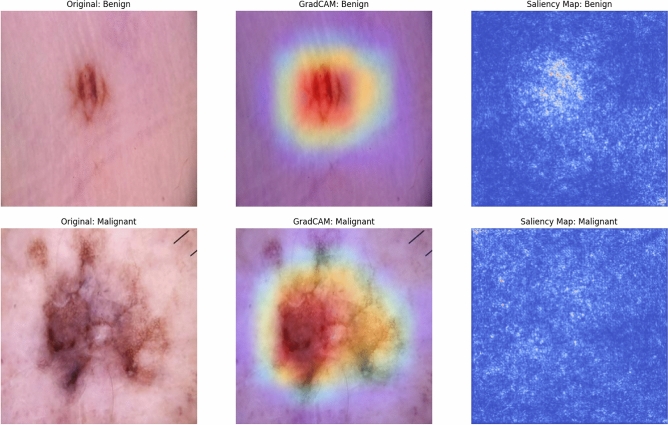
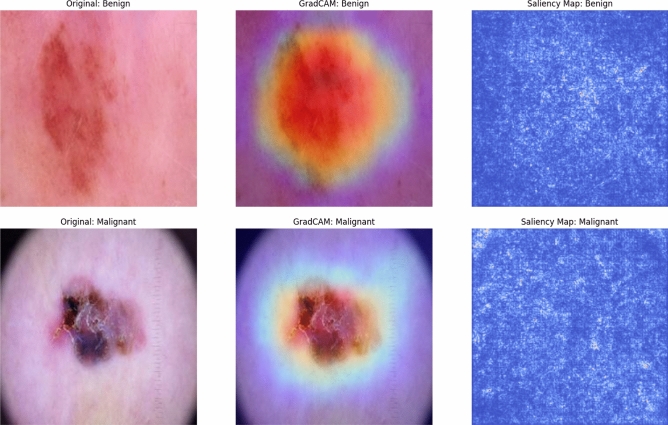
Detecting skin melanoma in the early stage using dermoscopic images presents a complex challenge due to the inherent variability in images. Utilizing dermatology datasets, the study aimed to develop Automated Diagnostic Systems for early skin cancer detection. Existing methods often struggle with diverse skin types, cancer stages, and imaging conditions, highlighting a critical gap in reliability and explainability. The novel approach proposed through this research addresses this gap by utilizing a proposed model with advanced layers, including Global Average Pooling, Batch Normalization, Dropout, and dense layers with ReLU and Swish activations to improve model performance. The proposed model achieved accuracies of 95.23% and 96.48% for the two different datasets, demonstrating its robustness, reliability, and strong performance across other performance metrics. Explainable AI techniques such as Gradient-weighted Class Activation Mapping and Saliency Maps offered insights into the model's decision- making process. These advancements enhance skin cancer diagnostics, provide medical experts with resources for early detection, improve clinical outcomes, and increase acceptance of Deep Learning-based diagnostics in healthcare.
Keywords: Deep learning; Dermoscopic images; Early-stage melanoma detection; Explainable AI; Swish activation.
© 2025. The Author(s).
Conflict of interest statement
Declarations. Competing interests: The authors declare no competing interests. Ethical Statement: This study was conducted in full compliance with all applicable ethical standards. Since the research did not involve any direct human or animal subjects, ethical approval was not required. The dermoscopic image datasets used in this study were obtained from publicly available sources.
Figures
References
-
- Inagaki, J., Rodriguez, V. & Bodey, G. P. Causes of death in cancer patients. Cancer33, 568–573 (1974). - PubMed
-
- World Health Organization. Radiation: Ultraviolet (uv) radiation and skin cancer | how common is skin cancer (2023). Accessed: 2023-03-02.
-
- Subramanian, R. R. et al. Skin cancer classification using convolutional neural networks. In 2021 11th International Conference on Cloud Computing, Data Science & Engineering (Confluence), 13–19 (IEEE, 2021).
-
- Piccialli, F., Di Somma, V., Giampaolo, F., Cuomo, S. & Fortino, G. A survey on deep learning in medicine: Why, how and when?. Information Fusion66, 111–137 (2021).
-
- Gandhi, S. A. & Kampp, J. Skin cancer epidemiology, detection, and management. Medical Clinics99, 1323–1335 (2015). - PubMed
MeSH terms
Grants and funding
LinkOut - more resources
Full Text Sources
Medical
Miscellaneous
