


Trends and projections of gallbladder and biliary tract cancer in China: a comprehensive analysis from 1990 to 2030 based on the Global Burden of Disease Study 2021
- PMID: 40629282
- PMCID: PMC12235985
- DOI: 10.1186/s12889-025-23601-7
Trends and projections of gallbladder and biliary tract cancer in China: a comprehensive analysis from 1990 to 2030 based on the Global Burden of Disease Study 2021
Abstract
Background: Gallbladder and biliary tract cancer (GBTC) poses a growing public health challenge in China, with considerable disparities across age and sex. Understanding long-term epidemiological patterns is essential for informing cancer control strategies and future projections.
Methods: Data from the Global Burden of Disease Study 2021 were used to assess GBTC burden in China from 1990 to 2021. Indicators analyzed included incidence, prevalence, mortality, disability-adjusted life years (DALYs), years lived with disability (YLDs), and years of life lost (YLLs). Joinpoint regression, age-period-cohort (APC) analysis, decomposition analysis, and Bayesian APC (BAPC) models were employed to explore temporal trends and project future burden through 2030.
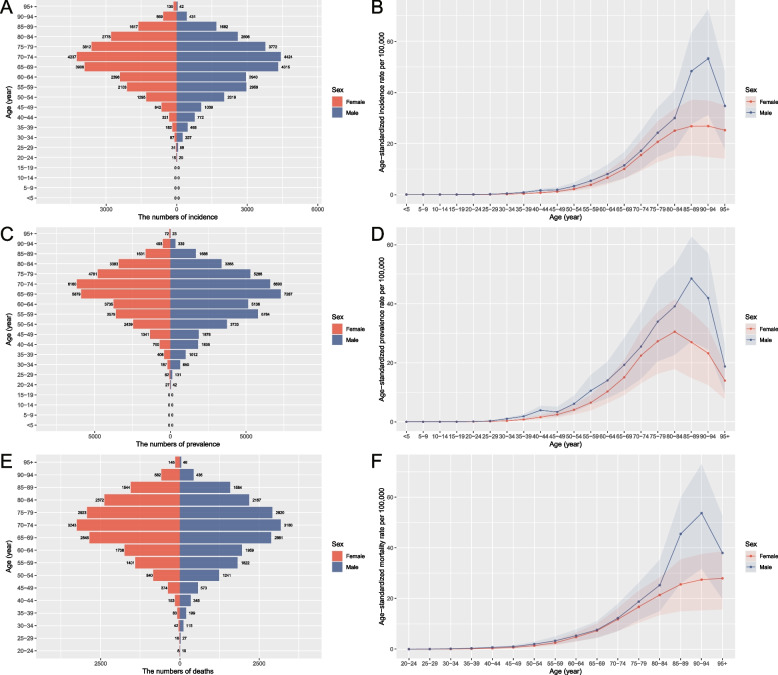
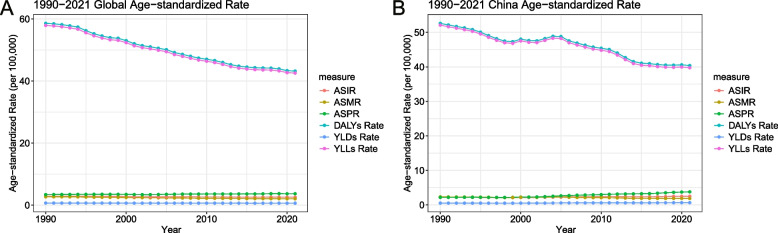
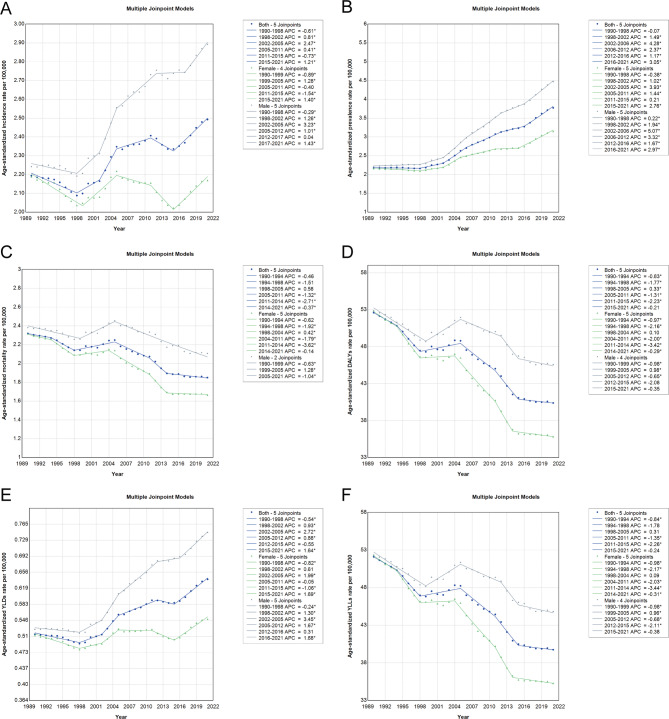
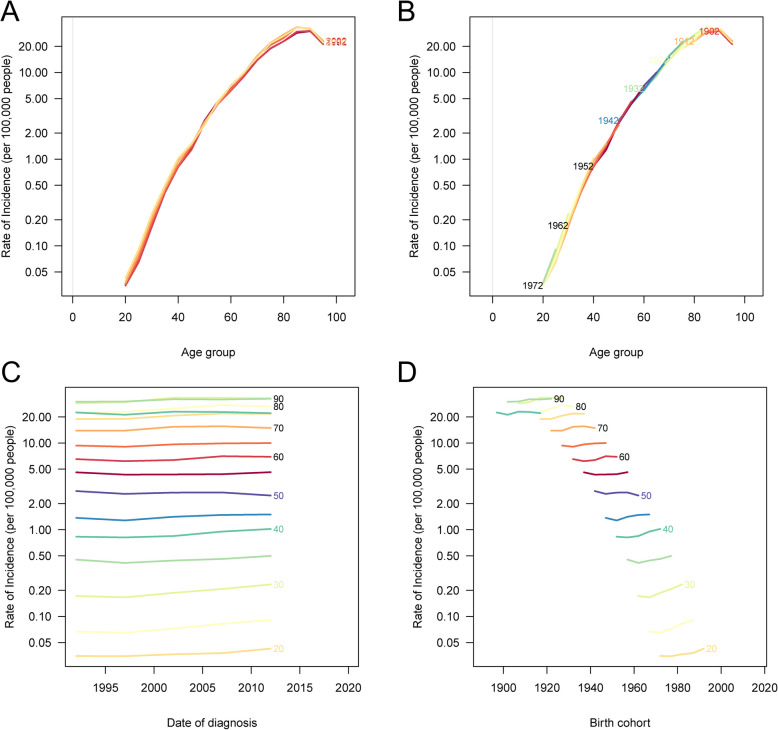
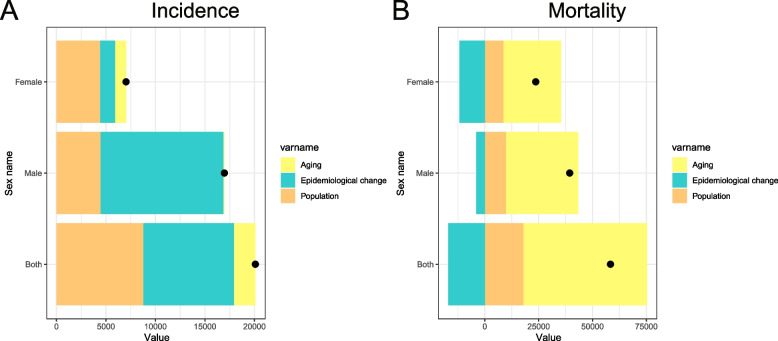
Results: In 2021, China reported 51,720 new GBTC cases, with an age-standardized incidence rate (ASIR) of 2.49 per 100,000. Males exhibited higher burden than females across all indicators. Incidence, prevalence, mortality, and DALYs were highest in older age groups. From 1990 to 2021, China experienced increasing trends in incidence and prevalence, while age-standardized mortality rates (ASMR) declined. Compared to global trends, China's ASIR rose while global rates declined. DALYs decreased in both contexts but more steeply globally. Joinpoint regression revealed sex-specific shifts, with males showing consistent increases in incidence and females experiencing periods of both decline and rise. APC analysis highlighted increasing incidence among post-1950 birth cohorts and decreasing mortality in recent cohorts. Decomposition analysis indicated that rising incidence was driven by epidemiological changes and population growth, while mortality reduction was linked to medical improvements. BAPC models projected a continued rise in incidence, particularly among males.
Conclusions: The burden of GBTC in China is rising, especially among men and older adults. While mortality has improved, incidence continues to grow, highlighting the need for targeted prevention, early detection, and gender-specific public health policies.
Keywords: Biliary tract cancer; China; Epidemiology; Gallbladder cancer; Global Burden of Disease; Joinpoint regression.
© 2025. The Author(s).
Conflict of interest statement
Declarations. Ethics approval and consent to participate: Ethical approval and consent to participate were not required as the study used publicly available, de-identified secondary data. The study was conducted in compliance with the Guidelines for Accurate and Transparent Health Estimates Reporting (GATHER) [51]. Consent for publication: Not applicable. Competing interests: The authors declare no competing interests.
Figures


References
MeSH terms
LinkOut - more resources
Full Text Sources
Medical
