


Are more muscle-strengthening exercise participations associated with weight status in children and adolescents? Results from 67,281 participants
- PMID: 40629310
- PMCID: PMC12235924
- DOI: 10.1186/s12889-025-23556-9
Are more muscle-strengthening exercise participations associated with weight status in children and adolescents? Results from 67,281 participants
Abstract
Purpose: The aim of this study was to explore association between muscle-strengthening exercise (MSE) days and weight status in Chinese children and adolescents.
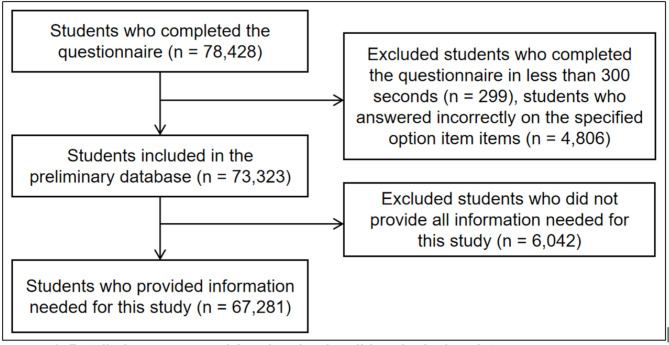
Methods: Cross-sectional data of 67,281 Chinese adolescents aged 10-17 years (mean age = 13.0 years, 51.9% males) was collected using online questionnaires. Validated questionnaires were used to collected data on variables (days of MES and weight status, sociodemographic characteristics) of interest in this study. The Chinese Children and Adolescents Weight Status Workforce Standard was used to categorize weight status into three groups: non-overweight/obesity, overweight, and obesity. A series of multilevel generalized linear models were used to analyse associations between days of MSE and weight status. Results were presented as odds ratio (OR) with 95% confidence interval (CI).
Results: In total, 34,909 boys (51.9%) and 32,372 girls (48.1%), respectively, were included in the current study. In the overall sample, those who engaged in MSE for 2 or more days had lower odds of overweight and obesity (p for trend < 0.001; OR for 2 days: 0.88, 95%CI: 0.84-0.93; OR for 3 days: 0.91, 95% CI: 0.86-0.96; OR for 4 days: 0.79, 95%CI: 0.74-0.85; OR for 5 days: 0.82, 95%CI: 0.76-0.88; OR 6 days: 0.69, 95%CI: 0.60-0.79; OR for 7 days: 0.71, 95%CI: 0.66-0.77). The associations between MSE and weight status were more pronounced in boys and younger participants. However, there was no clear pattern between MSE days and weight status among high school students. Results on subgroup analyses showed inverse associations between days of engaging in MSE per week and overweight and obesity in those not meeting the physical activity guidelines, except for girls (p = 0.179) and high school students (p = 0.449).
Conclusions: More days of MSE participation may be a protective factor that can prevent or control overweight and obesity in children and adolescents. However, given the study limitations in nature, future studies are recommended to confirm the association between MSE and weight status.
Keywords: Muscle-strengthening activity; Physical activity; School-aged student; Weight status.
© 2025. The Author(s).
Conflict of interest statement
Declarations. Ethics approval and consent to participate: The permission to conduct this study was obtained from the teachers and principals of those participating schools. All the children and adolescents participating in the study, and their parents or guardians, were informed and participants voluntarily took part in this survey. Verbal informed consent was obtained from all parents/guardians or teachers, and positive assent was obtained from all the children before data collection which was approved by the Institution of Review Board at Shenzhen University. This study survey was also approved by the Institution of Review Board at Shenzhen University (No. 2020005). Procedures performed in studies were by the national research committee and with the 1964 Helsinki Declaration and its later amendments or comparable ethical standards. Data were collected and analyzed anonymously. Consent for publication: Not applicable. Competing interests: The authors declare no competing interests.
Figures
Similar articles
-
Physical activity, diet and other behavioural interventions for improving cognition and school achievement in children and adolescents with obesity or overweight.Cochrane Database Syst Rev. 2018 Mar 2;3(3):CD009728. doi: 10.1002/14651858.CD009728.pub4. Cochrane Database Syst Rev. 2018. PMID: 29499084 Free PMC article.
-
Physical activity, diet and other behavioural interventions for improving cognition and school achievement in children and adolescents with obesity or overweight.Cochrane Database Syst Rev. 2018 Jan 29;1(1):CD009728. doi: 10.1002/14651858.CD009728.pub3. Cochrane Database Syst Rev. 2018. Update in: Cochrane Database Syst Rev. 2018 Mar 02;3:CD009728. doi: 10.1002/14651858.CD009728.pub4. PMID: 29376563 Free PMC article. Updated.
-
Physical exercise training interventions for children and young adults during and after treatment for childhood cancer.Cochrane Database Syst Rev. 2016 Mar 31;3(3):CD008796. doi: 10.1002/14651858.CD008796.pub3. Cochrane Database Syst Rev. 2016. PMID: 27030386 Free PMC article.
-
Diet, physical activity and behavioural interventions for the treatment of overweight or obese children from the age of 6 to 11 years.Cochrane Database Syst Rev. 2017 Jun 22;6(6):CD012651. doi: 10.1002/14651858.CD012651. Cochrane Database Syst Rev. 2017. PMID: 28639319 Free PMC article.
-
Education support services for improving school engagement and academic performance of children and adolescents with a chronic health condition.Cochrane Database Syst Rev. 2023 Feb 8;2(2):CD011538. doi: 10.1002/14651858.CD011538.pub2. Cochrane Database Syst Rev. 2023. PMID: 36752365 Free PMC article.
References
-
- Fulton S, Décarie-Spain L, Fioramonti X, Guiard B, Nakajima S. The menace of obesity to depression and anxiety prevalence. Trends Endocrinol Metabolism. 2022;33(1):18–35. - PubMed
MeSH terms
LinkOut - more resources
Full Text Sources
Medical
Miscellaneous
