


Evaluation and comparison of microbial colonization on nickel titanium (NiTi) closed coil springs and active tie-backs during orthodontic space closure: An in-vivo study
- PMID: 40630768
- PMCID: PMC12237003
- DOI: 10.4103/jos.jos_102_24
Evaluation and comparison of microbial colonization on nickel titanium (NiTi) closed coil springs and active tie-backs during orthodontic space closure: An in-vivo study
Abstract
Objective: Literature suggests that the mode of ligation and use of elastomeric chains for achieving orthodontic space closure may result in a significant increase in microbial colonisation. The objective of the present study was to evaluate and compare the rates of microbial colonization on nickel-titanium (NiTi) closed-coil springs and active tie-backs used for orthodontic space closure in the maxillary premolar extraction site.
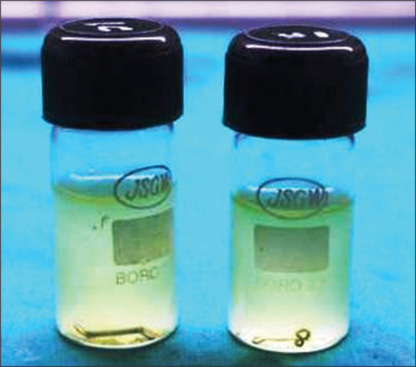
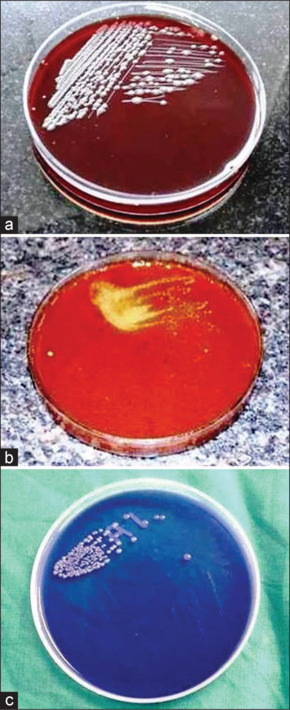
Materials and methods: Thirty-two participants, including 14 males and 18 females, were enrolled in the present split-mouth study. In Group I, NiTi closed-coil springs (Nitinol, 3M Unitek) were used, while in Group II, active tie-backs [stainless steel ligature wire (0.009') threaded through an elastic module (3M Unitek) were used. After a period of 3 weeks, the NiTi closed-coil springs and active tie-backs were carefully removed and transferred to brain heart infusion broth (BHI Broth). The BHI broth samples were then incubated and inoculated into different media, followed by sub-culturing with various specific media. The colony-forming unit per millilitre were measured using a colony counter (HiMedia Laboratories Private Limited, Mumbai, Maharashtra, India). Finally, the various isolated colonies were submitted for phenotypic characterization using BIOMÉRIEUX VITEK® MS, an automated mass spectrometry microbial identification system based on proteomics-based detection.
Results: The observations made in the study suggested an increased number of microbial colonies in the NiTi closed-coil spring group (46437.50 ± 11848.34 CFU/mL) compared to the active tie-back group (31031.25 ± 8204.97 CFU/mL), with the difference being statistically highly significant (P < 0.000).
Conclusion: Based on the findings of the present study, it can be concluded that using active tie-backs resulted in significantly reduced pathogenic adherence compared to NiTi closed-coil springs. However, further research is necessary to validate these findings before active tie-backs can be recommended as a suitable means for orthodontic space closure, especially in patients with compromised oral hygiene due to any given reason.
Keywords: Active tie-backs; NiTi; closed coil springs; in-vivo study; microbial colonization; orthodontic space closure.
Copyright: © 2025 Journal of Orthodontic Science.
Conflict of interest statement
There are no conflicts of interest.
Figures




References
-
- dos Santos RR, Nayme JG, Garbin AJ, Saliba N, Garbin CA, Moimaz SA. Prevalence of malocclusion and related oral habits in 5- to 6-year-old children. Oral Health Prev Dent. 2012;10:311–8. - PubMed
-
- Scheie AA, Arneberg P, Krogstad O. Effect of orthodontic treatment on prevalence of Streptococcus mutans in plaque and saliva. Scand J Dent Res. 1984;92:211–7. - PubMed
-
- Lundström F, Krasse B. Caries incidence in orthodontic patients with high levels of Streptococcus mutans. Eur J Orthod. 1987;9:117–21. - PubMed
LinkOut - more resources
Full Text Sources
Miscellaneous