


Heart rate variability in female soccer players, before, during, and after a COVID-19 positive test
- PMID: 40634557
- PMCID: PMC12241357
- DOI: 10.1038/s41598-025-10747-y
Heart rate variability in female soccer players, before, during, and after a COVID-19 positive test
Abstract
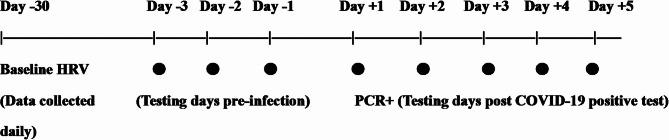
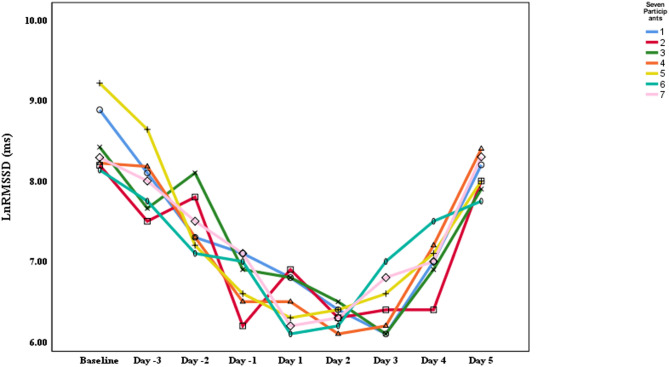
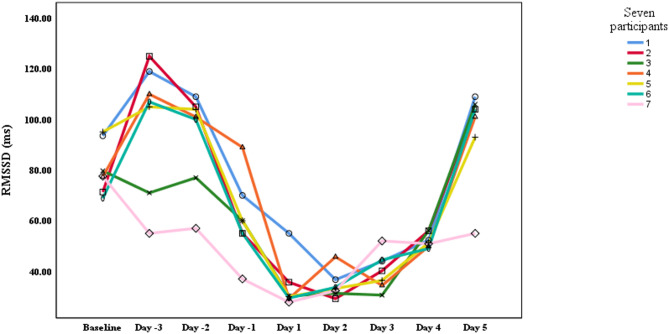
The purpose of this study is to examine the impact of COVID-19 infection on heart rate variability (HRV) in female soccer players, with a focus on identifying changes in autonomic regulation before, during, and after a COVID-19 positive test. Seven elite female soccer players (age: 20.14 ± 6.41 years, height: 162.43 ± 4.32 cm, weight: 51.73 ± 5.65 kg) were included in the analysis after consistently recording their HRV during the specified period. Morning HRV measures were completed using photoplethysmography via the HRV4 training smartphone application, a validated tool for field-based monitoring, along with self-reported data. The players were tracked for at least 30 consecutive days before testing positive for COVID-19 using a polymerase chain reaction (PCR) test. They were also requested to record their HRV while they had COVID-19 until a negative PCR result was obtained. The study presents data on RMSSD, LnRMSSD and HR for the 30 days prior to COVID-19, as well as for the 3 days (day - 3), 2 days (day - 2), and 1 day (day - 1) leading up to COVID-19. Also, data for the first 5 days following a positive COVID-19 test are included. The results of this study indicated that LnRMSSD measurements were significantly lower 2 days (day - 2) and 1 day (day - 1) before the onset of COVID-19, as well as during the first four days following a positive COVID-19 test, compared to baseline. In addition, RMSSD measurements were significantly lower during the first 4 days after a positive COVID-19 test, while resting heart rate was significantly higher during the first and second days following a positive COVID-19 test, compared to baseline. Our findings suggest that reductions in LnRMSSD, reflecting decreased parasympathetic activity, may serve as early indicators of COVID-19 infection in elite female soccer players, potentially allowing for pre-symptomatic detection through daily HRV monitoring.
Keywords: Autonomic regulation; Elite athletes; Football players; Heart rate variability; Infection; Wearable technology.
© 2025. The Author(s).
Conflict of interest statement
Declarations. Competing interests: The authors declare no competing interests. Institutional review board statement: The study was approved by the Cyprus National Committee on Bioethics (CNBC, 7 July 2021) and performed according to the guidelines of the Declaration of Helsinki. Informed consent: Informed consent was obtained from all subjects involved in the study and legal guardians.
Figures
References
MeSH terms
LinkOut - more resources
Full Text Sources
Medical
