


Integrated Genomic and GEO Data Analysis Reveals Therapeutic Targets for Rosacea
- PMID: 40635520
- PMCID: PMC12242367
- DOI: 10.1111/jocd.70334
Integrated Genomic and GEO Data Analysis Reveals Therapeutic Targets for Rosacea
Abstract
Background: Rosacea is a chronic inflammatory facial disorder with limited therapeutic options, severely impacting patients' quality of life. The identification of druggable genes plays a crucial role in facilitating the development of effective therapeutic strategies.
Methods: We conducted Mendelian randomization (MR) and Summary-based Mendelian randomization (SMR) analyses by integrating data on 5883 druggable genes, cis-expressed quantitative trait loci (eQTL) from blood and skin tissue (lower leg and suprapubic), and genome-wide association study (GWAS) data on rosacea to elucidate the causal relationship between druggable genes and rosacea. Robustness was confirmed via heterogeneity/horizontal pleiotropy tests, Steiger filtering, Bayesian colocalization analysis, and the heterogeneity in dependent instruments (HEIDI) analysis. The expression levels of identified druggable genes were validated using the GSE65914 data sets. Further analyses included protein-protein interactions (PPIs), functional enrichment analysis, phenome-wide association study (PheWAS), drug prediction, and molecular docking.
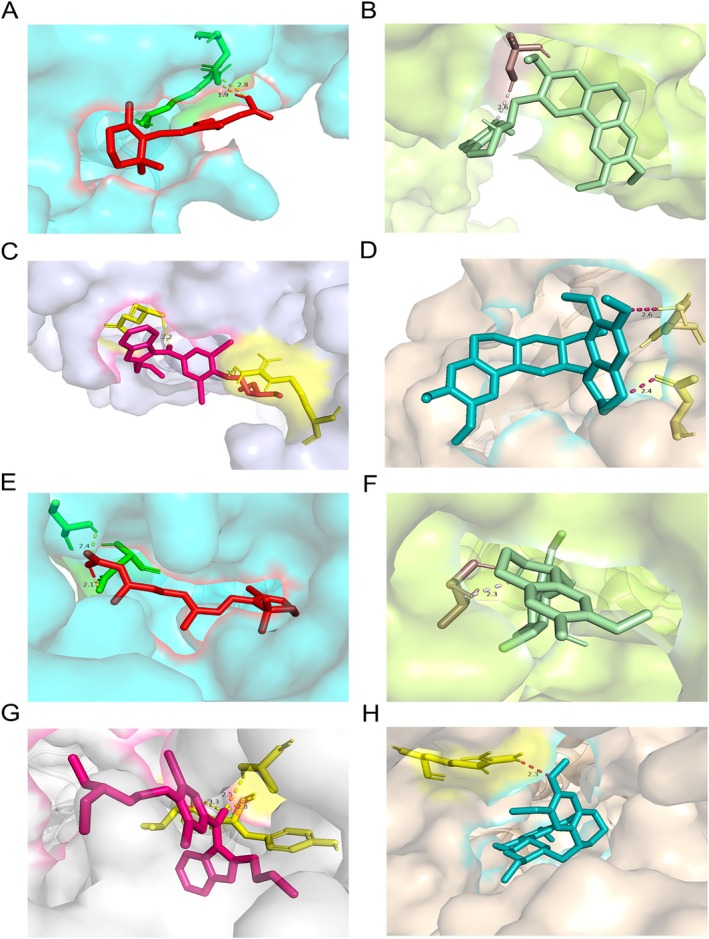
Results: MR and SMR analyses identified IRF1 and SLC22A5 as druggable genes for rosacea, with Bayesian colocalization strongly supporting shared causal variants. GEO data sets confirmed significant upregulation of IRF1 and downregulation of SLC22A5 in rosacea patients. PPIs and functional enrichment analyses revealed that IRF1 promotes inflammation by regulating immune cell activation and interferon signaling pathways; SLC22A5 regulates membrane transport and metabolic processes, and its dysregulation may lead to lipid homeostasis imbalance. PheWAS analysis indicated no other phenotypes associated with IRF1 and SLC22A5. Drug prediction and molecular docking verified the pharmacological value of IRF1 and SLC22A5.
Conclusion: This study identified IRF1 and SLC22A5 as potential drug targets for the treatment of rosacea, and their significant therapeutic potential provides a critical foundation for the development of targeted therapies.
Keywords: GWAS; IRF1; SLC22A5; druggable genes; mendelian randomization; rosacea.
© 2025 The Author(s). Journal of Cosmetic Dermatology published by Wiley Periodicals LLC.
Conflict of interest statement
The authors declare no conflicts of interest.
Figures


References
MeSH terms
LinkOut - more resources
Full Text Sources
Medical
