


Effect of surgery on breast cancer-specific mortality in older adults with endocrine receptor-positive and HER2-negative breast cancer
- PMID: 40636251
- PMCID: PMC12237573
- DOI: 10.2185/jrm.2025-009
Effect of surgery on breast cancer-specific mortality in older adults with endocrine receptor-positive and HER2-negative breast cancer
Abstract
Objective: Standard treatment modalities, including surgery, are desirable, even in older adults with breast cancer. However, frailty and comorbidities may limit surgery. This study aimed to evaluate whether endocrine therapy (ET) is associated with a lower survival rate than a standard surgical regimen.
Patients and methods: In this retrospective observational study, older adults (aged ≥75 years) diagnosed with nonmetastatic hormone receptor-positive, HER2-negative, primary breast cancer who were treated between 2006 and 2022 were evaluated in the ET (n=33) and surgery (n=95) groups. Survival status and cause of death were analyzed by estimating the overall survival (OS) and breast cancer-specific survival (BCSS) rates. Univariate and multivariate analyses were performed to identify survival-associated factors. Propensity score matching (PSM) was used to reduce the effect of selection bias.
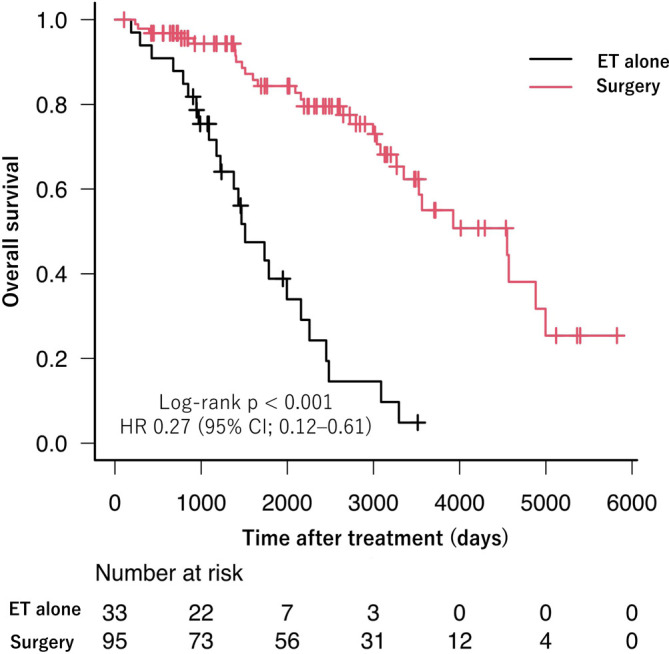
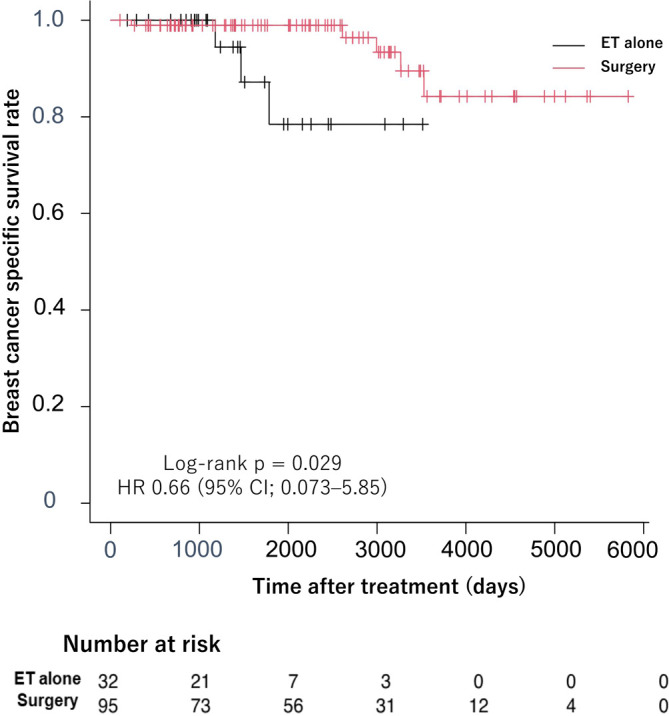
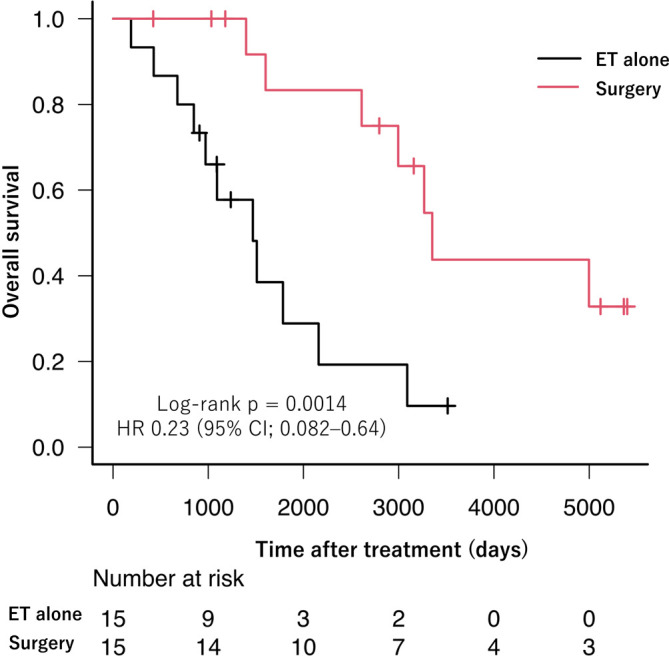
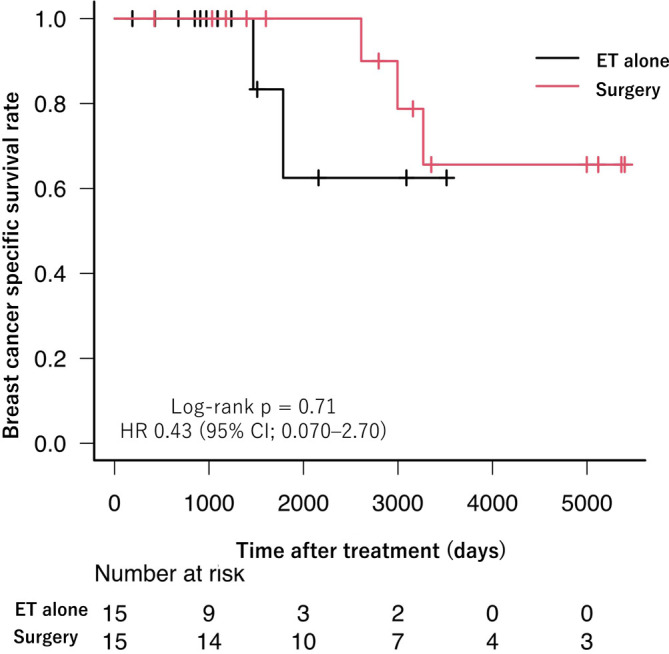
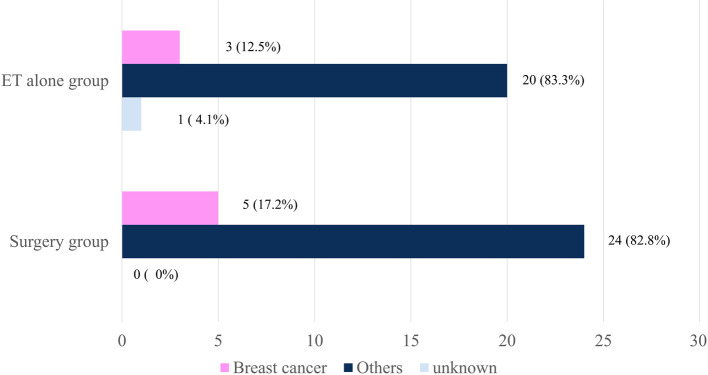
Results: The median ages of the ET and surgery groups were 84.6 and 80.4 years, respectively, and their mortality rates were 12.5% and 17.2%, respectively. OS and BCSS were significantly higher in the surgery group than in the ET group (hazard ratio [HR] 0.27, P=0.0014 and HR 0.66, P=0.029, respectively). Age, performance status, and treatment regimen proved to have a significant effect on OS and BCSS in univariate analysis. Only age and treatment affected OS; however, no factors were shown to affect BCSS in multivariate analysis. After PSM, the OS rates were higher in the surgery group than in the ET group (HR 0.23, P<0.001); however, no differences in BCSS rates were found.
Conclusion: ET may be an appropriate treatment option for older adults with breast cancer without sufficient life expectancies.
Keywords: endocrine therapy alone; hormone receptor-positive breast cancer; human epidermal growth factor receptor 2 (HER2)-negative primary breast cancer; older adult patients.
©2025 The Japanese Association of Rural Medicine.
Conflict of interest statement
All authors have no conflicts of interest to disclose.
Figures
References
-
- Ministry of Health, Labour and Welfare, Cabinet Office, Government of Japan. Current and future prospects of aging population, in Japan (in Japanese). 2022. https://www8.cao.go.jp/kourei/whitepaper/w-2022/html/zenbun/s1_1_1.html. Accessed September 6, 2024.
-
- Japanese Breast Cancer Society. Report on the national breast cancer patient registry survey, in Japan (in Japanese). 2022. https://memberpage.jbcs.gr.jp/uploads/ckfinder/files/2020kakutei.pdf. Accessed September 6, 2024.
-
- Ministry of Health, Labour and Welfare, Government of Japan. Abridged life tables for Japan 2021. 2021. https://www.mhlw.go.jp/. Accessed September 6, 2024.
-
- Sato T. E-Health net (in Japanese). 2022. https://www.e-healthnet.mhlw.go.jp/information/hale/h-01-002.html. Accessed September 6, 2024.
LinkOut - more resources
Full Text Sources
Research Materials
Miscellaneous
