


Age-stratified pharmacovigilance of azithromycin: a multimethod signal detection analysis in the FAERS database
- PMID: 40636562
- PMCID: PMC12239240
- DOI: 10.1080/20523211.2025.2525356
Age-stratified pharmacovigilance of azithromycin: a multimethod signal detection analysis in the FAERS database
Abstract
Background: Azithromycin, a widely prescribed macrolide antibiotic, faces emerging safety concerns due to inappropriate use and age-specific adverse drug reactions (ADRs). This study characterises age-stratified safety profiles of azithromycin using pharmacovigilance data.
Methods: Adverse event (AE) reports for azithromycin prescribed in Mycoplasma pneumoniae pneumonia treatment (2004-2024) were extracted from the FDA Adverse Event Reporting System (FAERS). Disproportionality analyses (Reporting Odds Ratio, Proportional Reporting Ratio, Bayesian Confidence Propagation Neural Network, Multi-item Gamma Poisson Shrinker) identified safety signals across four age groups: 0-17, 18-44, 45-64, and ≥65 years.
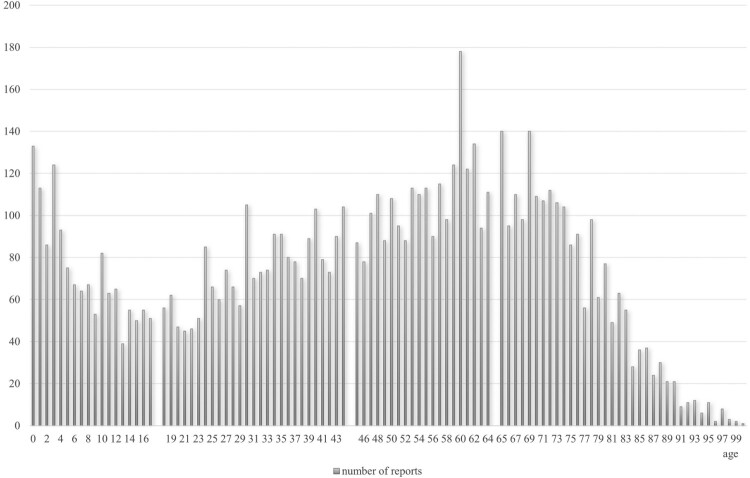
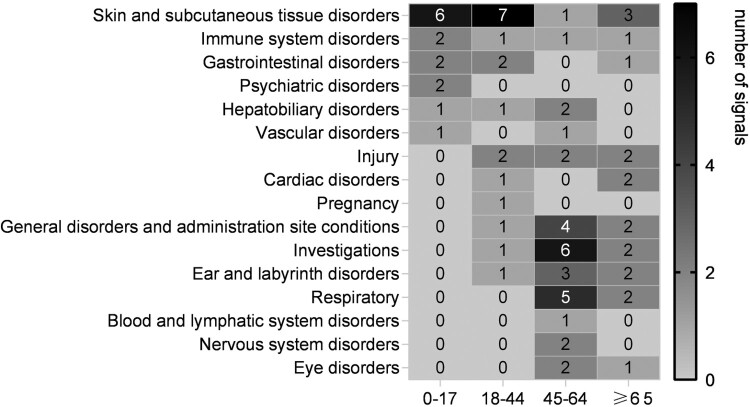
Results: Among 7,496 AE reports, age-specific risks varied significantly. Paediatric populations (0-17 years) exhibited predominant cutaneous/hypersensitivity reactions (rash, pruritus, Stevens-Johnson syndrome) and unlabelled psychiatric signals (hallucinations). Adults (18-44 years) showed pregnancy-related risks (preterm delivery). Geriatric patients (≥65 years) had heightened cardiac risks (QT prolongation, torsades de pointes), often exacerbated by off-label COVID-19 use. The 45-64-year cohort displayed the highest signal frequency, primarily involving drug hypersensitivity. Off-label prescribing accounted for 65% of geriatric AEs.
Conclusion: Azithromycin safety profiles differ markedly across age groups. Children face dermatologic and neuropsychiatric risks, while elderly patients are vulnerable to cardiac complications. Strict adherence to labelled indications, age-specific monitoring, and avoidance of off-label use - particularly during public health crises - are critical to mitigating ADRs. These findings underscore the need for stratified clinical decision-making and targeted pharmacovigilance.
Keywords: Azithromycin; FAERS; adverse events; data mining; pharmacovigilance.
© 2025 The Author(s). Published by Informa UK Limited, trading as Taylor & Francis Group.
Conflict of interest statement
No potential conflict of interest was reported by the author(s).
Figures
References
-
- Althammer, A., Prückner, S., Gehring, G. C., Lieftüchter, V., Trentzsch, H., & Hoffmann, F. (2023). Systemic review of age brackets in pediatric emergency medicine literature and the development of a universal age classification for pediatric emergency patients – The Munich Age Classification System (MACS). BMC Emergency Medicine, 23(1), 77. 10.1186/s12873-023-00851-5 - DOI - PMC - PubMed
LinkOut - more resources
Full Text Sources
