


Updated Classification of Vascular Anomalies. A living document from the International Society for the Study of Vascular Anomalies Classification Group
- PMID: 40636925
- PMCID: PMC12237419
- DOI: 10.1097/JOVA.0000000000000113
Updated Classification of Vascular Anomalies. A living document from the International Society for the Study of Vascular Anomalies Classification Group
Abstract
Introduction: The International Society for the Study of Vascular Anomalies developed in 1996 a Classification of Vascular Anomalies that became internationally accepted. The main feature was the division of vascular anomalies in 2 categories, vascular tumors and malformations. Major revisions occurred in 2014 and 2018, for updates and inclusion of newly described lesions. Major advances occurred in recent years, with improved understanding of genetic basis of vascular anomalies and its relevance in therapeutics. It created a demand for a new revision of ISSVA Classification, and the process is presented in this study.
Methods: A group was created in 2019, joining experts from different specialties and coordinated by ISSVA Scientific Committee, to reevaluate the 2018 Classification on each subtype of vascular anomaly, considering the clinical presentation, histological subtypes, flow velocity and genetic aspects. After several multidisciplinary online discussions and in person meetings at ISSVA Congresses (2022, 2023 and 2024) the proposal for the new classification was presented for ISSVA Members ratification, after an opening window for comments and suggestions. A new tool was created, named "Glossary of Vascular Anomalies", along the contours of a medical dictionary.
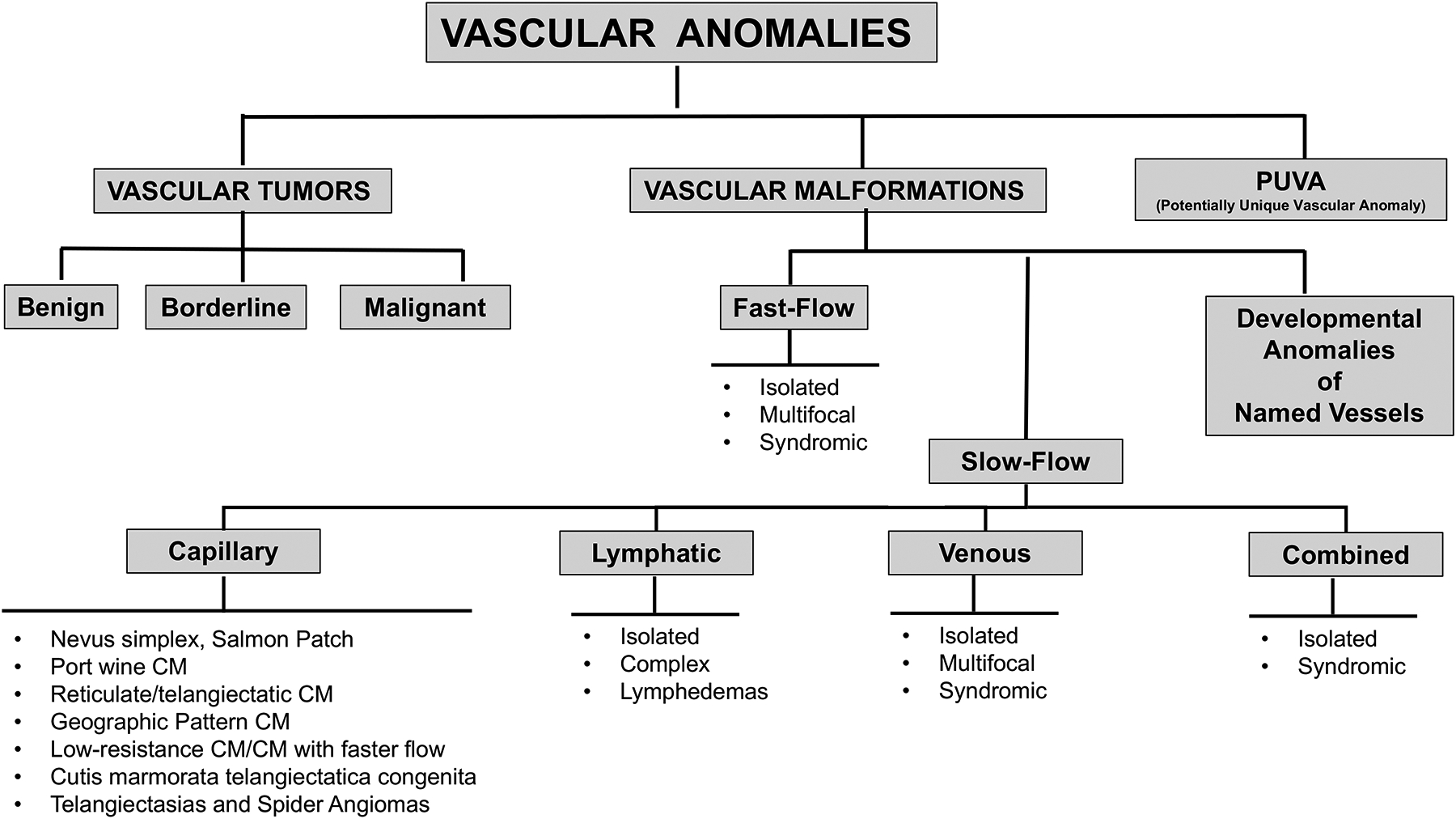
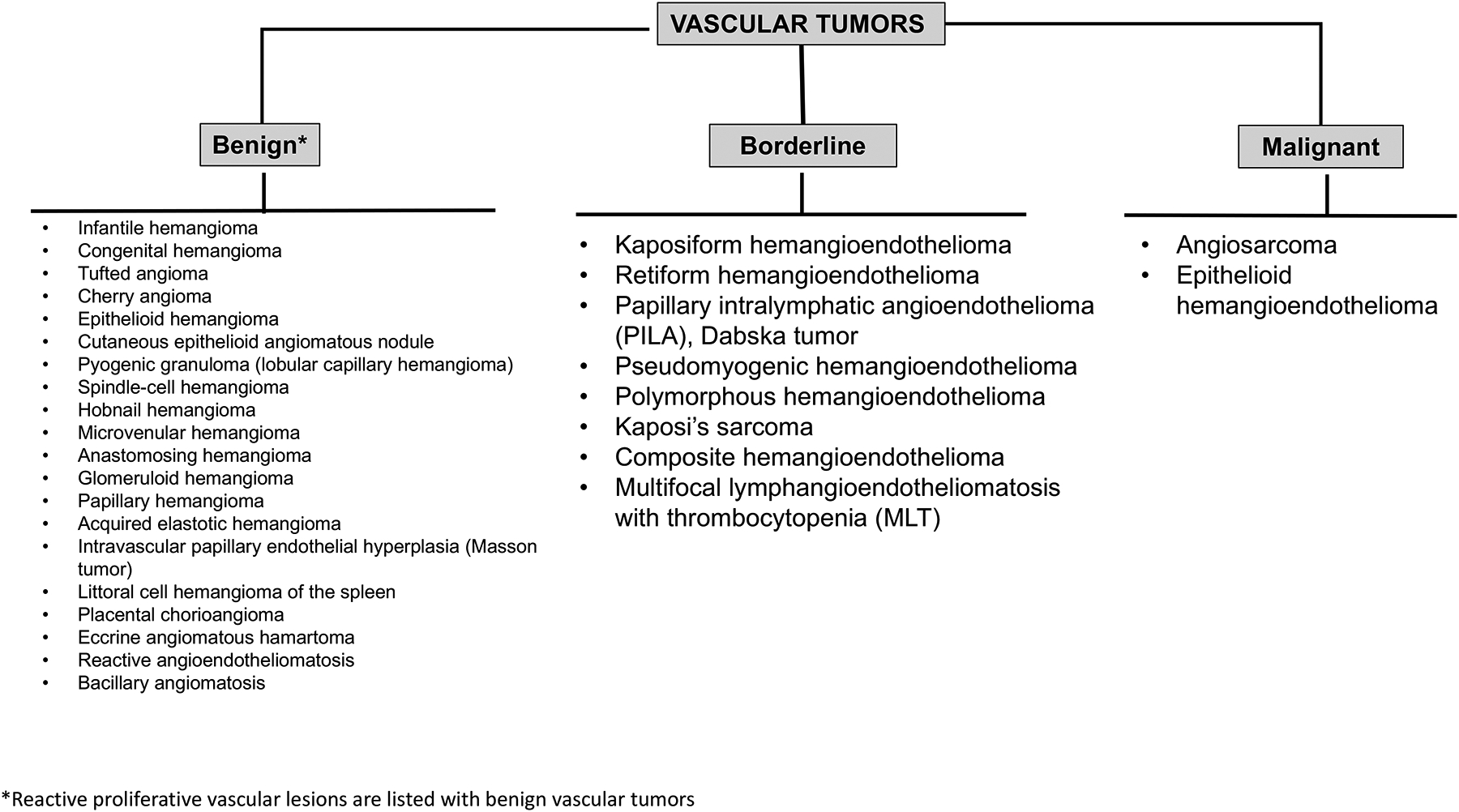
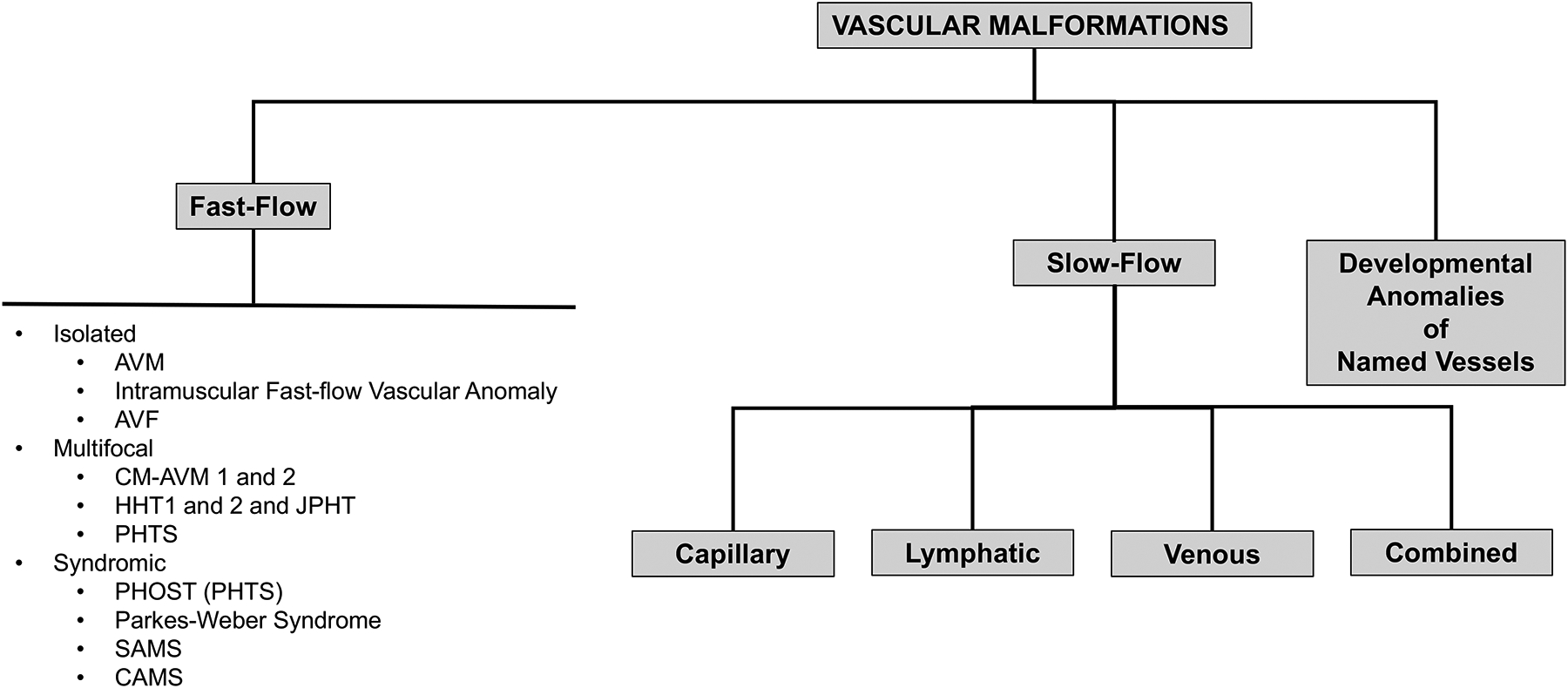
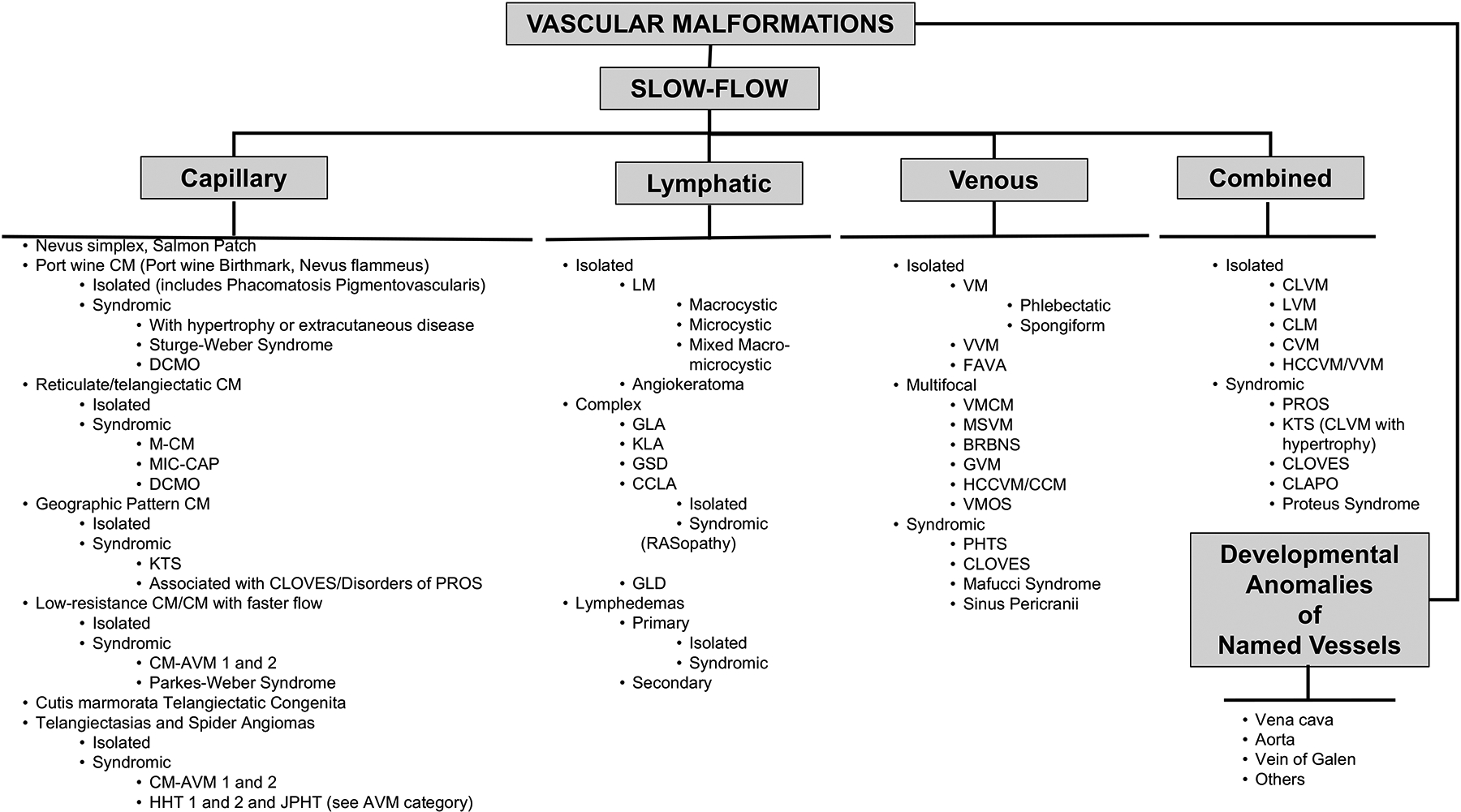
Results: A new layout of the classification was designed. The visualization begins with a general "Landing Page" where the basic division into vascular tumors and malformations are specified. For vascular tumors, the subdivision was kept between Benign, Borderline and Malignant tumors. For vascular malformations, the divisions were presented as Fast-flow lesions, Slow-flow lesions, and Developmental Anomalies of Named Vessels. A Full Classification Table page with all updated modifications followed the Landing Page. All changes and new terms are described in detail and summarized in a table. The glossary lists and explains, in alphabetic order, all technical terms, abbreviations, acronyms, eponyms, genes and syndromes related to vascular anomalies.
Conclusions: The presented updated ISSVA classification of vascular anomalies reflects our evolving understanding of vascular anomalies which will be continuously updated by a dedicated Committee of ISSVA.
Figures
References
-
- Wassef M, Blei F, Adams D, Alomari A, Baselga E, Berenstein A, Burrows P, Frieden IJ, Garzon MC, Lopez-Gutierrez JC, Lord DJ, Mitchel S, Powell J, Prendiville J, Vikkula M; ISSVA Board and Scientific Committee. Vascular Anomalies Classification: Recommendations From the International Society for the Study of Vascular Anomalies. Pediatrics. 2015;136(1):e203–14. - PubMed
-
- Queisser A, Seront E, Boon LM, Vikkula M. Genetic Basis and Therapies for Vascular Anomalies. Circulation Research. 2021;129(1):155–73. - PubMed
-
- Wassef M, Borsik M, Cerceau P, Faucon B, Laurian C, Le Clerc N, Lemarchand-Venencie F, Massoni C, Salvan D, Bisdorff-Bresson A. Classification des tumeurs et malformations vasculaires. Apport de la classification ISSVA 2014/2018 [Classification of vascular tumours and vascular malformations. Contribution of the ISSVA 2014/2018 classification]. Ann Pathol. 2021;41(1):58–70. - PubMed
-
- Loose DA. The Hamburg Classification. Gefasschirurgie. 2005;10(6):388–9.
-
- Jakob R Disease Classification. In: Quah SR (editor). International Encyclopedia of Public Health. 2 Ed. Academic Press, 2017, p. 332–337.
Grants and funding
LinkOut - more resources
Full Text Sources