


Reversal of cerebral pseudoatrophy in normal pressure hydrocephalus after ventriculoatrial shunt placement
- PMID: 40640209
- PMCID: PMC12246446
- DOI: 10.1038/s41598-025-03158-6
Reversal of cerebral pseudoatrophy in normal pressure hydrocephalus after ventriculoatrial shunt placement
Abstract
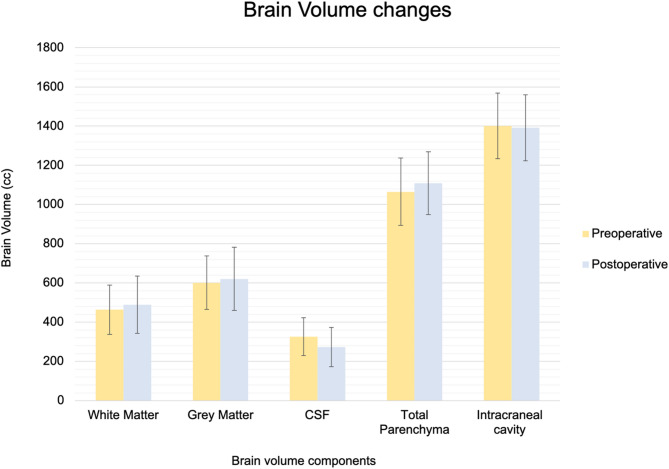
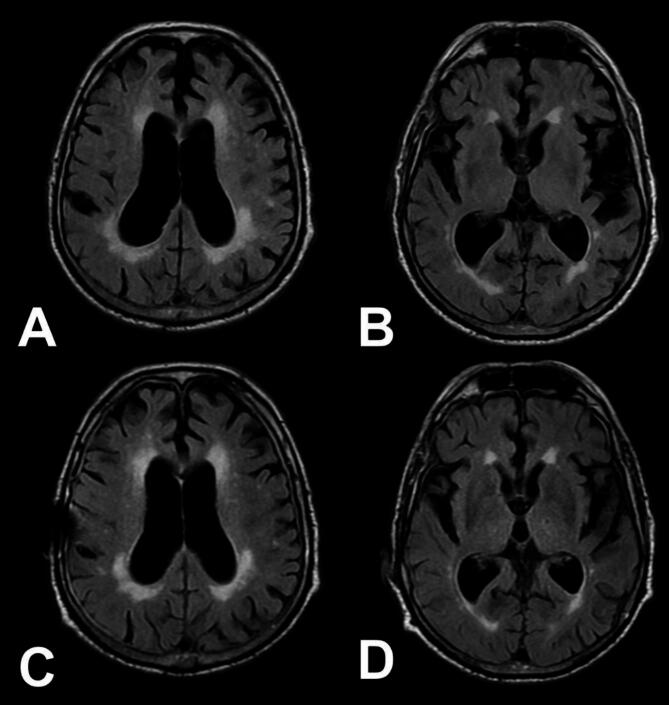
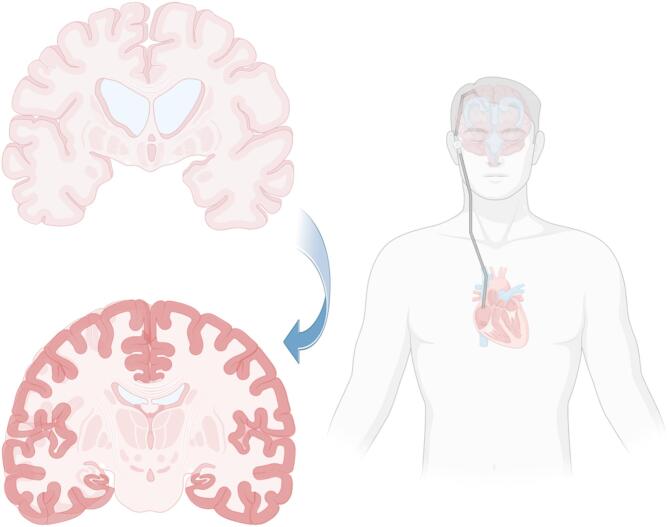
Normal Pressure Hydrocephalus (NPH) is a syndrome in predominantly older adults, differential diagnoses include primary neurodegenerative diseases. The key radiological finding is ventricular enlargement, different from increased ventricular size associated with cerebral atrophy. After definitive surgical cerebrospinal fluid (CSF) shunting there appears to be increased brain tissue volume in patients' follow-up images which could indicate that imaging findings usually interpreted as cerebral atrophy may be reversible with appropriate treatment. A cross-sectional study was performed comparing pre and postoperative brain volume in magnetic resonance imaging (MRI) studies of NPH patients who underwent ventriculoatrial shunting at our institution between April 2016 and February 2022. Brain volumes were obtained using volBrain and vol2Brain software. 30 patients were included, and 60 MRI studies reviewed. The average age was 80.4 years (54-92 years). 20 patients (66.6%) were men and 10 women. Following CSF shunting, patients had a statistically significant increase in white matter (p = 0.043), gray matter (p = 0.002), and total brain parenchyma (p = 0.032). The brain volume increased in postoperative MRI. We call this finding cerebral pseudoatrophy, which has not been previously described. Further studies are required to confirm this finding, which poses relevance for the accurate diagnosis of NPH.
Keywords: Brain volume; Cerebral pseudoatrophy; Hydrocephalus; Normal pressure hydrocephalus; Ventricles; Ventriculoatrial shunt.
© 2025. The Author(s).
Conflict of interest statement
Declarations. Competing interests: The authors declare no competing interests.
Figures
References
-
- Adams, R. D., Fisher, C. M., Hakim, S., Ojemann, R. G. & Sweet, W. H. Symptomatic occult hydrocephalus with normal cerebrospinal-fluid pressure: A treatable syndrome. N. Engl. J. Med.273, 117–126 (1965). - PubMed
-
- Bräutigam, K., Vakis, A. & Tsitsipanis, C. Pathogenesis of idiopathic normal pressure hydrocephalus: A review of knowledge. J. Clin. Neurosci.61, 10–13 (2019). - PubMed
-
- Sundström, N., Lundin, F., Arvidsson, L., Tullberg, M. & Wikkelsø, C. The demography of idiopathic normal pressure hydrocephalus: Data on 3000 consecutive, surgically treated patients and a systematic review of the literature. J. Neurosurg.10.3171/2022.2.JNS212063 (2022). - PubMed
-
- Pyykkö, O. T. et al. Incidence, comorbidities, and mortality in idiopathic normal pressure hydrocephalus. World Neurosurg.112, e624–e631 (2018). - PubMed
-
- Gallia, G. L., Rigamonti, D. & Williams, M. A. The diagnosis and treatment of idiopathic normal pressure hydrocephalus. Nat. Clin. Pract. Neurol.2, 375–381 (2006). - PubMed
MeSH terms
Grants and funding
LinkOut - more resources
Full Text Sources
Miscellaneous
