


Exploring the anti-inflammatory mechanism of geniposide in rheumatoid arthritis via network pharmacology and experimental validation
- PMID: 40640294
- PMCID: PMC12246104
- DOI: 10.1038/s41598-025-10196-7
Exploring the anti-inflammatory mechanism of geniposide in rheumatoid arthritis via network pharmacology and experimental validation
Abstract
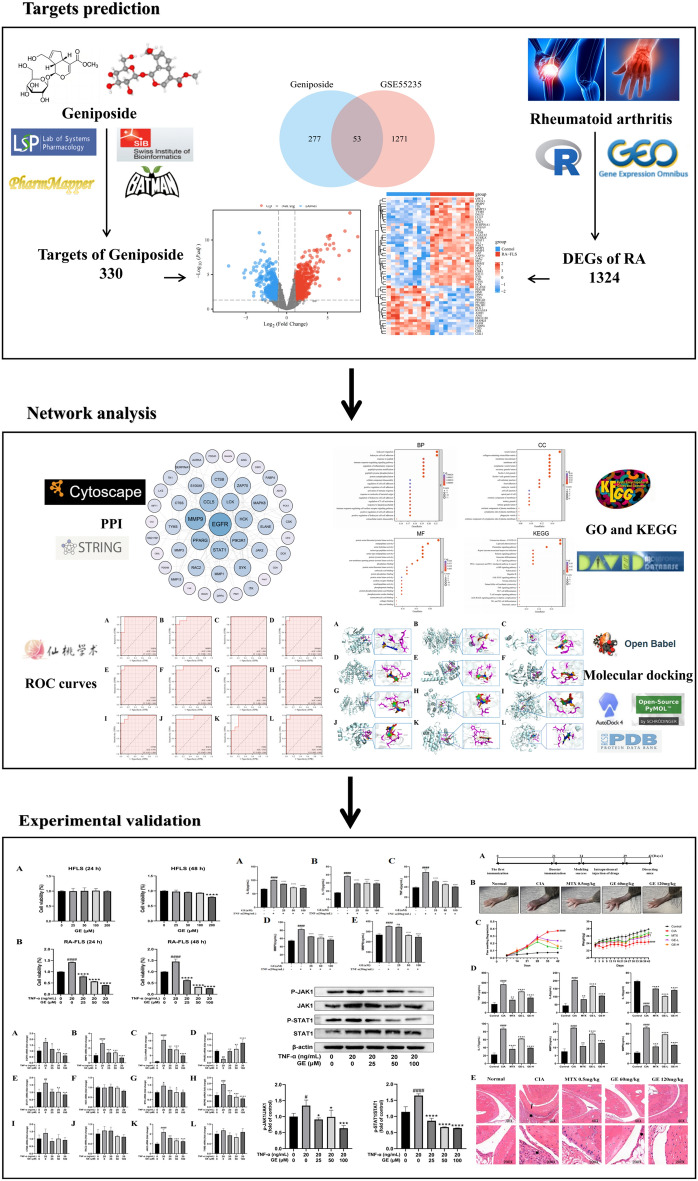
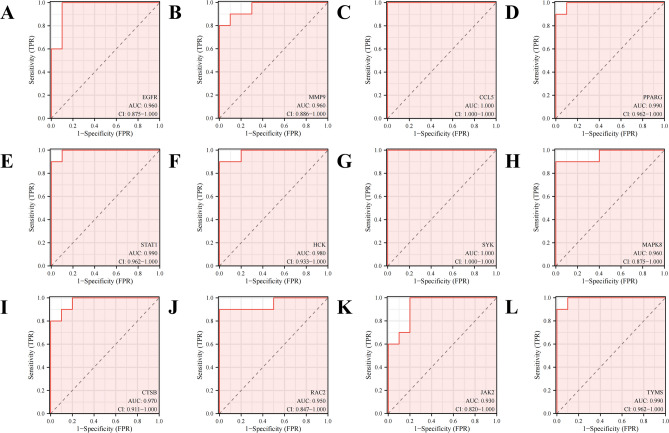
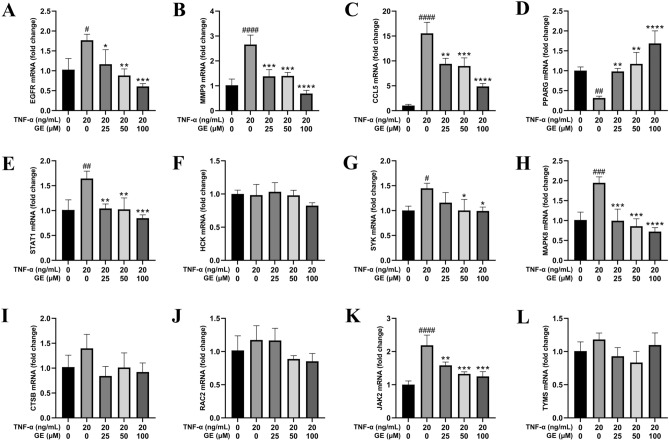
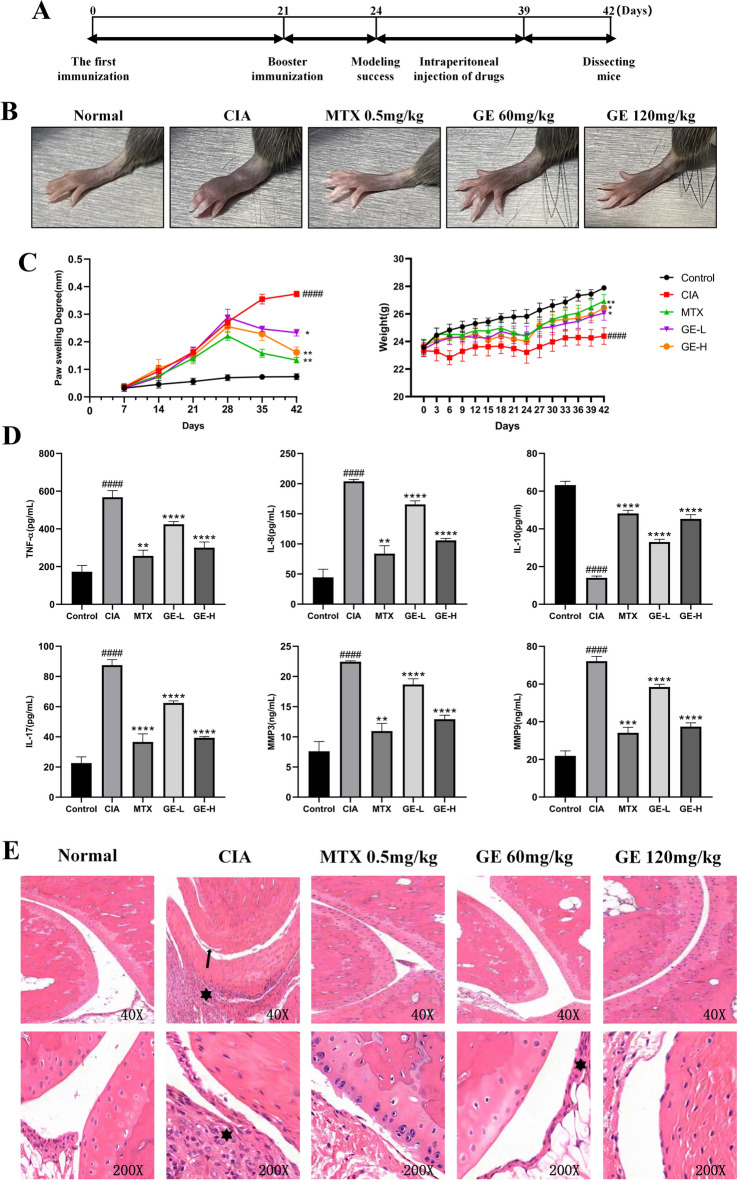
Rheumatoid arthritis (RA) is a chronic autoimmune disease that affects millions worldwide, characterized by joint pain, swelling, and functional impairment. Current treatments like Non-steroidal anti-inflammatory drugs (NSAIDs), corticosteroids, and biologics, have limitations including side effects and resistance problems, which create a need for new therapeutic strategies. This study aims to explore the potential therapeutic role and mechanisms of Geniposide (GE), a natural compound extracted from Gardenia jasminoides, in RA treatment. Through network pharmacology methods and using target prediction databases including TCMSP, SwissTargetPrediction, Pharmmapper, and Batman, 330 potential targets of GE were identified. In RA, 1324 differentially expressed genes (DEGs) were identified from the GSE55235 dataset. By intersecting the datasets, 53 shared targets were identified, which were further analyzed using Gene Ontology (GO) and Kyoto Encyclopedia of Genes and Genomes (KEGG) enrichment, with pathways like IL-17 and JAK-STAT being significantly highlighted. Additionally, protein-protein interaction (PPI) network analysis identified 12 key targets (EGFR, MMP-9, CCL5, PPARG, STAT1, HCK, SYK, MAPK8, CTSB, RAC2, JAK2, TYMS) with high degree values. Furthermore, molecular docking studies confirmed strong binding affinities between GE and the identified targets. Experimental validation demonstrated that GE inhibited RA-FLS cell proliferation in a dose-dependent manner by using MTT assays and reduced the level of pro-inflammatory cytokines (IL-17, IL-8, TNF-α, MMP-3, MMP-9) as measured by ELISA. RT-qPCR and Western blot analyses further confirmed that GE modulated the mRNA expression of key targets and inhibited the phosphorylation of JAK1 and STAT1 proteins, respectively. Finally, we verified the anti-inflammatory effect of GE on CIA mice through in vivo experiments. These findings suggest that GE has anti-RA effects by targeting several key molecules and pathways. This provides a theoretical basis for developing GE as a novel therapeutic for RA.
© 2025. The Author(s).
Conflict of interest statement
Declarations. Competing interests: The authors declare no competing interests.
Figures





References
-
- McInnes, I. B. & Schett, G. The pathogenesis of rheumatoid arthritis. N. Engl. J. Med.365(23), 2205–2219 (2011). - PubMed
MeSH terms
Substances
Grants and funding
- S202413705040/the 2024 Provincial Student Innovation and Entrepreneurship Project of Chengdu Medical College
- 2022LHXD-03/the Collaborative Fund of Chengdu Medical College - People's Hospital of Xindu District in Chengdu
- 2022LHXD-03/the Collaborative Fund of Chengdu Medical College - People's Hospital of Xindu District in Chengdu
- 2024MS010/the Sichuan Provincial Administration of Traditional Chinese Medicine
- 2024MS519/the Sichuan Provincial Administration of Traditional Chinese Medicine
LinkOut - more resources
Full Text Sources
Medical
Research Materials
Miscellaneous
