


The mediating role of resilience in the relationships between posttraumatic growth and depression as well as anxiety among survivors of nasopharyngeal carcinoma: a cross-sectional study
- PMID: 40640902
- PMCID: PMC12247339
- DOI: 10.1186/s40359-025-03100-5
The mediating role of resilience in the relationships between posttraumatic growth and depression as well as anxiety among survivors of nasopharyngeal carcinoma: a cross-sectional study
Abstract
Background: Nasopharyngeal carcinoma (NPC) survivors demonstrate heightened vulnerability to depression and anxiety, while posttraumatic growth (PTG) and resilience have been reported as important protective factors for mental health. This study examined the mediating role of resilience in the associations between PTG and both depression and anxiety among NPC survivors.
Methods: A total of 773 NPC survivors were recruited through convenience sampling at Sun Yat-sen University Cancer Center (Guangzhou, China). Participants completed a self-administered structured questionnaire measuring sociodemographic and clinical characteristics, depression (PHQ-9), anxiety (GAD-7), posttraumatic growth (PTGI), and resilience (CD-RISC10). Mediation analyses were performed using structural equation modeling.
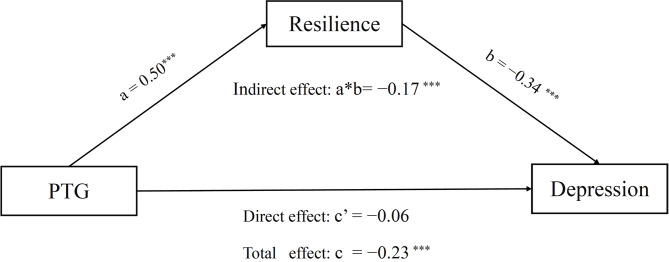
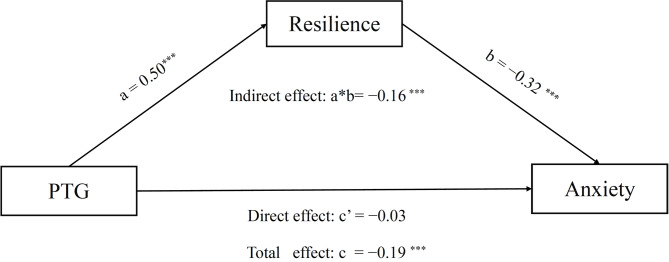
Results: The average time since cancer diagnosis was 2.68 (SD = 1.80) years, with 55.0% diagnosed for over 2 years. Among the participants, 44.2% reported mild to severe depressive symptoms, and 35.3% reported mild to severe anxiety. Higher PTG was significantly associated with lower symptoms of depression (β = -0.23, p < 0.001) and anxiety (β = -0.19, p < 0.001). Additionally, greater resilience was associated with reduced symptoms of depression (β = -0.37, p < 0.001) and anxiety (β = -0.33, p < 0.001). Further, resilience fully mediated the relationship between PTG and both anxiety (86.50%) and depression (74.13%).
Conclusion: PTG and resilience are negatively associated with depression and anxiety in NPC survivors, with resilience acting as a complete mediator in these relationships.
Keywords: Anxiety; Depression; Nasopharyngeal carcinoma; Posttraumatic growth; Resilience.
© 2025. The Author(s).
Conflict of interest statement
Declarations. Ethics approval and consent to participate: Patients were assured that non-participation would not have any impact on their access to medical services. Written informed consent was obtained prior to the investigation and the study was approved by the Ethics Committee of Sun Yat-sen University (No. 2019 − 145). This study was conducted in accordance with relevant guidelines and regulations. Consent for publication: Not applicable. Competing interests: The authors declare no competing interests.
Figures
References
-
- Su ZY, Siak PY, Lwin YY, Cheah S. Epidemiology of nasopharyngeal carcinoma: current insights and future outlook. Cancer Metastasis Rev. 2024;43(3):919–39. - PubMed
-
- Hammermüller C, Hinz A, Dietz A, Wichmann G, Pirlich M, Berger T, Zimmermann K, Neumuth T, Mehnert-Theuerkauf A, Wiegand S, et al. Depression, anxiety, fatigue, and quality of life in a large sample of patients suffering from head and neck cancer in comparison with the general population. BMC Cancer. 2021;21(1):94. - PMC - PubMed
MeSH terms
Grants and funding
LinkOut - more resources
Full Text Sources
Medical
