


TNF‑α induces premature senescence in tendon stem cells via the NF‑κB and p53/p21/cyclin E/CDK2 signaling pathways
- PMID: 40641112
- PMCID: PMC12270418
- DOI: 10.3892/ijmm.2025.5581
TNF‑α induces premature senescence in tendon stem cells via the NF‑κB and p53/p21/cyclin E/CDK2 signaling pathways
Abstract
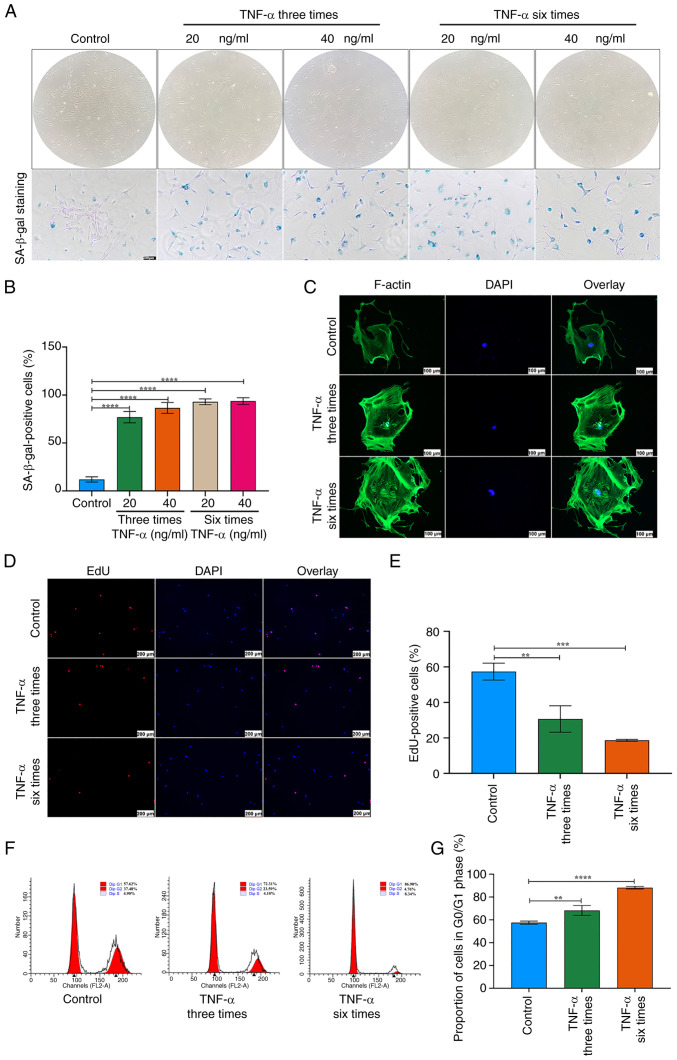
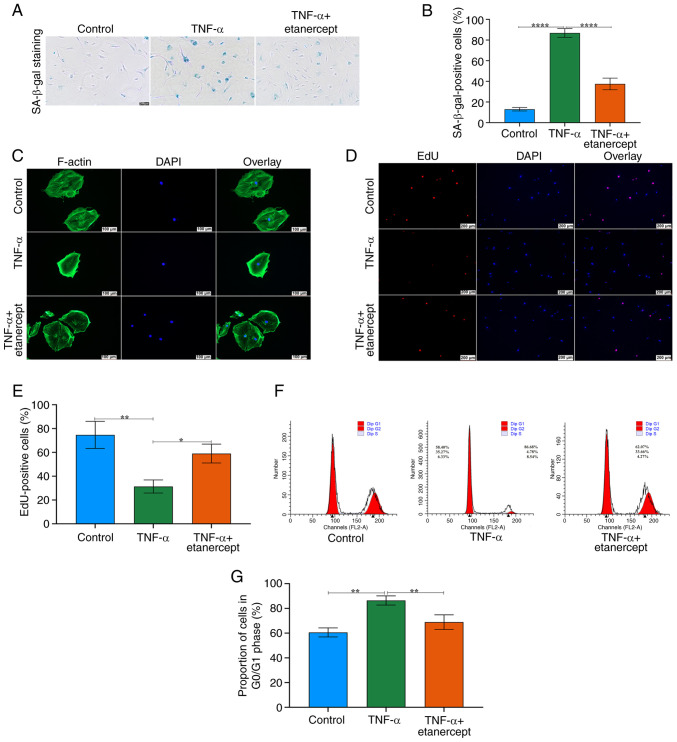
Achilles tendinitis (AT) is a complex disorder that affects tendon tissue and often responds poorly to non‑steroidal anti‑inflammatory drugs. Tumor necrosis factor‑α (TNF‑α), a proinflammatory cytokine involved in cell death and immune regulation, serves a central role in AT progression. The present study investigated the effects of TNF‑α on tendon stem cells (TSCs) and evaluated potential therapeutic strategies for AT. TNF‑α‑induced changes in TSCs were determined by investigating markers of cellular senescence, reactive oxygen species (ROS) activity, DNA damage and the expression of key transcription factors, including NF‑κB (phosphorylated‑p65, p65), p53, p21, cyclin E and CDK2. To determine whether TNF‑α‑induced senescence could be reversed, TSCs were treated with etanercept, a TNF‑α‑specific inhibitor. TNF‑α stimulation induced significant senescence in TSCs, as evidenced by increased ROS production, DNA damage and altered expression of senescence‑associated transcription factors. TNF‑α activated the NF‑κB and p53/p21/cyclin E/CDK2 signaling pathways, promoting TSC senescence. Etanercept treatment effectively reversed these effects, decreasing TSC senescence, suppressing inflammatory cell infiltration, decreasing TNF‑α protein expression and mitigating collagen fiber degradation. TNF‑α promotes TSCs senescence through specific signaling pathways and etanercept can counteract these deleterious effects. These results provide insights into the pathogenesis of AT and highlight TNF‑α inhibition as a promising therapeutic approach. Targeting TNF‑α may offer a novel treatment strategy for individuals with AT.
Keywords: Achilles tendinitis; DNA damage; senescence; tendon stem cell; tumor necrosis factor‑α.
Conflict of interest statement
The authors declare that they have no competing interests.
Figures





References
-
- Iagnocco A, Riente L, Delle Sedie A, Filippucci E, Salaffi F, Meenagh G, Scirè CA, Grassi W, Montecucco C, Bombardieri S, Valesini G. Ultrasound imaging for the rheumatologist. XXII. Achilles tendon involvement in spondyloarthritis. A multi-centre study using high frequency volumetric probe. Clin Exp Rheumatol. 2009;27:547–551. - PubMed
-
- Mobasheri A, Shakibaei M. Is tendinitis an inflammatory disease initiated and driven by pro-inflammatory cytokines such as interleukin 1β? Histol Histopathol. 2013;28:955–964. - PubMed
MeSH terms
Substances
LinkOut - more resources
Full Text Sources
Medical
Research Materials
Miscellaneous