


Sine of the times: Can sinusoidal waves model changes in the therapeutic alliance over time?
- PMID: 40641666
- PMCID: PMC12242452
- DOI: 10.1016/j.invent.2025.100845
Sine of the times: Can sinusoidal waves model changes in the therapeutic alliance over time?
Abstract
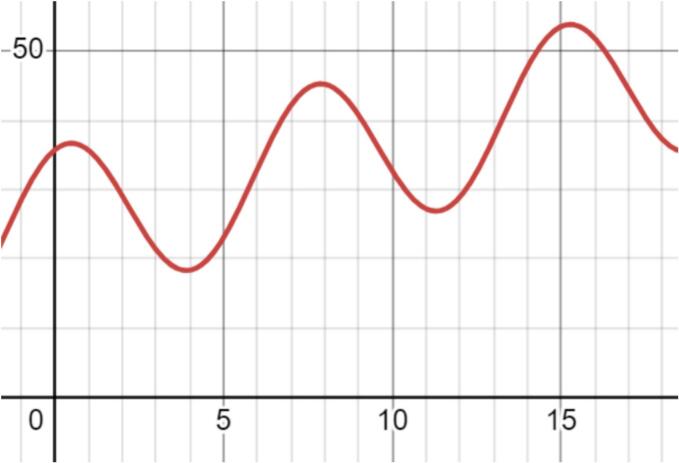
The present study examined the association between the therapeutic alliance and social anxiety symptoms during internet-delivered cognitive behavior therapy (ICBT) for social anxiety disorder (SAD). We examined 162 individuals diagnosed with SAD who underwent therapist-assisted ICBT and completed measures of the therapeutic alliance weekly during a randomized controlled trial. We used a novel modeling strategy and modeled changes in the therapeutic alliance over time using sinusoidal models. We found that a model that incorporated both a linear component and a sinusoidal component (r 2 = 0.72), explained significantly more variance than models using only linear (r 2 = 0.42) or only sinusoidal (r 2 = 0.41) components. We also found that higher average levels of the alliance as well as greater increases in the therapeutic alliance during treatment were associated with greater reductions in social anxiety during treatment. Finally, we found that greater fluctuations around the slope of alliance were associated with greater reductions in social anxiety during treatment (above and beyond average alliance and increases in alliance). Considering fluctuations around a linear slope may be a useful model for the ups and downs experienced in the therapeutic alliance over the course of therapy. Fluctuations in alliance may not be a sign of negative processes, but could potentially indicate a healthy ebb and flow of the alliance that is predictive of better outcomes.
Keywords: Internet-delivered CBT; Sinusoidal models; Social anxiety; Social anxiety disorder; Therapeutic alliance.
© 2025 The Author(s).
Conflict of interest statement
Idan M. Aderka reports financial support was provided by Israel Science Foundation. The Editor-in-Chief of this Journal, Prof. Gerhard Andersson, is one of the authors of the submitted manuscript. If there are other authors, they declare that they have no known competing financial interests or personal relationships that could have appeared to influence the work reported in this paper.
Figures
References
-
- Aderka I.M., Hofmann S.G., Nickerson A., Hermesh H., Gilboa-Schechtman E., Marom S. Functional impairment in social anxiety disorder. J. Anxiety Disord. 2012;26(3):393–400. - PubMed
-
- Alberti G.G. Psychotherapy by alliance and corrective experiences: a possible general model. J. Psychother. Integr. 2018;28(1):31–45. doi: 10.1037/int0000079. - DOI
-
- Andersson G., Carlbring P., Holmström A., Sparthan E., Furmark T., Nilsson-Ihrfelt E., Buhrman M., Ekselius L. Internet-based self-help with therapist feedback and in vivo group exposure for social phobia: a randomized controlled trial. Journal of Consulting & Clinical Psychology. 2006;74(4):677–686. - PubMed
-
- Andersson G., Paxling B., Wiwe M., Vernmark K., Felix C.B., Lundborg L., Furmark T., Cuijpers P., Carlbring P. Therapeutic alliance in guided internet-delivered cognitive behavioural treatment of depression, generalized anxiety disorder and social anxiety disorder. Behav. Res. Ther. 2012;50(9):544–550. doi: 10.1016/J.BRAT.2012.05.003. - DOI - PubMed
LinkOut - more resources
Full Text Sources
