


The prognostic and clinicopathological value of HALP score in non-small cell lung cancer
- PMID: 40642085
- PMCID: PMC12240774
- DOI: 10.3389/fimmu.2025.1576326
The prognostic and clinicopathological value of HALP score in non-small cell lung cancer
Abstract
Objective: The prognostic role of the hemoglobin, albumin, lymphocyte, and platelet (HALP) score in non-small cell lung cancer (NSCLC) has been widely reported, but the results remain controversial. Therefore, we aim to evaluate the prognostic and clinicopathological value of the HALP score in NSCLC through a pooled analysis.
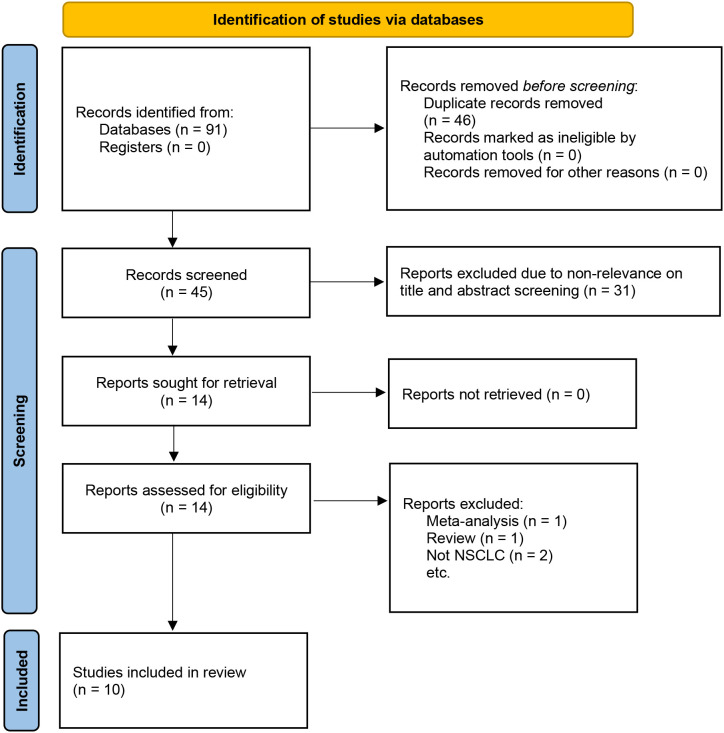
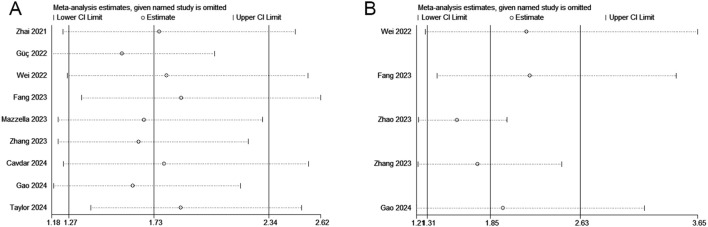
Methods: We conducted a comprehensive literature search of PubMed, Embase, Web of Science, Cochrane Library, and the ClinicalTrials.gov databases in December 2024 to identify studies evaluating the relationship between the pretreatment HALP score and outcomes in NSCLC patients. Eligible studies included patients treated with surgical resection, chemotherapy, or immunotherapy. The HALP score was calculated using peripheral blood levels of hemoglobin, albumin, lymphocytes, and platelets measured before treatment. Data were extracted and analyzed to determine the association of the HALP score with overall survival (OS), disease/progression/recurrence-free survival (DFS/PFS/RFS), and clinicopathological characteristics. Subgroup and sensitivity analyses were performed to ensure the robustness and reliability of the results.
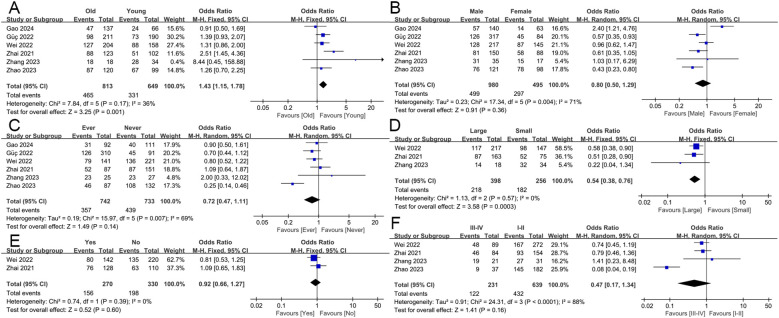
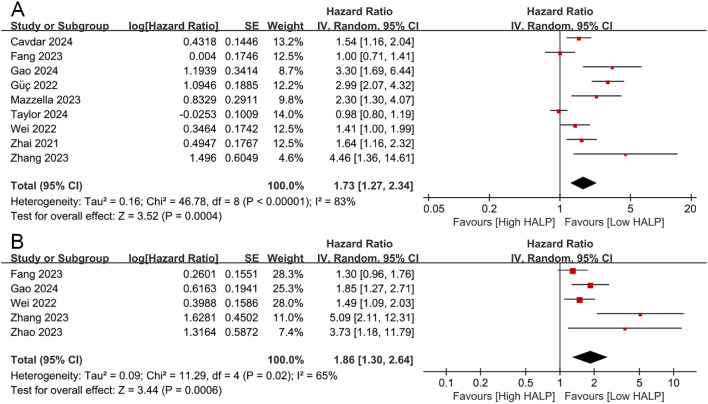
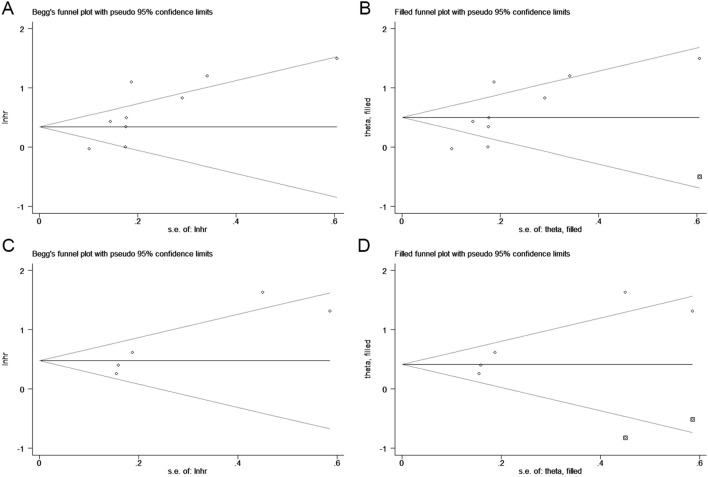
Results: A total of 10 studies involving 7024 patients were included. The results demonstrated that patients with lower pretreatment HALP score had worse OS (hazard ratio [HR] = 1.73, 95% confidence interval [95% CI]: 1.27-2.34, p < 0.001) and DFS/PFS/RFS (HR = 1.86, 95% CI: 1.30-2.64, p < 0.001). The results remained consistent across subgroup analyses based on study characteristics and sensitivity analyses. Additionally, a lower HALP score was significantly associated with age (odds ratio [OR] = 1.43, 95% CI: 1.15-1.78, p = 0.001) and tumor size (OR = 0.54, 95% CI: 0.38-0.76, p < 0.001).
Conclusions: The HALP score is a valuable prognostic biomarker for predicting survival outcomes in NSCLC patients. Its ability to integrate multiple aspects of systemic inflammation and nutritional status makes it a promising tool for improving risk stratification and guiding treatment decisions. Future studies should continue to validate this finding in prospective, multicentre trials.
Keywords: HALP score; NSCLC; biomarker; prognostic; survival.
Copyright © 2025 Li, Chen, Zhao and Zeng.
Conflict of interest statement
The authors declare that the research was conducted in the absence of any commercial or financial relationships that could be construed as a potential conflict of interest.
Figures
References
-
- Portale G, Bartolotta P, Azzolina D, Gregori D, Fiscon V. Prognostic role of platelet-to-lymphocyte ratio, neutrophil-to-lymphocyte, and lymphocyte-to-monocyte ratio in operated rectal cancer patients: systematic review and meta-analysis. Langenbeck’s Arch Surg. (2023) 408:85. doi: 10.1007/s00423-023-02786-8 - DOI - PubMed
Publication types
MeSH terms
Substances
LinkOut - more resources
Full Text Sources
Medical
