


A cross-sectional study on self-medication with over-the-counter drugs among adolescents: an analysis of current practices
- PMID: 40642234
- PMCID: PMC12241090
- DOI: 10.3389/fpubh.2025.1560299
A cross-sectional study on self-medication with over-the-counter drugs among adolescents: an analysis of current practices
Abstract
Background: Self-medication refers to individuals using over-the-counter (OTC) medications to manage self-diagnosed health issues or symptoms without professional medical guidance. Although OTC medications are generally considered safe and effective, significant knowledge gaps and safety risks persist among adolescents when using these drugs. This study aims to explore the self-medication behaviors of adolescents in China regarding OTC medications and the influencing factors.
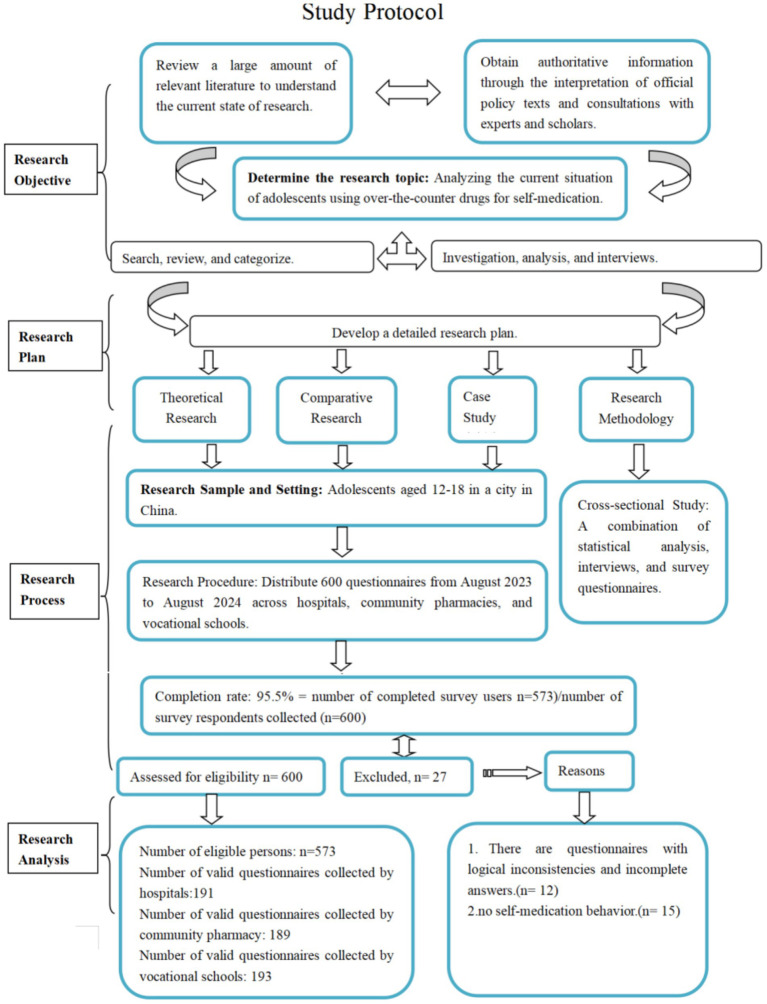
Objective: This study explores adolescent self-medication strategies for OTC drug use through multi-setting surveys in hospitals, pharmacies, and schools, aiming to enhance understanding of adolescents' medication behaviors and improve awareness of safe medication practices.
Methods: This cross-sectional study distributed data via questionnaires from adolescents aged 12 to 18 between August 2023 and August 2024. The questionnaire included demographic information, health status, OTC medication usage patterns, motivations for use, knowledge of OTC drugs, and purchasing behaviors. A total of 600 questionnaires were distributed, and after logical consistency checks, 573 valid questionnaires were included in the final analysis.
Results: The study found that 97.5% of adolescents used OTC medications in the past year, with 52.5% using them 1-2 times, 31% using them 3-5 times, and 14% using them more than 5 times. However, 23.75% lacked knowledge of proper usage, 25.67% misunderstood antibiotic use, 6.67% were unaware of adverse reactions, and 9.17% did not recognize Traditional Chinese Medicine side effects.
Conclusion: This study highlights common self-medication among adolescents with significant knowledge gaps on OTC drugs and side effects. It calls for better health education, especially in schools, and a more active role for pharmacists and healthcare professionals. Regulatory bodies should enhance oversight, and future research should explore OTC traditional Chinese medicines and social adaptability.
Keywords: adolescents; drug safety; health education; over-the-counter drugs; self-medication.
Copyright © 2025 Ma and Zhang.
Conflict of interest statement
The authors declare that the research was conducted in the absence of any commercial or financial relationships that could be construed as a potential conflict of interest.
Figures
References
-
- World Health Organization . WHO guidelines for the regulatory assessment of medicinal products for use in self-medication. Available online at: http://apps.who.int/medicinedocs/en/d/Js2218e/1.html. Accessed March 31, 2014.
-
- World Health Organization . The role of the pharmacist in self-care and self-medication. Report of the 4th WHO consultative group on the role of the pharmacist. The Hague. The Netherlands: World Health Organization; (1998).
-
- Asefzadeh S, Barkhordari F, Moghadam F. Self-medication among cardiovascular patients of Bu-Ali hospital. J Qazvin Univ Med Sci. (2003) 7:91–4.
-
- Tajik R, Shami M, Mohammad Beigi A. Knowledge, attitude and practice of self-medication in mothers in Arak. Payesh Health Monit. (2011) 10:197–204.
MeSH terms
Substances
LinkOut - more resources
Full Text Sources
Medical
Miscellaneous
