


Facial Anatomy Teaching for Aesthetic Surgery: Using 3-dimensional Photogrammetry and Immersive Virtual Reality
- PMID: 40642258
- PMCID: PMC12245329
- DOI: 10.1097/GOX.0000000000006972
Facial Anatomy Teaching for Aesthetic Surgery: Using 3-dimensional Photogrammetry and Immersive Virtual Reality
Abstract
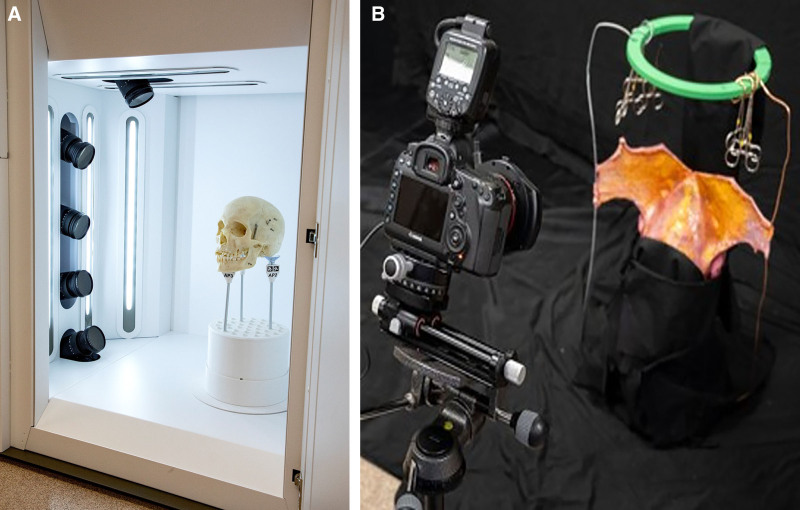
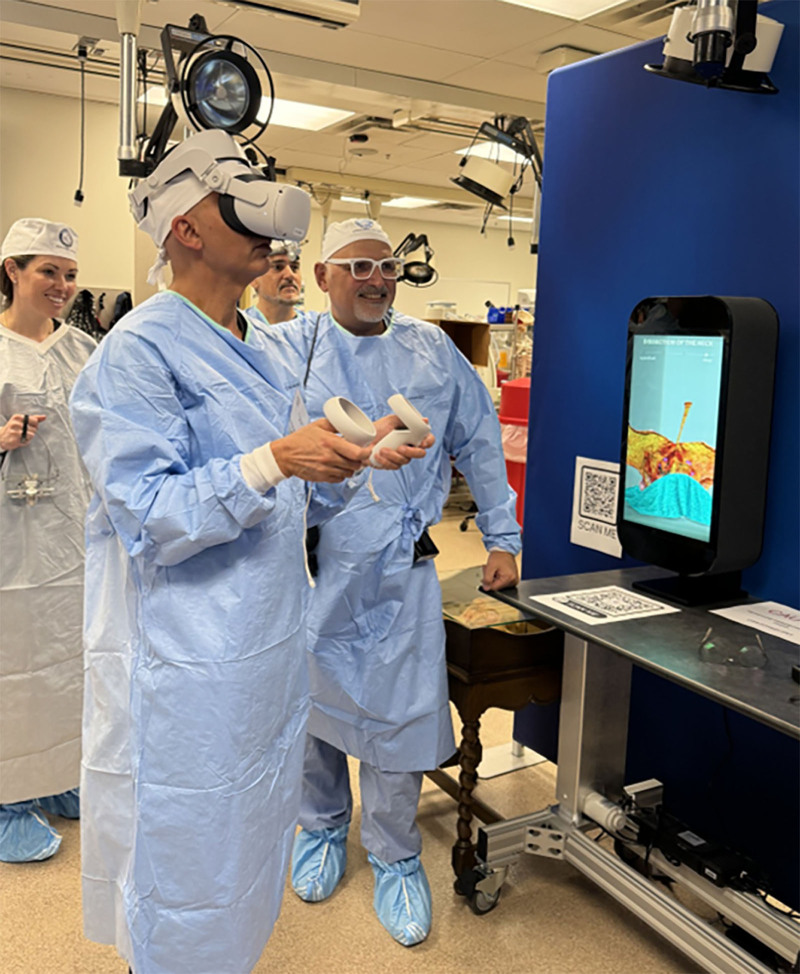
Anatomy is a critical component of surgical training; however, traditional resources-such as Netter's Surgical Anatomy, Gray's Anatomy, and anatomy applications-often fall short in delivering surgically relevant, 3-dimensional (3D) perspectives of facial anatomy. Although cadaveric dissection remains a valuable teaching tool, its accessibility is limited by cost, ethical concerns, and the lack of structured curricula, making it less feasible for ongoing surgical education. To address these limitations, this article introduced a novel educational approach that integrates 3D photogrammetry and virtual reality technology into the surgical anatomy curriculum for craniofacial and aesthetic surgery. Six fresh cadaveric specimens were meticulously dissected by a plastic surgeon to illustrate the intricate layered anatomy of the face and neck. At each stage of the dissection, a photogrammetry technique was used to capture 360-degree images using 5 digital single-lens reflex cameras alongside a 3D handheld camera. This approach not only ensured high-quality imaging but also facilitated the creation of detailed, lifelike virtual 3D models, enhancing the understanding of facial and neck anatomy within a surgical context. Additionally, we present some technical refinements of the 3D volume renderings to capture precise anatomical details during our dissections. Preliminary results from the use of this technology in anatomy courses and workshops indicated trainee engagement, a clearer grasp of the spatial anatomical relationships, and greater confidence in applying this knowledge to hands-on surgical procedures.
Copyright © 2025 The Authors. Published by Wolters Kluwer Health, Inc. on behalf of The American Society of Plastic Surgeons.
Conflict of interest statement
The authors have no financial interest to declare in relation to the content of this article.
Figures
References
-
- Streith L, Cadili L, Wiseman SM. Evolving anatomy education strategies for surgical residents: a scoping review. Am J Surg. 2022;224:681–693. - PubMed
-
- Erolin C. Interactive 3D digital models for anatomy and medical education. Adv Exp Med Biol. 2019;1138:1–16. - PubMed
-
- Smith DM, Aston SJ, Cutting CB, et al. Applications of virtual reality in aesthetic surgery. Plast Reconstr Surg. 2005;116:898–904; discussion 905. - PubMed
-
- Smith DM, Aston SJ, Cutting CB, et al. Designing a virtual reality model for aesthetic surgery. Plast Reconstr Surg. 2005;116:893–897. - PubMed
LinkOut - more resources
Full Text Sources