


Social profiles among youth with attention-deficit/hyperactivity disorder (ADHD): Evidence from the ABCD study
- PMID: 40645110
- PMCID: PMC12274712
- DOI: 10.1016/j.dcn.2025.101591
Social profiles among youth with attention-deficit/hyperactivity disorder (ADHD): Evidence from the ABCD study
Abstract
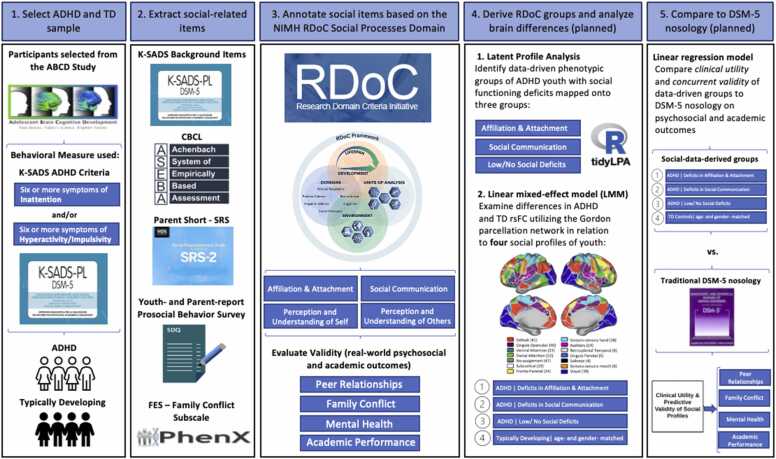
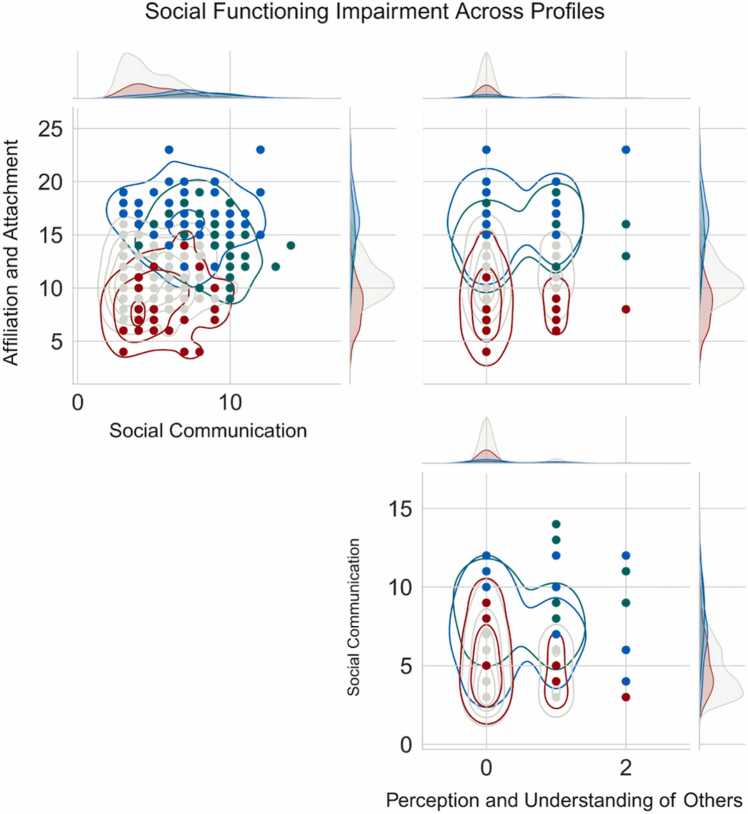
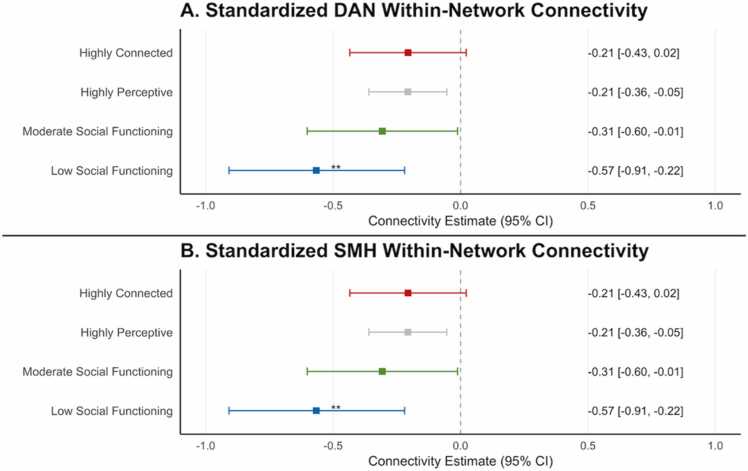
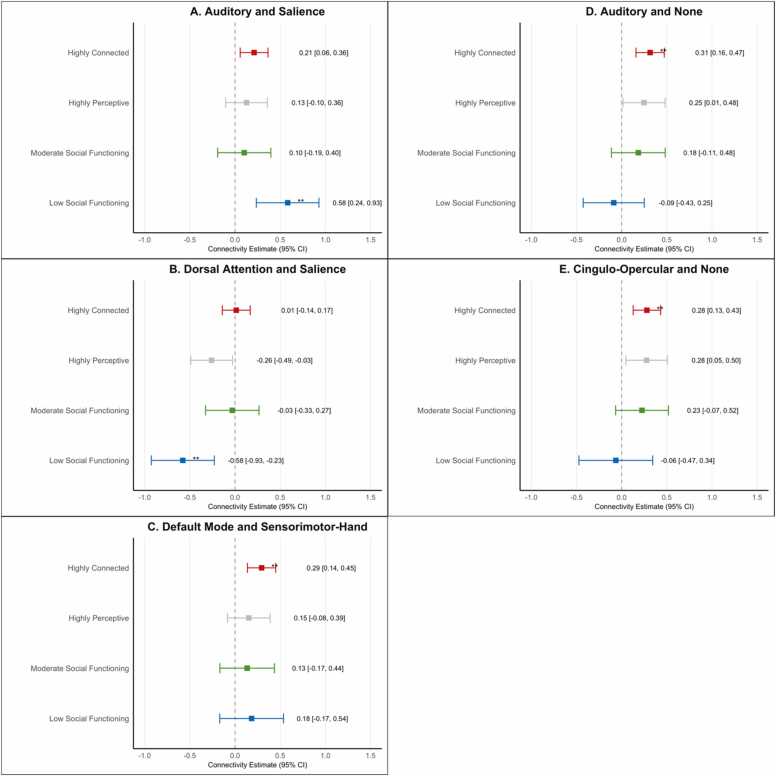
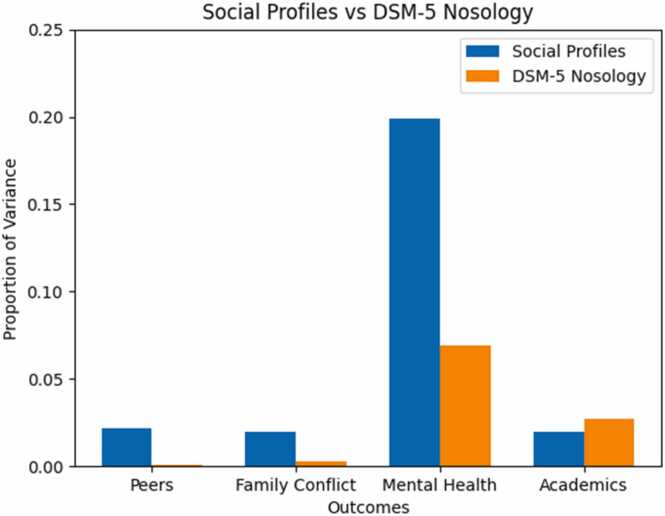
Social functioning difficulties among youth with attention-deficit/hyperactivity disorder (ADHD) have been examined behaviorally; however, limited research has investigated brain networks associated with social difficulties among youth with ADHD. A growing body of literature supports the utility of the NIMH's Research Domain Criteria (RDoC) framework, which emphasizes broad neurobiological based dimensions, allowing for the integration of models of both neural circuitry and behavior when examining externalizing behaviors in youth. We hypothesized that an ADHD classification system based on social functioning would better predict real-world psychosocial and academic outcomes compared to traditional Diagnostic and Statistical Manual of Mental Disorders (DSM-5) nosology of ADHD presentations. First, using data from the Adolescent Brain Cognitive Development (ABCD) Study, we identified four distinct profiles of youth with ADHD ranging from low social functioning to high social functioning. These social-data-derived profiles were linked to differential social challenges associated with caregiver income and mental health disorders. Next, our neuroimaging findings initially revealed differential patterns of functional connectivity across profiles involving attention-control, cingulo-opercular, sensorimotor networks. However, these connectivity differences were not consistently replicated, indicating that social functioning alone may not define neurobiologically distinct subgroups. Finally, in comparing our social functioning profiles to existing DSM-5 nosology with respect to real-world psychosocial outcomes, our social profiles demonstrated greater explanatory power for outcomes related to peer relationships, family conflict, and mental health. Overall, these findings emphasize the heterogeneity in social functioning among ADHD youth and suggest that while behavioral profiles are clinically meaningful, future work should integrate additional dimensions, such as executive functioning, to more precisely capture the neurobiological underpinnings of ADHD.
Keywords: Attention-deficit/hyperactivity disorder; Brain networks; Research domain criteria; Resting state functional, connectivity; Social functioning.
Published by Elsevier Ltd.
Conflict of interest statement
Declaration of Competing Interest The authors declare that they have no known competing financial interests or personal relationships that could have appeared to influence the work reported in this paper.
Figures
References
-
- Achenbach T.M., Dumenci L., Rescorla L.A. Ratings of Relations Between DSM-IV Diagnostic Categories and Items of the CBCL/6-18, TRF, and YSR. 2001. p. 9.
-
- Achenbach T.M., Rescorla L.A. Child Behavior Checklist for Ages 6-18 (CBCL/6-18, ASEBA CBCL/6-18) [Database record] APA PsycTests. 2001
MeSH terms
LinkOut - more resources
Full Text Sources
Medical
