


Identification of technology-based models and efficacy of digital-based pain facial expression assessment tools among children: a systematic review
- PMID: 40646568
- PMCID: PMC12247435
- DOI: 10.1186/s12912-025-03451-9
Identification of technology-based models and efficacy of digital-based pain facial expression assessment tools among children: a systematic review
Abstract
Background: Pain management in children remains a significant challenge due to the lack of appropriate assessment methods. Facial expression-based instruments are widely used as facial expressions serve as a key nonverbal indicator of pain. However, conventional paper-based tools have limitations, including subjective interpretation, observer bias, and low accuracy. To address these challenges, digital technology-based facial recognition systems have emerged as a more objective and reliable alternative. This study aims to identify technology-based models and evaluate the efficacy of digital pain facial expression assessment tools for children. These technology-driven approaches aim to provide more objective and consistent solutions than conventional methods.
Purpose: This study aims to identify the technology-based models and efficacy of digital-based pain facial expression assessment instruments in children with a systematic review approach.
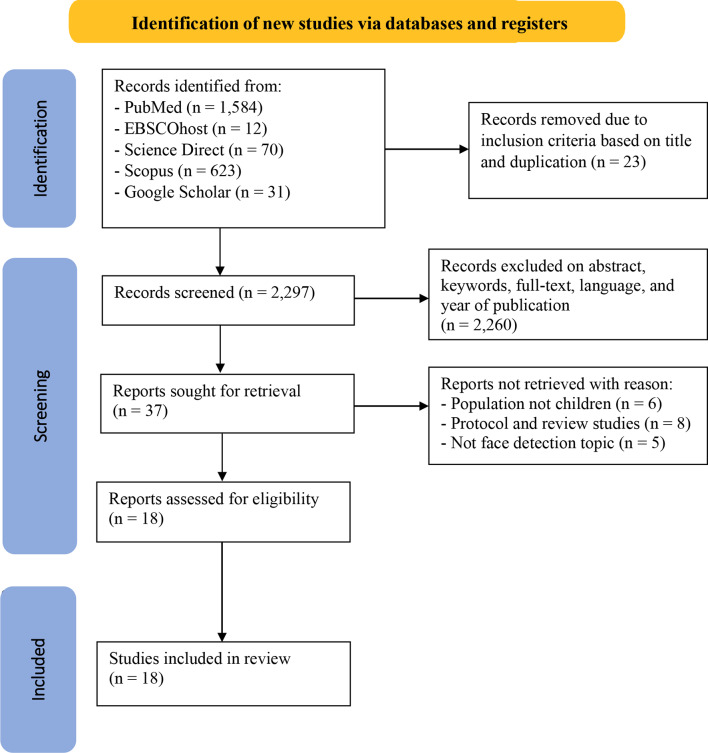
Methods: This systematic review follows the Preferred Reporting Items for Systematic Reviews and Meta-Analyses (PRISMA). The article search used five databases: PubMed, EBSCOhost, ScienceDirect, Scopus, and Google Scholar. The study questions used the PCC (Population, Concept, and Context) research framework guidelines. Children with pain as a population, assessment of pain facial expressions as a concept, and technological efficacy as a context. The inclusion criteria for this study were articles published from 2015 to 2024, full-text and free-text articles, and studies that focused on assessing facial expressions of pain in children. Studies were excluded if the article was not in English, and the research design was a literature review type. Study quality was assessed using the Critical Appraisal Checklist Tools from the Joanna Briggs Institute (JBI).
Results: We found 18 studies that described the technology model for assessing facial expressions of pain using computers and mobile applications through video and image recordings. Overall, this suggests that the model used to assess facial expressions of pain is more effective than conventional or paper-based pain assessments. The developed technology model has many advantages, including good performance, high accuracy, an excellent program, validity, reliability, high sensitivity, specificity, and more sensitive.
Conclusion: The findings of this study demonstrate that technology-based models for facial expression pain assessment provide a more objective, accurate, and efficient alternative to conventional methods. These digital tools, including computer and mobile applications, offer real-time analysis, reduce observer bias, and enhance consistency in pain evaluation. Their accessibility, convenience, and automation further strengthen their potential to revolutionize pediatric pain assessment, addressing the limitations of traditional paper-based approaches. Future research should focus on refining these models to improve accuracy across diverse pediatric populations.
Keywords: Children; Digital health; Facial expressions; Pain assessment; Technology.
© 2025. The Author(s).
Conflict of interest statement
Declarations. Ethics approval and consent to participate: Not applicable. Consent for publication: Not applicable. Competing interests: The authors declare no competing interests.
Figures


References
-
- Rennick JE, et al. Measuring psychological outcomes following pediatric intensive care unit hospitalization: psychometric analysis of the children’s critical illness impact scale. Pediatr Crit Care Med. 2011;12. 10.1097/PCC.0b013e3182191bfa. - PubMed
-
- Haraldstad K, Sørum R, Eide H, Natvig GK, Helseth S. Pain in children and adolescents: prevalence, impact on daily life, and parents’ perception, a school survey., Scand J Caring Sci, vol. 25, no. 1, pp. 27–36, Mar. 2011, 10.1111/j.1471-6712.2010.00785.x - PubMed
LinkOut - more resources
Full Text Sources
