


Curcumin Supplementation Improves Gastrointestinal Symptoms in Women with Severe Obesity: A Double-Blind, Randomized, Placebo-Controlled Trial-A Pilot Study
- PMID: 40647170
- PMCID: PMC12250708
- DOI: 10.3390/nu17132064
Curcumin Supplementation Improves Gastrointestinal Symptoms in Women with Severe Obesity: A Double-Blind, Randomized, Placebo-Controlled Trial-A Pilot Study
Abstract
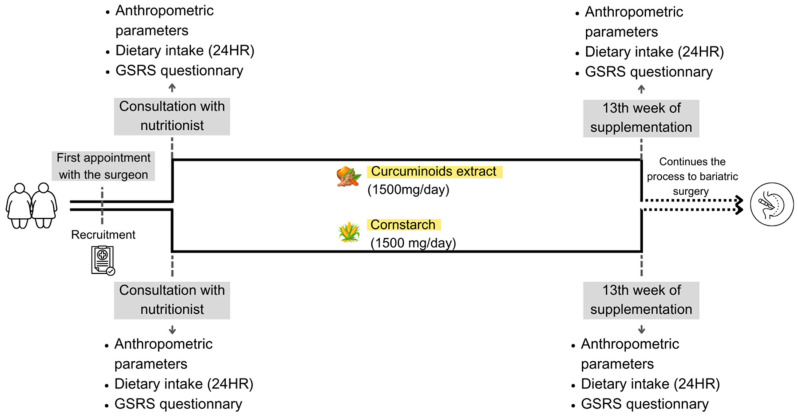
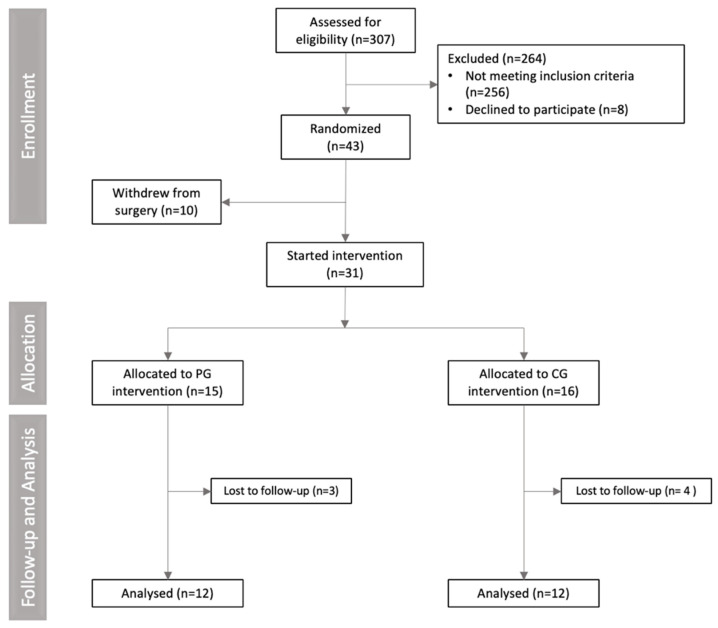
Gastrointestinal symptoms, including reflux, bloating, dyspepsia, stomach pain, and altered bowel patterns, are commonly reported in individuals with severe obesity and may significantly impact quality of life. Background/Objectives: Curcumin, a bioactive compound found in turmeric (Curcuma longa L.), possesses anti-inflammatory and antioxidant properties and has been investigated for its potential role in gastrointestinal health. However, its effects in individuals with severe obesity remain unclear. Methods: This double-blind, placebo-controlled clinical trial aimed to evaluate the effect of curcumin supplementation on gastrointestinal symptoms in women with severe obesity. Thirty-one women with a body mass index (BMI) ≥ 40 kg/m2 undergoing bariatric surgery were randomized to receive either 1500 mg of curcumin (98.75%) or a placebo (1500 mg corn starch) daily for 13 weeks. Gastrointestinal symptoms were assessed using the Gastrointestinal Symptom Rating Scale (GSRS), and stool consistency was assessed using the Bristol Stool Scale. Anthropometric measurements were also collected. Results: Participants had an average age of 33.1 ± 8 years and a BMI of 45.6 ± 3.31 kg/m2. No differences were observed between groups at baseline. At the end of the study, the curcumin group showed a significant reduction in the GSRS's total score compared to the placebo group (p = 0.002), with improvements in eructation (p = 0.011) and constipation (p = 0.007). Additionally, the curcumin group showed reduced BMI (p = 0.019) and neck circumference (p = 0.042). Conclusions: These findings suggest that curcumin supplementation may alleviate some gastrointestinal symptoms and improve anthropometric measures in women with severe obesity, providing a potential dietary strategy.
Keywords: gastrointestinal symptoms; stool consistency; turmeric.
Conflict of interest statement
The authors declare no conflicts of interest.
Figures
References
-
- Rubino F., Cummings D.E., Eckel R.H., Cohen R.V., Wilding J.P.H., Brown W.A., Stanford F.C., Batterham R.L., Farooqi I.S., Farpour-Lamb N.J., et al. Definition and diagnostic criteria of clinical obesity. Lancet Diabetes Endocrinol. 2025;13:221–262. doi: 10.1016/S2213-8587(24)00316-4. - DOI - PMC - PubMed
Publication types
MeSH terms
Substances
Grants and funding
LinkOut - more resources
Full Text Sources
Medical
