


Clinical and Pathological Features and Survival Outcomes of Breast Cancers with Intermediate ER Expression
- PMID: 40647549
- PMCID: PMC12248481
- DOI: 10.3390/cancers17132252
Clinical and Pathological Features and Survival Outcomes of Breast Cancers with Intermediate ER Expression
Abstract
Background: Breast cancer is the most prevalent women's cancer, representing about a third of all cancers diagnosed in women. Estrogen receptor (ER) is an important transcription factor expressed in 70% to 75% of all breast cancers. Of these breast cancers, the majority express ER robustly in 91-100% of tumor cells. However, a minority of breast cancers express ER in intermediate levels between 11% and 90% of tumor cells. The characteristics and outcomes of this intermediate subset of ER-positive breast cancers are not well studied.
Methods: We retrospectively reviewed the medical records of all breast cancer patients treated in our Cancer Center over a period of 8 years. Patients were grouped according to the level of ER expression in tumors with negative/low ER expression, intermediate ER expression, and high ER expression, and the groups were compared for tumor characteristics and outcomes.
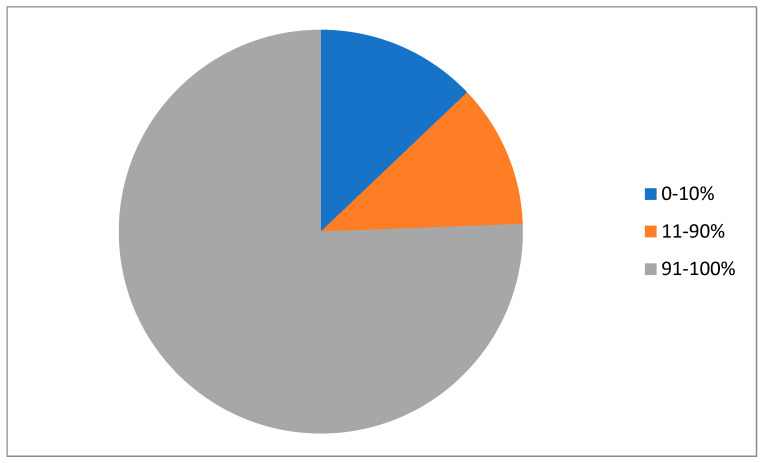
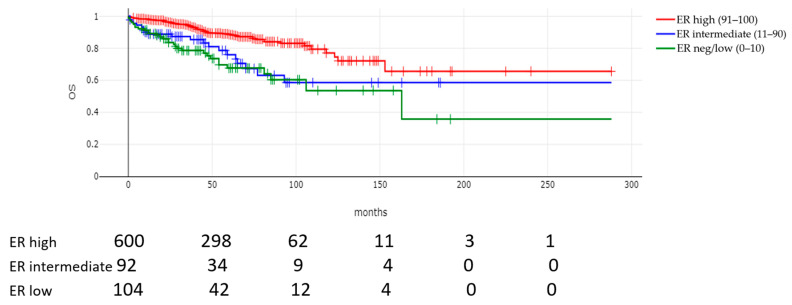
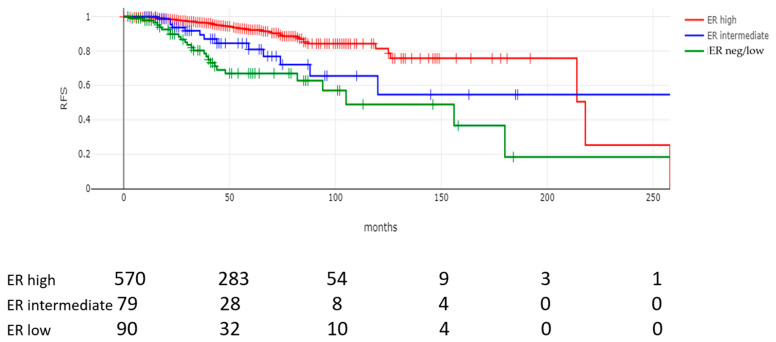
Results: Patients with high ER levels (91% to 100%) represented 75.6% (600 of 794 patients), patients with intermediate ER expression represented 11.5% of the entire group (91 of 794 patients), and patients with negative/low ER expression (ER expression 0-10%) represented 12.9% of the entire cohort (103 of 794 patients). Patients with intermediate ER expression presented at a younger age than patients with high-ER cancers, as well as a more advanced stage and higher grade. These characteristics were more akin to patients with negative/low ER levels. Mastectomy was the surgical method of resection more commonly in ER-intermediate tumors than in ER-high tumors. The relapse-free survival (RFS) of patients with ER-intermediate cancers was worse than the RFS of patients that expressed ER robustly.
Conclusion: The level of expression of ER defines groups of patients with varying characteristics and prognoses. Patients in the intermediate ER expression group had notable differences from patients in the high ER expression group including younger age, (more often) a higher grade, and low PR positivity. Differences observed between the group of patients with intermediate ER expression and that with high ER expression may help to prioritize therapeutic algorithms.
Keywords: ER expression; ER expression level; ER-intermediate; breast cancer; prognosis.
Conflict of interest statement
The authors declare no conflicts of interest.
Figures
References
-
- Sørlie T., Perou C.M., Tibshirani R., Aas T., Geisler S., Johnsen H., Hastie T., Eisen M.B., van de Rijn M., Jeffrey S.S., et al. Gene expression patterns of breast carcinomas distinguish tumor subclasses with clinical implications. Proc. Natl. Acad. Sci. USA. 2001;98:10869–10874. doi: 10.1073/pnas.191367098. - DOI - PMC - PubMed
LinkOut - more resources
Full Text Sources
Research Materials
