


Analysis of Selected Small Proline-Rich Proteins in Tissue Homogenates from Samples of Head and Neck Squamous Cell Carcinoma
- PMID: 40647632
- PMCID: PMC12248949
- DOI: 10.3390/diagnostics15131633
Analysis of Selected Small Proline-Rich Proteins in Tissue Homogenates from Samples of Head and Neck Squamous Cell Carcinoma
Abstract
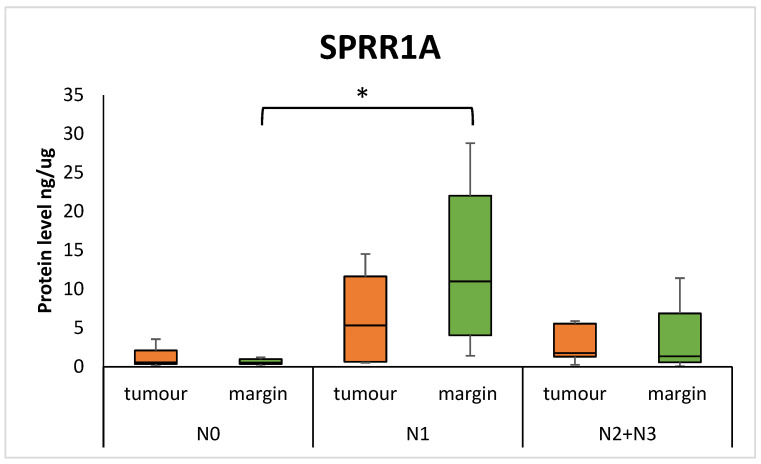
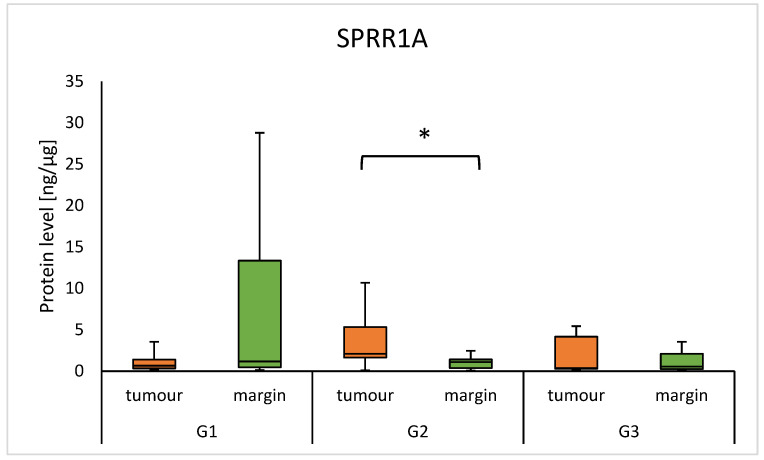
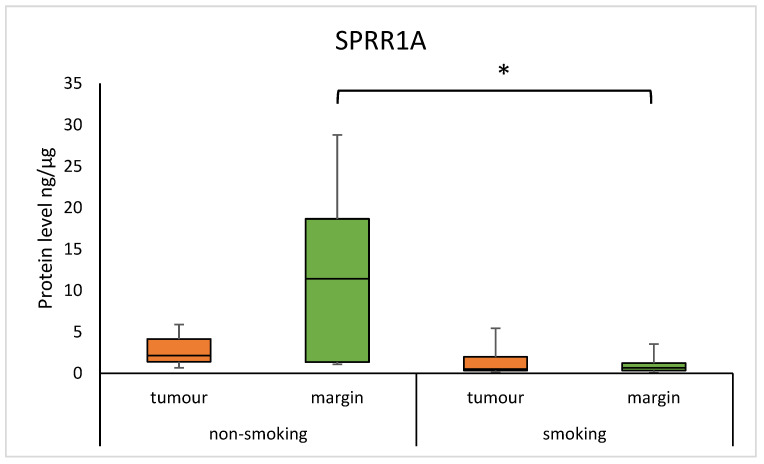
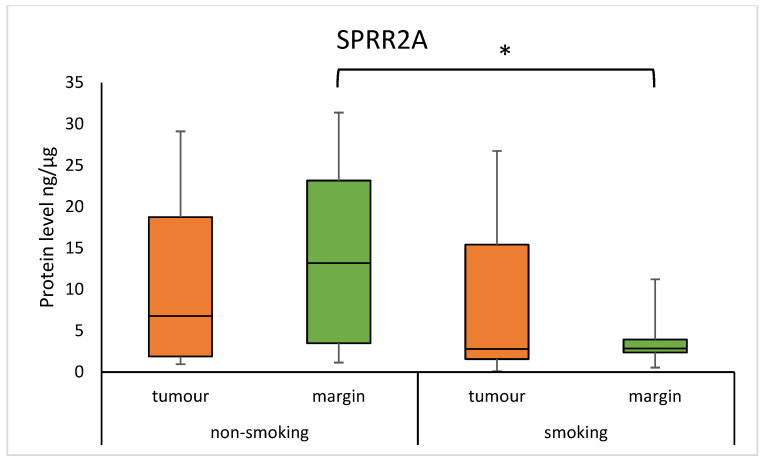
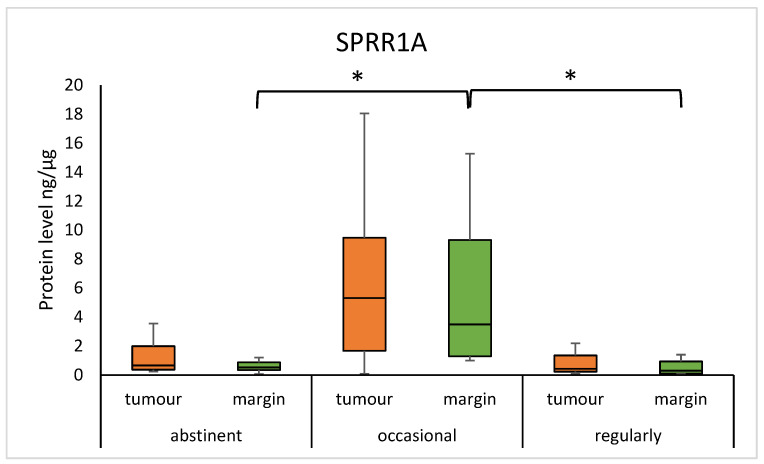
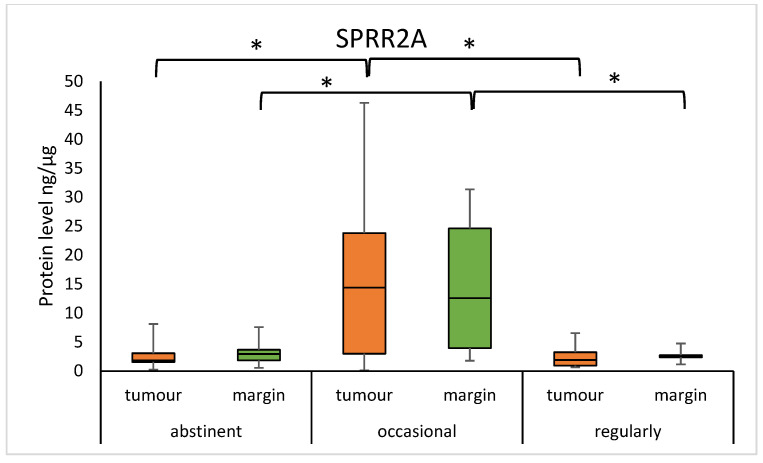
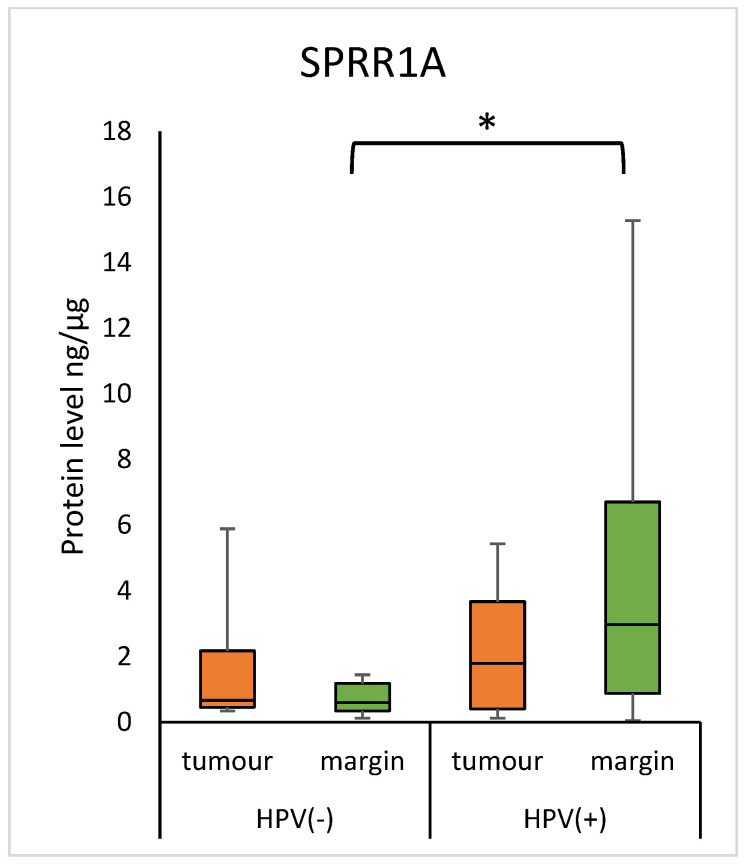
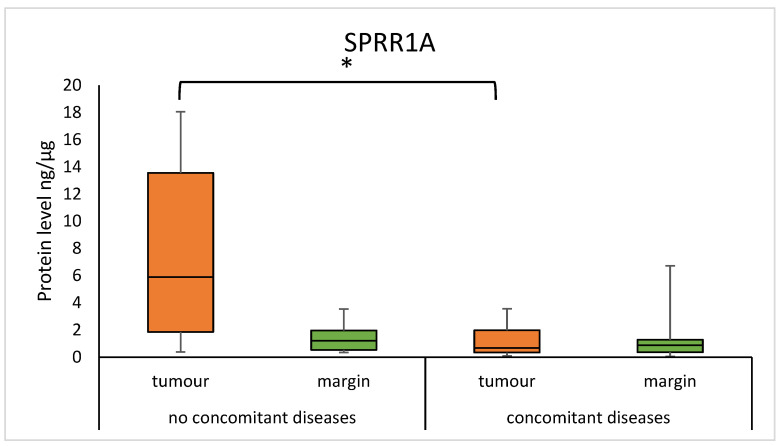
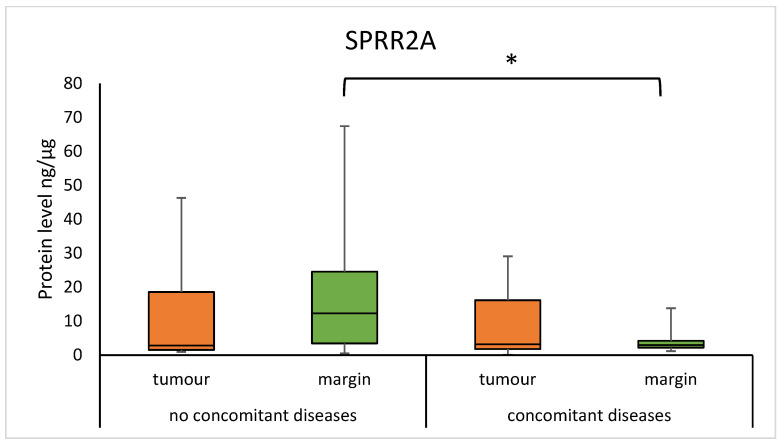
Background/Objectives: Head and neck squamous cell carcinoma (HNSCC) ranks sixth in the world in terms of incidence. Small proline-rich proteins (SPRRs) are precursors of the keratinocyte envelope and act as substrates of transglutaminase. A change in SPRR expression is characteristic in a few types of cancer. Our aim was to determine the concentration of SPRR1A and SPRR2A in tumours samples obtained from 61 patients with HNSCC (OSCC, OPSCC, LSCC, HPSCC, NCSCC, and SSCC). Also, we aimed to determine the relationship between protein concentration and other clinical and/or demographic variables. Methods: An ELISA test was used to determine the concentrations of SPRR in the tumour tissue homogenates. Results: In margin samples, we found a statistically significant association between SPRR1A levels and nodal status (N) and between SPRR1A levels in tumours and margins with G2 histological grade. When we analysed the effect of tobacco and alcohol habits, we found a statistically significant difference between the SPRR1A and SPRR2A amount in smokers and non-smokers in margin samples. Also, we found a statistically significant difference between the SPRR1A and SPRR2A levels in tumour and margin samples obtained from patients that either abstain and occasionally or regularly consume alcohol. Furthermore, we found in tumour and margin samples from patients with concomitant diseases an association between SPRR1A and SPRR2A levels. Our results showed altered concentrations of SPRR1A at margins, depending on HPV status. Conclusions: These results suggest that differences in SPRR proteins are determined by disease status and unhealthy behaviours, which, in a wider perspective, can influence carcinogenesis.
Keywords: HNSCC; SPRR1A; SPRR2A; SPRRs; carcinogenesis; head and neck squamous cell carcinoma; protein level; small proline rich proteins; surgical margin; tumour.
Conflict of interest statement
The authors declare no conflicts of interest. The funders had no role in the design of the study; in the collection, analyses, or interpretation of data; in the writing of the manuscript; or in the decision to publish the results.
Figures
References
LinkOut - more resources
Full Text Sources
