


Role of Liquid Biopsy for Early Detection, Prognosis, and Therapeutic Monitoring of Hepatocellular Carcinoma
- PMID: 40647654
- PMCID: PMC12249386
- DOI: 10.3390/diagnostics15131655
Role of Liquid Biopsy for Early Detection, Prognosis, and Therapeutic Monitoring of Hepatocellular Carcinoma
Abstract
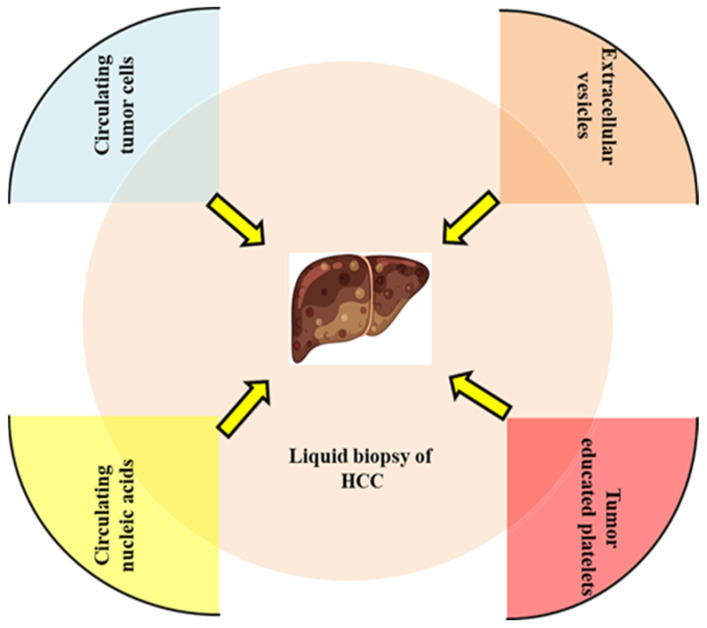
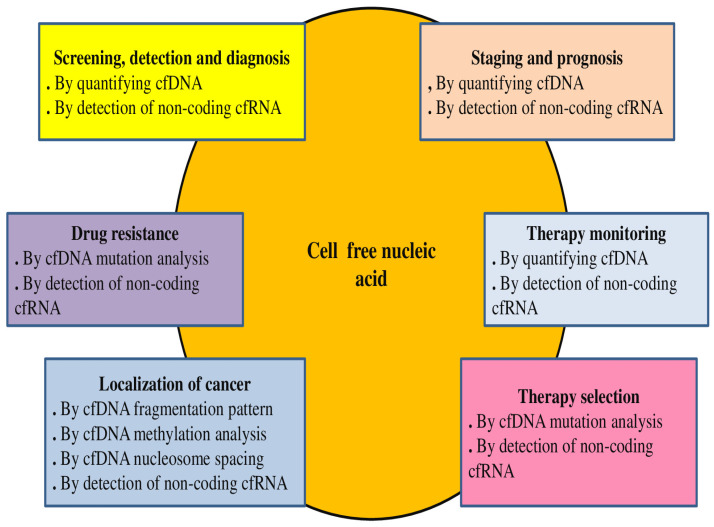
The global prevalence of hepatocellular carcinoma (HCC) is getting worse, leading to an urgent need for improved diagnostic and prognostic strategies. Liquid biopsy, which analyzes circulating tumor cells (CTCs), cell-free DNA (cfDNA), cell-free RNA (cfRNA), and extracellular vesicles (EVs), has emerged as a minimally invasive and promising alternative to traditional tissue biopsy. These biomarkers can be detected using sensitive molecular techniques such as digital PCR, quantitative PCR, methylation-specific assays, immunoaffinity-based CTC isolation, nanoparticle tracking analysis, ELISA, next-generation sequencing, whole-genome sequencing, and whole-exome sequencing. Despite several advantages, liquid biopsy still has challenges like sensitivity, cost-effectiveness, and clinical accessibility. Reports highlight the significance of multi-analyte liquid biopsy panels in enhancing diagnostic sensitivity and specificity. This approach offers a more comprehensive molecular profile of HCC, early detection, and tracking therapeutic treatment, particularly in those cases where single-analyte assays and imaging fail. The technological advancement in the isolation and analysis of CTC, cell-free nucleic acids, and EVs is increasing our understanding of extracting genetic information from HCC tumors and discovering mechanisms of therapeutic resistance. Furthermore, crucial information on tumor-specific transcriptomic and genomic changes can be obtained using cfRNA and cfDNA released into the peripheral blood by tumor cells. This review provides an overview of current liquid biopsy strategies in HCC and their use for early detection, prognosis, and monitoring the effectiveness of HCC therapy.
Keywords: cell free nucleic acids; circulating tumor cells; hepatocellular carcinoma; liquid biopsy; prognosis.
Conflict of interest statement
The author declares no conflict of interest.
Figures
References
-
- Anwar S., Almatroudi A., Alsahli M.A., Khan M.A., Khan A.A., Rahmani A.H. Natural products: Implication in cancer prevention and treatment through modulating various biological activities. Anti-Cancer Agents Med. Chem. (Former. Curr. Med. Chem.-Anti-Cancer Agents) 2020;20:2025–2040. doi: 10.2174/1871520620666200705220307. - DOI - PubMed
Publication types
Grants and funding
LinkOut - more resources
Full Text Sources
