


Oxidative Stress, MicroRNAs, and Long Non-Coding RNAs in Osteoarthritis Pathogenesis: Cross-Talk and Molecular Mechanisms Involved
- PMID: 40650204
- PMCID: PMC12250001
- DOI: 10.3390/ijms26136428
Oxidative Stress, MicroRNAs, and Long Non-Coding RNAs in Osteoarthritis Pathogenesis: Cross-Talk and Molecular Mechanisms Involved
Abstract
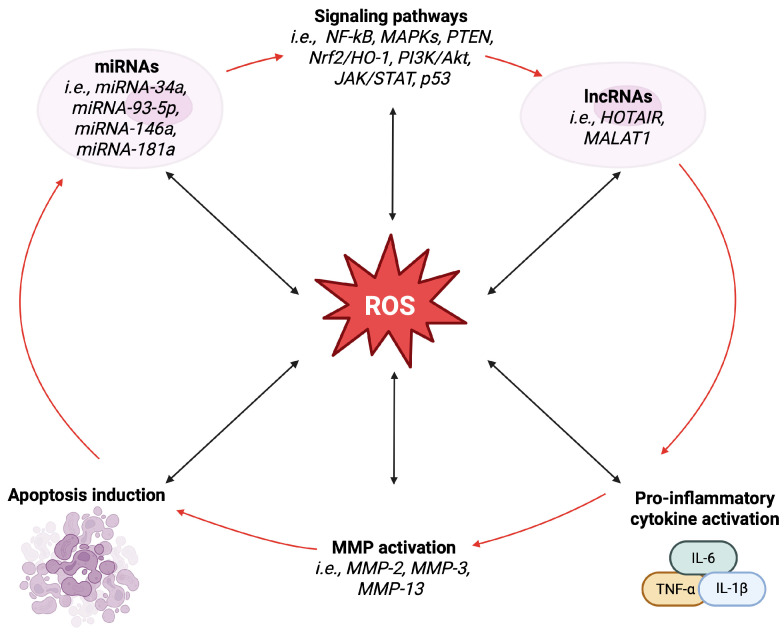
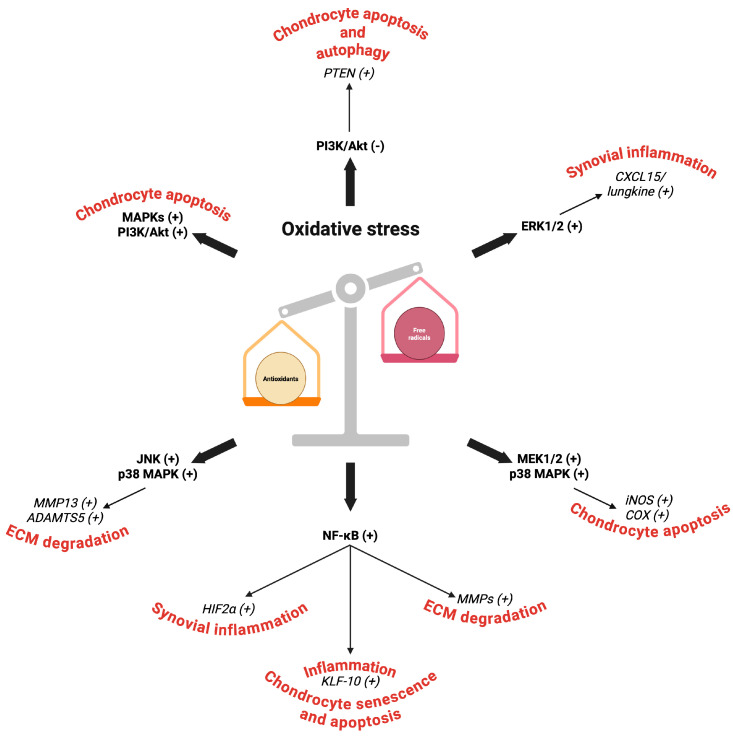
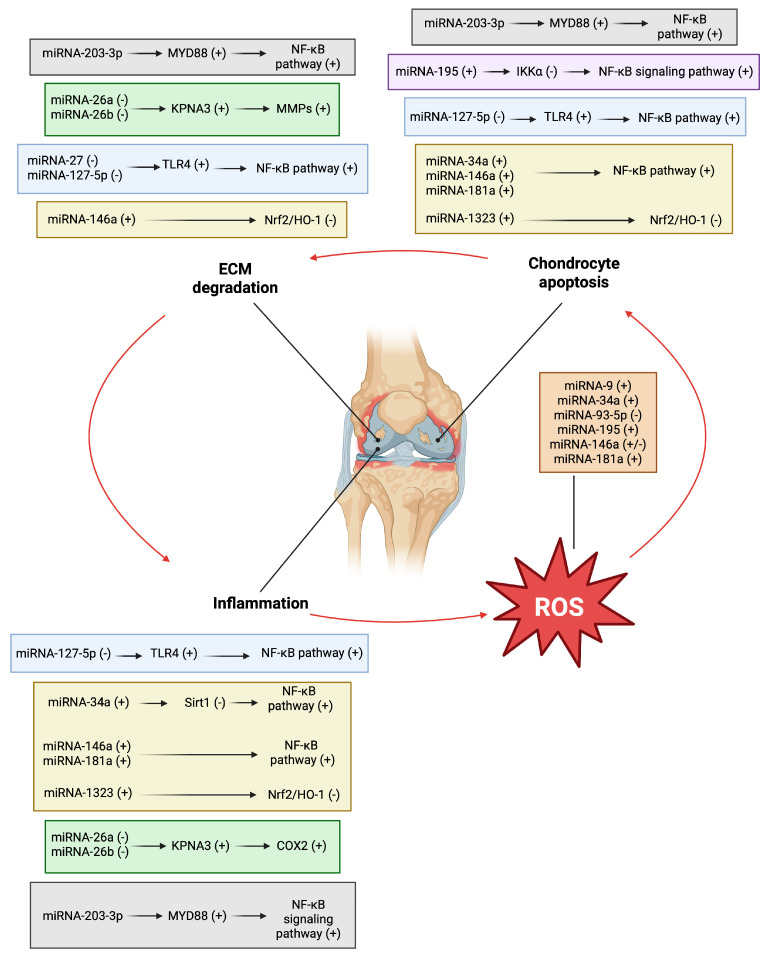
Osteoarthritis (OA) is the most common degenerative joint disease, characterized by articular cartilage degradation, synovial inflammation, and ligament lesions. Non-coding RNAs (ncRNAs) do not encode any protein products and play a fundamental role in regulating gene expression in several physiological processes, such as in the regulation of cartilage homeostasis. When deregulated, they affect the expression of genes involved in cartilage degradation and synovial inflammation, contributing to the onset and progression of OA. Oxidative stress is also involved in the pathogenesis of OA by contributing to the inflammatory response, degradation of the extracellular matrix, and induction of chondrocyte apoptosis. Studies in the literature show a reciprocal relationship between the altered expression of a number of ncRNAs, including microRNAs (miRNAs) and long non-coding RNAs (lncRNAs), and oxidative stress. The aim of this review is to highlight the role of oxidative stress, miRNAs, and lncRNAs and their cross-talk in OA in order to understand the main molecular mechanisms involved and to identify possible targets that may be useful for the identification and development of new diagnostic and therapeutic approaches for this disease.
Keywords: cartilage degradation; lncRNAs; miRNAs; osteoarthritis; oxidative stress.
Conflict of interest statement
The authors declare no conflicts of interest.
Figures

References
Publication types
MeSH terms
Substances
LinkOut - more resources
Full Text Sources
Medical
