


Disability Among Middle Aged and Older Immigrants: Differences by Citizenship, English Proficiency, and Years in United States
- PMID: 40650549
- PMCID: PMC12337104
- DOI: 10.1177/08982643251359389
Disability Among Middle Aged and Older Immigrants: Differences by Citizenship, English Proficiency, and Years in United States
Abstract
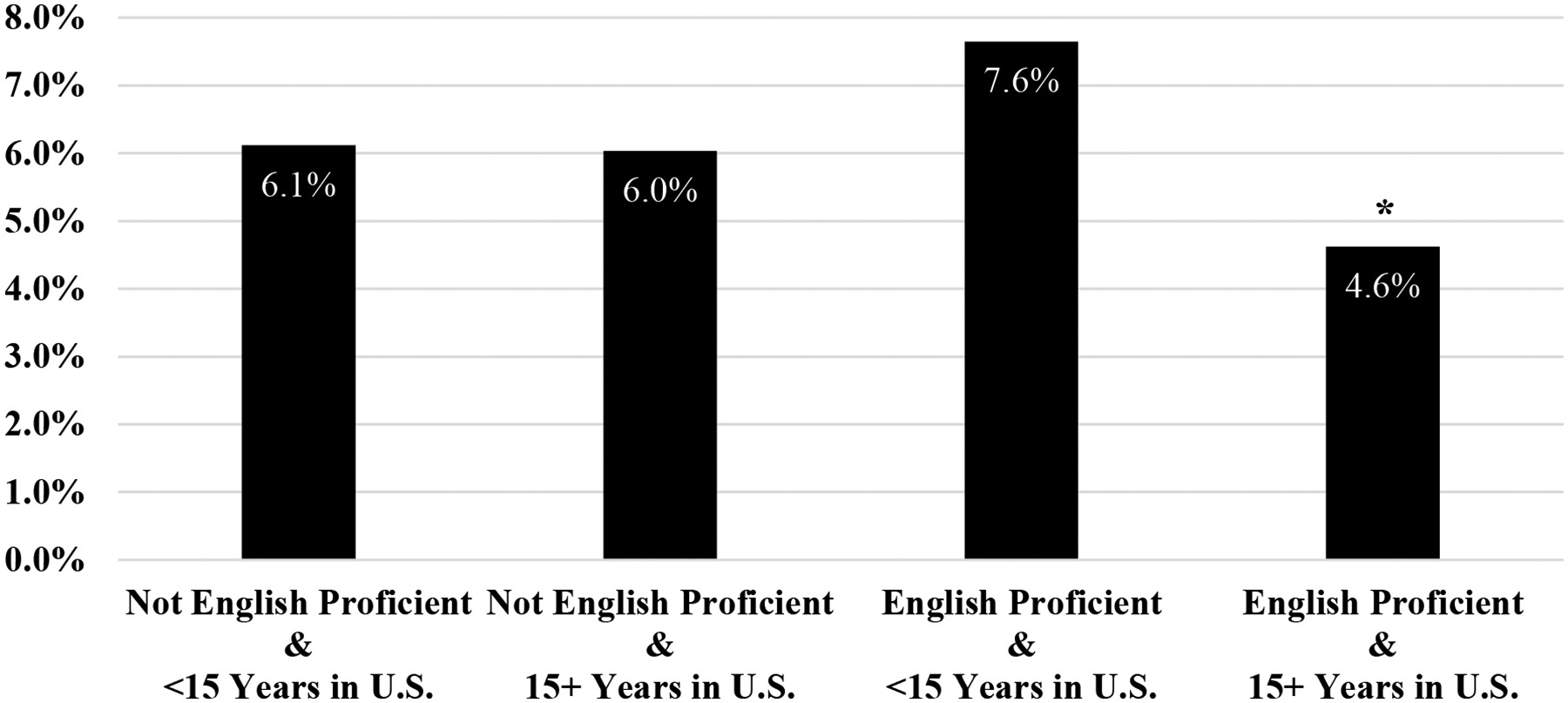
ObjectivesUnited States (U.S.) immigrants are rapidly aging, although little is known on how acculturation influences their disability risk.MethodsWe pooled 2000-2018 data (n = 50,075) from the National Health Interview Survey (NHIS) to examine odds of activities of daily living (ADL) disability among middle aged (40-64) and older (65+) immigrants based on three acculturation indicators while accounting for various measures.ResultsAmong middle aged immigrants, citizenship was associated with higher odds of ADL disability after accounting for socioeconomic factors. Among both middle aged and older immigrants, English proficiency was associated with lower odds of ADL disability until accounting for socioeconomic factors. Among older immigrants, lower ADL disability odds were observed among those with English proficiency and greater U.S. duration.DiscussionAcculturation had heterogenous influences on ADL disability risk among aging U.S. immigrants, while the interplay of these mechanisms shaped varied outcomes.
Keywords: acculturation; activities of daily living; disablement process; life course; socioeconomic factors.
Figures
References
-
- Alegría M, Sribney W, Woo M, Torres M, & Guarnaccia P (2007). Looking Beyond Nativity: The Relation of Age of Immigration, Length of Residence, and Birth Cohorts to the Risk of Onset of Psychiatric Disorders for Latinos. Research in Human Development, 4(1–2), 19–47. 10.1080/15427600701480980 - DOI - PMC - PubMed
-
- Allison PD (2009). Missing Data. In The SAGE Handbook of Quantitative Methods in Psychology. SAGE Publications Ltd. 10.4135/9780857020994 - DOI
Grants and funding
LinkOut - more resources
Full Text Sources
