


Evaluating acceptability and experiences of pregnant women at high risk of developing gestational diabetes who take part in antenatal intervention trials: a qualitative systematic review
- PMID: 40652192
- PMCID: PMC12255016
- DOI: 10.1186/s12884-025-07854-z
Evaluating acceptability and experiences of pregnant women at high risk of developing gestational diabetes who take part in antenatal intervention trials: a qualitative systematic review
Abstract
Background: Gestational diabetes mellitus (GDM) is associated with short- and longer-term adverse outcomes for both mother and child. The success of randomised controlled trials (RCTs) assessing interventions to prevent GDM depends in part on participant adherence to and acceptability of the intervention. A review of the nested-qualitative components of antenatal RCTs to prevent GDM is lacking. This qualitative systematic review aimed to evaluate the experiences of pregnant women at higher risk of developing GDM who took part in preconception and/or pregnancy interventions which aimed to reduce GDM.
Methods: Electronic databases (MEDLINE, EMBASE, Cochrane Library), and reference and citation lists were searched up to February 2025. Studies were eligible if they included qualitative research methods to examine the experiences of pregnant women following an intervention to reduce GDM. We used the PRISMA (Preferred Reporting Items for Systematic Reviews and Meta-Analyses) framework, and the Critical Appraisal Skills Programme (CASP) qualitative checklist was used to assess the quality of the studies.
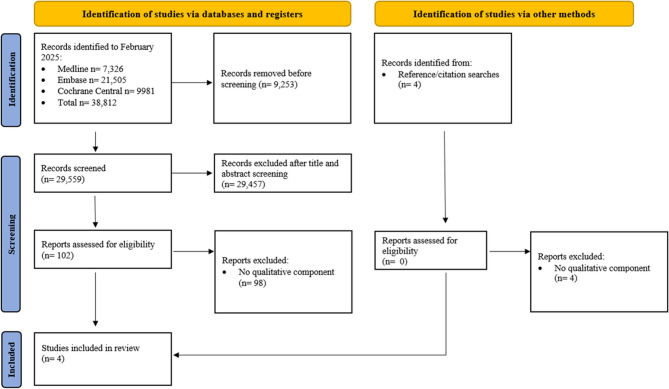
Results: Of the 38,812 studies initially identified, 102 trials were screened for eligibility, and four met the inclusion criteria and were included. All were pilot RCTs using semi-structured interviews in high-income countries (UK n = 3, USA n = 1). Data were synthesised into three themes: (1) acceptability of the interventions, (2) adherence to the interventions, and (3) perceived change in knowledge, attitude and behaviour. Acceptability of interventions was influenced by awareness of GDM, extra support and antenatal care, and natural pharmacological supplements. Adherence to interventions was facilitated by the intervention content and delivery. Perceived change in knowledge, attitude and behaviour was facilitated by intervention specific components and perceived improvements in health.
Discussion: This review identified factors influencing adherence and acceptability of interventions for pregnant women at high risk of GDM. It also highlighted a lack of embedded qualitative studies exploring women's experiences of participating in antenatal interventions. The findings suggest that improving the design and implementation of pregnancy interventions requires greater attention to participants' experiences and support systems. This study highlights the need for nested qualitative studies in RCTs to improve acceptability and adherence to pregnancy interventions.
Keywords: Acceptability; Experience; Gestational diabetes; Intervention; Pregnancy; Randomised controlled trials.
© 2025. The Author(s).
Conflict of interest statement
Declarations. Ethical approval and consent to participate: Not applicable. Consent for publication: Not applicable. Competing interests: The authors declare no competing interests.
Figures
References
-
- Hivert MF, Backman H, Benhalima K, et al. Pathophysiology from preconception, during pregnancy, and beyond. Lancet. 2024;404(10448):158–74. 10.1016/S0140-6736(24)00827-4. - PubMed
-
- Sweeting A, Hannah W, Backman H, et al. Epidemiology and management of gestational diabetes. Lancet. 2024;404(10448):175–92. 10.1016/S0140-6736(24)00825-0. - PubMed
-
- Bashir M, Fagier Y, Ahmed B, Konje C. An overview of diabetes mellitus in pregnant women with obesity. Best Pract Res Clin Obstet Gynaecol. 2024;93. 10.1016/j.bpobgyn.2024.102469. - PubMed
Publication types
MeSH terms
LinkOut - more resources
Full Text Sources
Medical
Miscellaneous
