


SERUM LncRNA SNHG16: A Biomarker for Diagnosing Childhood Obesity and Predicting Its Progression to Metabolic Syndrome
- PMID: 40655166
- PMCID: PMC12256061
- DOI: 10.2147/DMSO.S513449
SERUM LncRNA SNHG16: A Biomarker for Diagnosing Childhood Obesity and Predicting Its Progression to Metabolic Syndrome
Abstract
Purpose: Obesity is a major risk factor for metabolic syndrome (MS) in children. This study explores the expression and clinical significance of long non-coding RNA SNHG16 (SNHG16) in childhood obesity and its complications with MS (obesity-MS).
Patients and methods: Healthy controls and obese children (categorized as those with simple obesity or obesity-MS) were enrolled. Serum SNHG16 and miR-27a-3p levels were quantified by RT-qPCR. ROC curves evaluated SNHG16's diagnostic value for obesity. Logistic regression analysis identified potential risk factors for the development of obesity-MS. DLR assay and RIP assay confirmed the interaction between SNHG16 and miR-27a-3p. Bioinformatics was used to predict downstream genes of miR-27a-3p and, then GO and KEGG enrichment analysis identified the functions and signaling pathways of these genes.
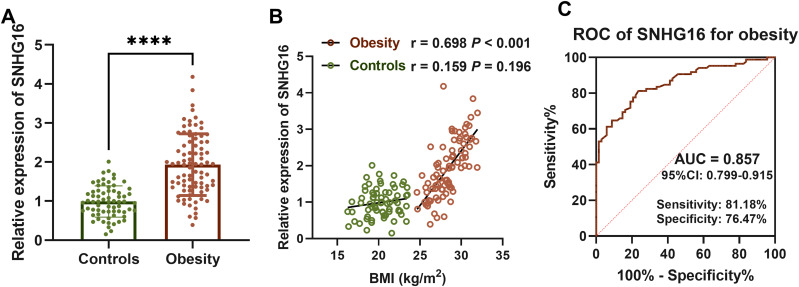
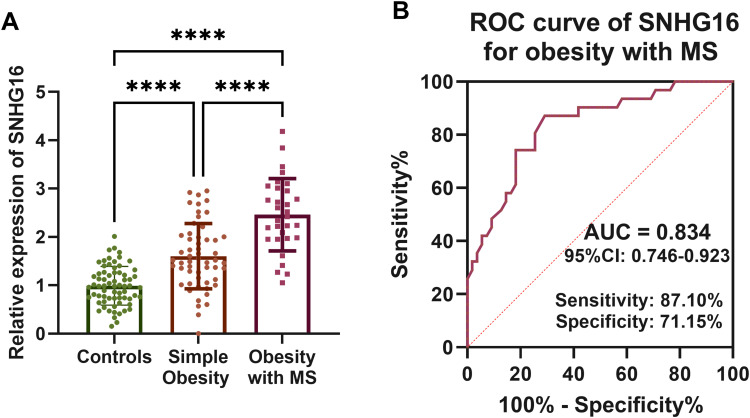
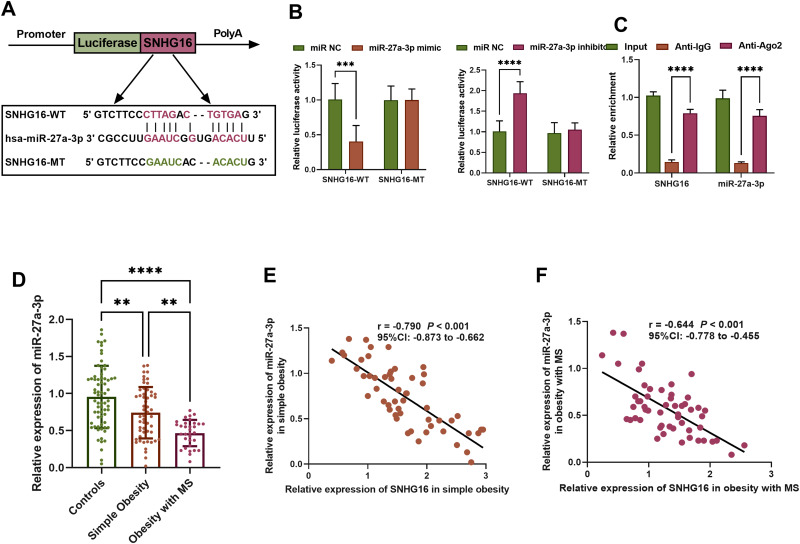
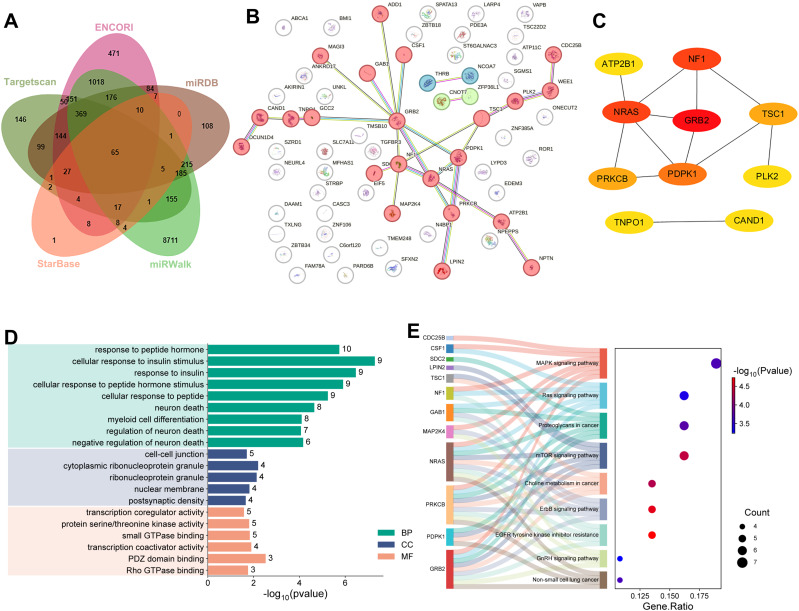
Results: Serum SNHG16 levels were distinctly upregulated in obese children, especially those with obesity-MS. In contrast, miR-27a-3p expression showed the opposite trend. Additionally, SNHG16 was positively correlated with BMI in obese children. Serum SNHG16 exhibited 81.18% sensitivity and 76.47% specificity in distinguishing controls from obese individuals. Furthermore, serum SNHG16, BMI, HOMA-IR, and TG are potential risk factors for MS in obese children. Mechanistically, SNHG16 directly targets miR-27a-3p, and miR-27a-3p targets 65 genes primarily enriched in insulin response and the MAPK, Ras, and mTOR signaling pathways.
Conclusion: Elevated serum SNHG16 levels may serve as diagnostic biomarkers for obese children and predict obesity-MS. SNHG16 may also contribute to the progression of obesity and MS by targeting miR-27a-3p.
Keywords: SNHG16; diagnostic; metabolic syndrome; miR-27a-3p; obesity.
© 2025 Hu et al.
Conflict of interest statement
The authors report no conflicts of interest in this work.
Figures
References
LinkOut - more resources
Full Text Sources
Miscellaneous
