


Prenatal affective cognitive training: A proof-of-concept study
- PMID: 40655968
- PMCID: PMC12244145
- DOI: 10.1016/j.nsa.2023.101135
Prenatal affective cognitive training: A proof-of-concept study
Abstract
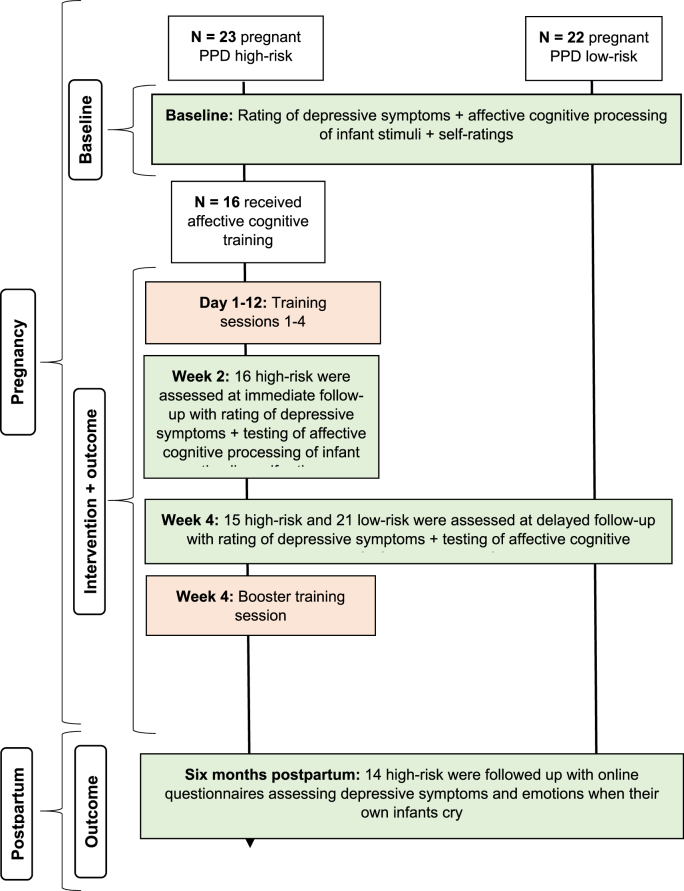
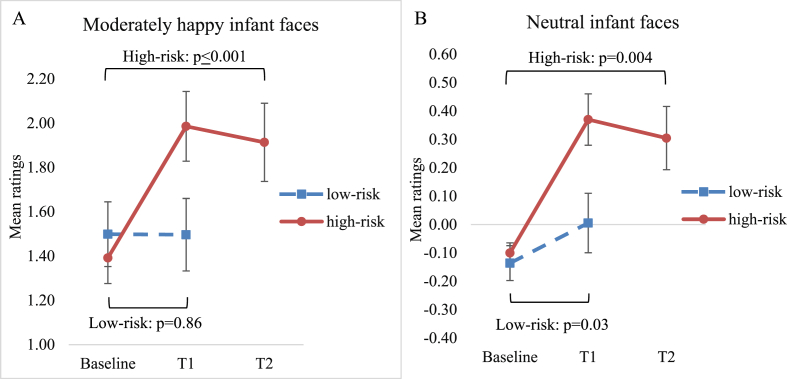
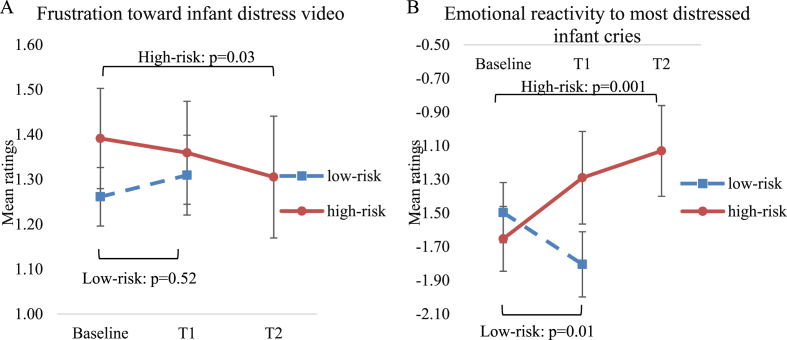
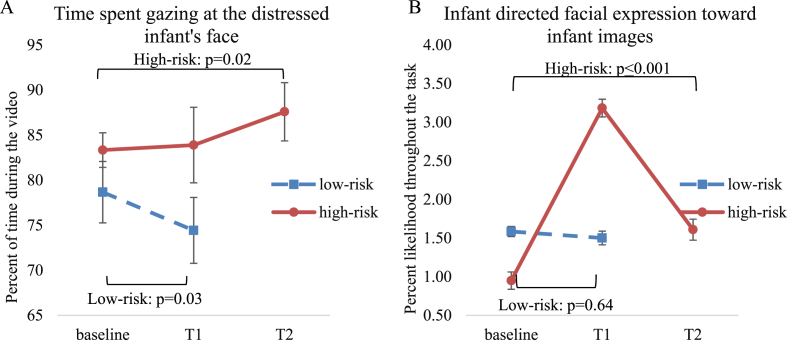
Negatively biased cognitive response to infant stimuli during pregnancy is associated with increased postpartum depression (PPD) risk. This proof-of-concept study aimed to investigate the feasibility and effects of a two-week affective cognitive training intervention on cognitive responses to emotional infant stimuli for pregnant participants at risk of PPD. Forty-three participants were included: 23 at high risk and 22 at low risk of PPD. Cognitive response to emotional infant stimuli was assessed at baseline, immediately after the intervention and at a two-week follow-up for the intervention group (n = 16) and twice over two weeks for the comparison group. The intervention was feasible, as 80% completed all sessions and gave positive feedback. The intervention group showed increased sensitivity to happy infant faces (p-values < 0.02, d > 0.1), more infant-directed facial expressions (p < 0.001, d = 0.6), greater attention toward infant stimuli (p = 0.04, d = 0.2), and reduced negative reactivity to infant distress (p = 0.01, d = 2.6). The increased sensitivity to happy infant faces correlated with fewer depressive symptoms six months after birth (r = -0.59, p = 0.03). Interpretation of the results is limited by the lack of a high-risk control group and small sample size. Randomised controlled trials are now warranted to investigate whether the effects of prenatal affective cognitive training on affective cognitive response to infant stimuli confer reduced risk of PPD.
Keywords: Attachment; Cognitive neuropsychiatry; Emotional cognition; Infant development; Mother-infant interaction; Pregnancy.
© 2023 The Authors.
Figures
References
-
- Barkus E. Effects of working memory training on emotion regulation: transdiagnostic review. PsyCh J. 2020;9(2):258–279. - PubMed
-
- Bjertrup A.J., et al. Cognitive processing of infant stimuli in pregnant women with and without affective disorders and the association to postpartum depression. Eur. Neuropsychopharmacol. 2021;42:97–109. - PubMed
-
- Bjertrup A.J., et al. Processing of infant emotion in mothers with mood disorders and implications for infant development. Psychol. Med. 2021:1–11. - PubMed
-
- Bjertrup A.J., Væver M.S., Miskowiak K.W. Prediction of postpartum depression with an online neurocognitive risk screening tool for pregnant women. Eur. Neuropsychopharmacol. 2023;73:36–47. - PubMed
LinkOut - more resources
Full Text Sources