


Role of circulating microRNAs in tetralogy of Fallot
- PMID: 40656164
- PMCID: PMC12244341
- DOI: 10.5114/aic.2025.151804
Role of circulating microRNAs in tetralogy of Fallot
Abstract
Introduction: Congenital heart disease (CHD) is the most common malformation from birth. The severity of the different forms of CHD varies extensively from superficial mild lesions with follow-up for decades without any treatment to complex cyanotic malformations requiring urgent surgical intervention. One of the most common severe forms of CHD is tetralogy of Fallot (TOF), characterized by a misalignment of the canal septum leading to a deviation of the aorta to the right. microRNAs (miRs) are crucial in cardiac development, giving rise to possible phenotypes in CHD.
Aim: We aimed to evaluate the expression of miRs in 23 children with TOF and 45 controls and correlate them with the clinical characteristics of both the children and the mothers.
Material and methods: We analyzed the miRNA expression of miR-21-5p, miR-155-5p, miR-221-3p, miR-26a-5p, and miR-144-3p by RT-qPCR.
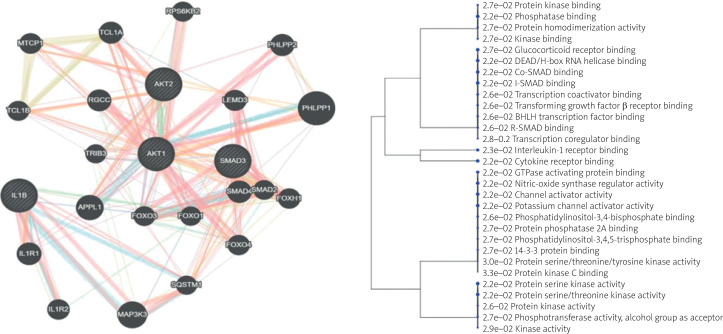
Results: In this study, we found that miR-221-5p, miR-21-5p, and miR-144-3p exhibited a significant difference in expression compared to controls. Through bioinformatics analysis, we found that the target genes of analyzed mIRs are members of the AKT1, SMAD, TNF-α, and FOX families. All have in common that they are associated with different cellular pathways that lead to cell cycle changes, cell growth, and apoptosis, mainly in hypoxic conditions.
Conclusions: The expression levels of miRs in pediatric patients may contribute to the development of TOF. Additionally, the high expression of miR-221-5p, miR-21-5p, and miR-144-3p in children with TOF is associated with genes associated with many cellular pathways involved in TOF development.
Keywords: children; microRNAs; pediatric; tetralogy of Fallot.
Copyright: © 2025 Termedia Sp. z o. o.
Conflict of interest statement
The authors declare no conflict of interest.
Figures


References
-
- Hoffman JI, Kaplan S. The incidence of congenital heart disease. J Am Coll Cardiol 2002; 39: 1890–900. - PubMed
-
- Latus H, Hachmann P, Gummel K, et al. Impact of residual right ventricular outflow tract obstruction on biventricular strain and synchrony in patients after repair of Tetralogy of Fallot: a cardiac magnetic resonance feature tracking study. Eur J Cardiothorac Surg 2015; 48: 83–90. - PubMed
-
- Saliminejad K, Khorram-Khorshid HR, Soleymani-Fard S, Ghaffari SH. An overview of microRNAs: biology, functions, therapeutics, and analysis methods. J Cell Physiol 2019; 234: 5451–65. - PubMed
LinkOut - more resources
Full Text Sources
Miscellaneous
