


Nurse Managers' Toxic Leadership: Its Relation to Nurses' Internal and External Intentions to Whistleblowing
- PMID: 40656906
- PMCID: PMC12255496
- DOI: 10.1155/jonm/1734502
Nurse Managers' Toxic Leadership: Its Relation to Nurses' Internal and External Intentions to Whistleblowing
Abstract
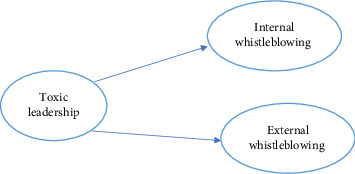
Aim: This study aimed to explore the relationship between toxic leadership by nurse managers and staff nurses' intentions to engage in whistleblowing practices, both within and outside their hospital. Background: Nurses are pivotal in providing high-quality care, but toxic nurse manager leadership in the workplace can lead to challenges in patient care and the workplace environment. In response, whistleblowing serves as a mechanism to mitigate these problems and foster accountability. Methods: This descriptive correlational study was conducted from October 2023 to March 2024 with 292 inpatient and critical care unit nurses from a university hospital who were selected through simple random sampling. They completed the 15-item Toxic Leadership Scale to assess their views of toxic leadership in five domains: self-promotion, abusive supervision, unpredictability, narcissism, and authoritarian leadership. Nurses' intention to report misconduct was assessed using the 8-item whistleblowing intention questionnaire, including both internal and external whistleblowing. Descriptive statistics summarised the data; relationships between variables were evaluated using Spearman's correlation. Linear regression analysis provided the predictors of whistleblowing intention, exploring how personal characteristics and toxic leadership can affect this intention. Results: The study revealed that nurses reported moderate levels of toxic leadership among their managers, with a total mean of 45.97 ± 11.545. They were more likely to intend to blow the whistle within the organisation (15.63 ± 3.085) than outside the organisation (10.77 ± 3.331), with the overall whistleblowing intention mean being 26.4 ± 5.008. Toxic leadership was significantly positively correlated with external whistleblowing (r = 0.282, p < 0.001). Conclusion: A positive correlation was found between toxic leadership and external whistleblowing. Toxic leadership is a significant predictor of nurses' intentions to blow the whistle, and the educational level of nurses also contributes to these intentions. Addressing toxic leadership is crucial for encouraging whistleblowing and fostering a healthier work environment. Implications for Nursing Management: Hospital managers and leaders need to combat toxic leadership, encourage a culture of safe whistleblowing practices, reinforce legal protections for whistleblowers and create ethical leadership training programs for nurse managers.
Keywords: external whistleblowing; internal whistleblowing; nurses; toxic leadership; whistleblowing.
Copyright © 2025 Mahitab Mohamed Abdelrahman et al. Journal of Nursing Management published by John Wiley & Sons Ltd.
Conflict of interest statement
The authors declare no conflicts of interest.
Figures
References
-
- Celiker N., Guzeller C. O. Toxic Leadership Scale Development in Hospitality Sector and Scale Item-Bias Analysis. Journal of Quality Assurance in Hospitality & Tourism . 2023;26(3):512–543. doi: 10.1080/1528008x.2023.2253998. - DOI
-
- Morris J. A. Understanding Coping Strategies and Behaviors of Employees Affected by Toxic Leadership . Walden University; 2019.
-
- Milosevic I., Maric S., Lončar D. Defeating the Toxic Boss: The Nature of Toxic Leadership and the Role of Followers. Journal of Leadership & Organizational Studies . 2020;27(2):117–137. doi: 10.1177/1548051819833374. - DOI
-
- Roth T., Whitehead D. Impact of Nurse Manager Peer Mentorship Program on Job Satisfaction and Intention to Stay. Journal of Excellence in Nursing and Healthcare Practice . 2019;1(1):p. 2. doi: 10.5590/jenhp.2019.1.1.02. - DOI
MeSH terms
LinkOut - more resources
Full Text Sources
