


Critical role of LncRNA in sepsis-associated acute kidney injury
- PMID: 40657645
- PMCID: PMC12247304
- DOI: 10.3389/fphar.2025.1627253
Critical role of LncRNA in sepsis-associated acute kidney injury
Abstract
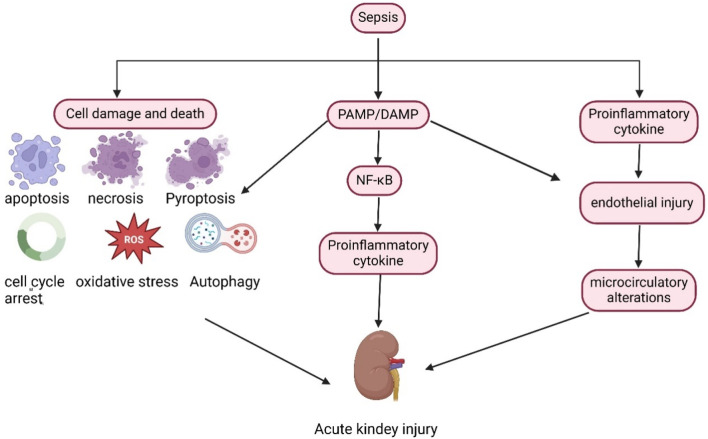
Sepsis is defined as organ dysfunction resulting from a harmful host response to infection. It can lead to multiple organ dysfunction, with the kidneys being one of the most commonly affected organs, resulting in sepsis-associated acute kidney injury (SA-AKI), which is associated with a high mortality rate. Despite significant advances in the treatment of SA-AKI in recent years, the condition continues to exhibit a high mortality rate. It remains a critical issue and clinical burden that necessitates further research to mitigate both acute and chronic consequences. An in-depth exploration of the pathogenesis of SA-AKI is essential for guiding early diagnosis and treatment. Increasing evidence indicates that long non-coding RNAs (LncRNAs) play a crucial role in SA-AKI, typically functioning as competing endogenous RNAs (ceRNAs) that alleviate the inhibition of downstream target genes by microRNAs (miRNAs), thus regulating downstream signaling pathways and participating in vital cellular biological processes and inflammatory responses. A growing number of studies have reported the involvement of LncRNAs in SA-AKI, highlighting the necessity of summarizing the evidence on this topic through a comprehensive review, as LncRNAs can either promote the onset or inhibit the progression of SA-AKI depending on the underlying mechanisms. This paper reviews the pathophysiological mechanisms contributing to the development of SA-AKI, the pivotal role of LncRNAs in this condition, and their potential as biomarkers and therapeutic targets, aiming to provide theoretical guidance for the study and treatment of SA-AKI.
Keywords: SA-AKI; inflammation; lncRNAs; sepsis; signaling pathway.
Copyright © 2025 Jin, Liao, Jin, Chen and Yuan.
Conflict of interest statement
The authors declare that the research was conducted in the absence of any commercial or financial relationships that could be construed as a potential conflict of interest.
Figures


References
Publication types
LinkOut - more resources
Full Text Sources
